








Dental Academy Chandigarh
Choosing the right Dental Academy Chandigarh can make a meaningful difference for dentists who want to strengthen their clinical knowledge and develop practical skills. Dental education is no longer limited to textbooks and classroom lectures. Modern dentists increasingly need exposure to treatment planning, digital workflows, implant dentistry, restorative procedures, and evidence-based clinical decision-making.
For BDS graduates, young dentists, and practicing clinicians, advanced education can provide an opportunity to understand procedures more systematically. The goal should not simply be to collect certificates, but to build knowledge that can be applied carefully and responsibly in everyday dental practice.
Why Advanced Dental Education Matters for Modern Dentists
Dentistry continues to evolve with new materials, technologies, imaging systems, and treatment techniques. Digital dentistry, CAD/CAM workflows, CBCT imaging, implant planning, and minimally invasive approaches are becoming important areas of professional development. Recent dental education research also highlights the growing importance of digital technology and structured CAD training in contemporary dental education.
A good advanced course should therefore connect theoretical concepts with clinical reasoning. Dentists need to understand not only how a procedure is performed, but also when it is appropriate, what factors influence treatment decisions, and how complications can be prevented or managed.
What to Look for in a Dental Academy Chandigarh
Not every dental course offers the same learning experience. Before selecting a program, dentists should look at the curriculum, clinical exposure, faculty experience, course structure, and opportunities for practical learning.
Practical Clinical Learning
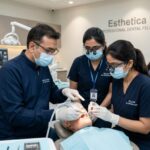
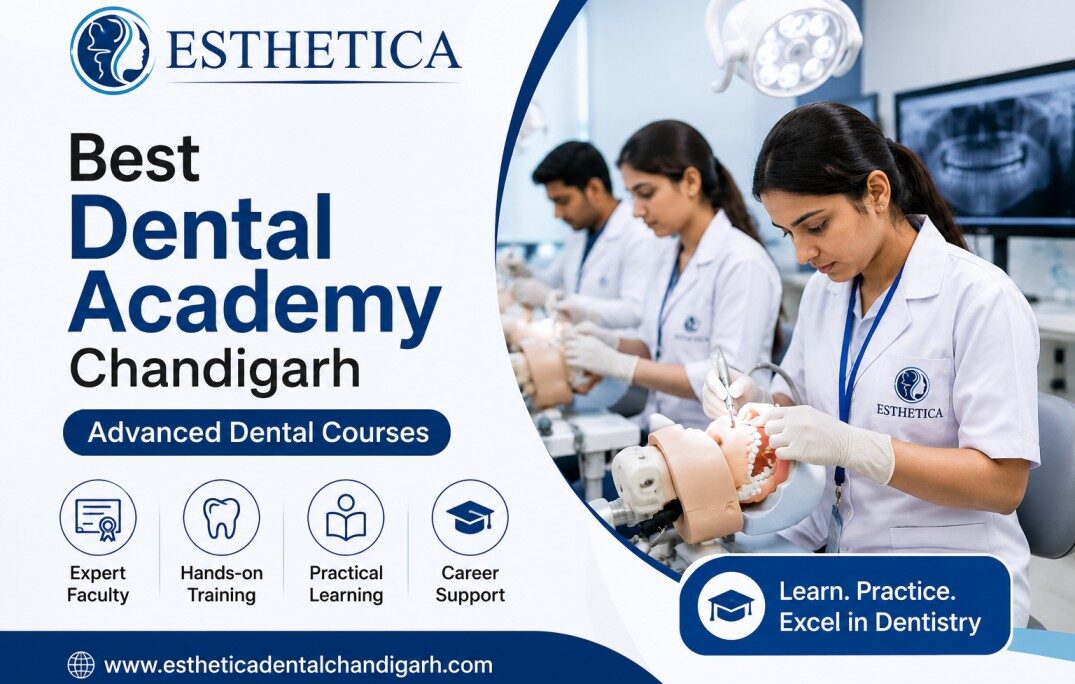
One of the most important factors is the amount of practical exposure provided. A course that combines lectures, demonstrations, case discussions, and supervised clinical learning can help learners connect theoretical knowledge with real treatment situations.
Hands-on education can also help dentists become familiar with instruments, clinical protocols, patient assessment, treatment sequencing, and documentation. However, practical training should always be carried out under appropriate professional supervision and within the learner’s existing legal scope of practice.
Experienced Faculty and Mentorship
Faculty guidance is another important consideration. Experienced clinicians can explain why different approaches are selected and how treatment plans change according to patient-specific factors.
Mentorship can be especially useful when learning complex areas such as implantology, oral surgery, prosthodontics, and endodontics. Case-based discussions can help dentists understand the reasoning behind clinical decisions rather than simply memorizing procedures.
Updated Dental Technology
Modern dental education increasingly includes digital tools. CBCT, intraoral scanning, CAD/CAM, digital treatment planning, and 3D technologies are changing how dentists diagnose, plan, design, and communicate treatment.
A 2026 review of digital intelligence in dental education describes the growing integration of CBCT, intraoral scanning, CAD/CAM, 3D printing, virtual simulation, and AI-enabled educational technologies.
This makes technology-focused learning a useful component of continuing professional development.
Dental Courses in Chandigarh for Different Career Stages
The right course depends on the dentist’s previous education and clinical experience. A newly graduated BDS dentist may need stronger foundations, while an experienced practitioner may prefer advanced specialty-oriented training.
Dental Courses in Chandigarh can cover areas such as implantology, endodontics, prosthodontics, oral surgery, restorative dentistry, smile design, and digital workflows. The important point is to select a program that matches the learner’s current skill level.
Courses for Fresh BDS Graduates
Fresh graduates often have strong theoretical knowledge but may want additional exposure to clinical decision-making. Courses focusing on treatment planning, patient communication, basic surgical principles, restorative procedures, and practical workflows can help bridge the gap between academic learning and professional practice.
The most useful programs should encourage systematic thinking rather than rushing learners into complicated procedures.
Courses for Practicing Dentists
Practicing dentists may have different goals. They may want to add implant treatment, advanced endodontics, prosthodontics, digital dentistry, or aesthetic procedures to their existing knowledge base.
For these learners, shorter focused programs, workshops, case-based education, and structured mentorship may be more useful than introductory courses.
Implantology as an Important Area of Advanced Training
Implant dentistry has become a major area of continuing dental education. Canadian education providers currently offer implant courses covering treatment planning, implant surgery, prosthetic procedures, bone grafting, and implant maintenance.
A comprehensive implantology curriculum can include patient assessment, medical history, radiographic evaluation, bone analysis, implant positioning, surgical principles, soft-tissue considerations, prosthetic planning, and maintenance.
The emphasis should always remain on predictable treatment planning and patient safety rather than simply increasing the number of procedures performed.
Learning CBCT and Digital Treatment Planning
Three-dimensional imaging can provide valuable information when conventional two-dimensional radiographs are insufficient. Dentists learning implantology and complex treatment planning should understand how CBCT is selected, interpreted, and incorporated into clinical decision-making.
Canadian continuing education programs currently include dedicated CBCT education for dental professionals, showing the continuing relevance of three-dimensional imaging in professional development.
Digital planning should also be understood as part of a wider workflow. The technology is useful when clinicians know how to interpret the information and translate it into an appropriate treatment strategy.
Clinical Dental Courses in Chandigarh and Hands On Education
Clinical Dental Courses in Chandigarh can be particularly valuable when they provide structured opportunities for practical learning. Dentists often remember concepts better when they can see a procedure, understand the sequence, discuss the case, and then apply the principles under supervision.
However, hands-on education should have clear learning objectives. A course should explain what participants are expected to understand before, during, and after the practical session.
Case Based Learning
Case-based education allows dentists to explore real clinical situations. Instead of studying a procedure in isolation, learners can consider patient history, diagnosis, imaging, treatment options, contraindications, sequencing, and follow-up.
This approach can improve clinical reasoning because dental treatment rarely follows one identical pathway for every patient.
Complication Management
Advanced dental education should also discuss complications and limitations. Understanding what can go wrong is an essential part of becoming a responsible clinician.
For example, implant education may address inadequate bone volume, soft-tissue concerns, prosthetic complications, infection risk, and treatment planning limitations. Similarly, endodontic education may discuss difficult anatomy, procedural errors, and retreatment considerations.
How Dental Education in Chandigarh Compares With International Learning Trends
Dentists considering education in India may also compare course structures with continuing education programs available internationally, including Canada.
Canadian institutions and dental education providers currently offer structured continuing education in implant dentistry, CBCT, multidisciplinary treatment planning, endodontics, prosthodontics, and digital dentistry.
For example, the University of Toronto lists a hands-on implant certification program designed for general dentists, while other Canadian providers offer practical implant surgery, bone grafting, and restorative education.
This comparison can help dentists understand what modern professional education increasingly emphasizes: structured learning, clinical relevance, practical experience, mentorship, and continuing professional development.
Why Digital Dentistry Should Be Part of Continuing Education
Digital dentistry is changing both clinical practice and dental education. Intraoral scanners, digital impressions, CAD/CAM, digital smile planning, CBCT, and 3D printing can influence treatment planning and laboratory communication.
Recent research indicates that digital technology is becoming increasingly important in dental education, while also noting barriers such as access, cost, and training requirements.
For this reason, dentists should look for education that explains the clinical application of digital tools rather than focusing only on software demonstrations.
Choosing the Right Advanced Dental Course
Before enrolling, dentists can use a simple checklist:
Check the curriculum:
Make sure the subjects match your professional goals and current experience.
Review practical exposure:
Understand whether the course includes demonstrations, simulation, case discussions, or supervised clinical experience.
Ask about mentorship:
Find out whether faculty members provide guidance during and after the learning sessions.
Consider course duration:
A one-day introductory workshop and a longer clinical program serve different purposes.
Review technology exposure:
For modern dentistry, consider whether the curriculum includes relevant digital workflows and imaging concepts.
Understand certification:
Always check what the certificate represents and whether it has any formal regulatory or licensing status.
The website’s academy information states that its clinical training and mentorship programs are intended for continuing professional development and skill enhancement rather than statutory qualifications or licensing credentials. (Esthetica Dental Chandigarh)
Building Skills Beyond the Classroom
Completing a course is only one part of professional development. Dentists can strengthen learning by reviewing cases, reading current literature, attending continuing education sessions, discussing difficult cases with experienced clinicians, and maintaining proper clinical records.
Regular learning is particularly important in areas that change quickly. Digital workflows, implant materials, restorative techniques, imaging technology, and treatment protocols continue to develop.
A strong learning mindset therefore focuses on continuous improvement rather than treating one course as the final step.
What Dentists From Canada Should Consider
Dentists from Canada who explore international continuing education should carefully evaluate the purpose and regulatory implications of any program. Completing a course outside Canada does not automatically provide permission to practise dentistry in Canada or satisfy provincial licensing requirements.
Canadian dental regulators and professional bodies have specific requirements concerning registration, education, continuing competence, and scope of practice. Therefore, dentists should independently verify whether a particular educational program meets any requirement relevant to their province.
The educational value of an international course can still be considered separately from licensing recognition. Clinical exposure, academic learning, technology familiarity, and professional networking may be useful, but regulatory recognition should never be assumed.
A Smarter Approach to Choosing Dental Training
The best dental education is not necessarily the course with the longest syllabus or the largest number of procedures. Instead, dentists should look for a balanced learning experience that develops knowledge, clinical reasoning, technical understanding, patient assessment, and awareness of limitations.
For beginners, foundational education can create confidence. For experienced dentists, focused advanced training can help update knowledge and explore new clinical areas.
The ideal path is different for every dentist, so course selection should be based on previous experience, professional goals, available time, and the type of clinical skills the learner wants to develop.
A Message from Dr. Sharad Arya, Founder – Esthetica Dental Academy
When I started Esthetica Dental Clinic in 2012, my vision was simple — to combine clinical excellence with genuine patient care. Over the years, as our practice grew across Punjab, Himachal, and Chandigarh, I realized that the biggest gap in Indian dentistry wasn’t a lack of talent, but a lack of accessible, hands-on implant training for practicing dentists.
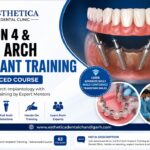
That’s why we built Esthetica Dental Academy — not as another certificate mill, but as a mentorship-driven program where dentists actually work on live cases, under supervision, until they’re confident enough to do it on their own. I’ve seen BDS graduates walk in unsure of their surgical skills and walk out ready to plan and execute full-arch implant cases independently.
If you’re serious about growing your implant practice, I’d encourage you to invest in training that prioritizes real clinical exposure over theory alone. That’s the philosophy behind everything we teach here.
— Prof. Dr. Sharad Arya, MDS
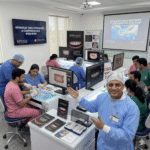
Every batch we train is small by design, because implant surgery demands individual attention, not a classroom of fifty watching a screen. Whether it’s digital implant planning, guided surgery, or full-arch rehabilitation, we make sure every participant leaves confident enough to apply it in their own practice.
Frequently Asked Questions
1. What is a Dental Academy Chandigarh?
A Dental Academy Chandigarh is an educational setting where dental professionals can undertake additional learning through courses, workshops, clinical training, case discussions, and professional development programs.
2. Which Dental Courses in Chandigarh are useful after BDS?
Popular areas include implantology, endodontics, prosthodontics, oral surgery, restorative dentistry, digital dentistry, and aesthetic dentistry. The best choice depends on the dentist’s existing skills and career objectives.
3. Are Clinical Dental Courses in Chandigarh suitable for practicing dentists?
Yes. Clinical courses can be useful for practicing dentists who want to update their knowledge or develop skills in a particular area. Course level and clinical exposure should be matched to previous experience.
4. Why is hands-on training important in dental education?
Hands-on training helps learners connect theoretical concepts with practical workflows. It can improve familiarity with instruments, treatment sequences, case assessment, and clinical decision-making when conducted under appropriate supervision.
5. Is implantology a good area for continuing dental education?
Implantology is an important area of continuing education, particularly for dentists interested in implant treatment planning, surgery, prosthetics, and maintenance. Current Canadian continuing education programs also place substantial emphasis on implant dentistry.
6. Should a dental course include digital dentistry?
Digital dentistry is increasingly relevant to modern clinical education. CBCT, intraoral scanning, CAD/CAM, digital planning, and 3D technologies are becoming important components of contemporary dental workflows.
7. Does completing an international dental course provide a Canadian dental licence?
No. Completing a course or receiving a certificate does not automatically provide authorization to practise dentistry in Canada. Dentists must meet the applicable Canadian and provincial regulatory requirements.
Esthetica Advanced Dental Academy
For dentists researching continuing education opportunities, Esthetica Advanced Dental Academy provides information about clinical training and advanced dental education programs in Mohali within the Chandigarh Tricity. Its published course information includes areas such as implantology, endodontics, prosthodontics, oral surgery, and practical clinical learning. (Esthetica Dental Chandigarh)
The most important consideration for any dentist is to choose education that fits their current clinical experience and professional objectives. A thoughtful combination of theory, practical learning, mentorship, evidence-based knowledge, and ongoing professional development can provide a stronger foundation for responsible modern dental practice.