







Clinical Dentistry Courses for Dentists to Improve Practical Skills
A dental degree gives you the foundation, but confidence often grows through practice. Many dentists know the theory yet want more experience with instruments, treatment planning, procedures, and unexpected clinical situations. clinical dentistry courses for dentists can help bridge that gap through focused learning and supervised practice. They turn classroom knowledge into practical skills that can be applied with greater clarity.
Why Practical Training Matters After Dental School
Graduation does not mean learning stops. Dentistry changes with new materials, techniques, technologies, and treatment approaches. At the same time, every patient brings different anatomy, expectations, medical history, and clinical challenges. A procedure that looks straightforward in a textbook may require careful judgment when applied to an individual patient.
Practical training gives dentists space to ask questions, repeat techniques, and learn from feedback. It can reveal habits that need correction and make unfamiliar procedures feel more manageable. Fresh graduates may gain confidence with routine work, while experienced dentists can refine skills they use less often. The value lies in turning knowledge into controlled, repeatable clinical action.
What Skills Can Dentists Develop?
The content of a clinical course depends on its focus. General programs may cover restorative dentistry, endodontics, prosthodontics, oral surgery, periodontics, and basic treatment planning. Specialized programs can go deeper into subjects such as implants, full-mouth rehabilitation, cosmetic dentistry, or advanced endodontic procedures.
Hands-on sessions may involve access cavity preparation, rotary instrumentation, tooth preparation, impressions, surgical extraction, flap design, suturing, restorative procedures, or implant-related planning. The goal should not simply be to memorize steps. Dentists need to understand why a technique is selected, when a case is suitable, and what alternatives may be considered.
Hands-On Practice Makes Learning More Useful
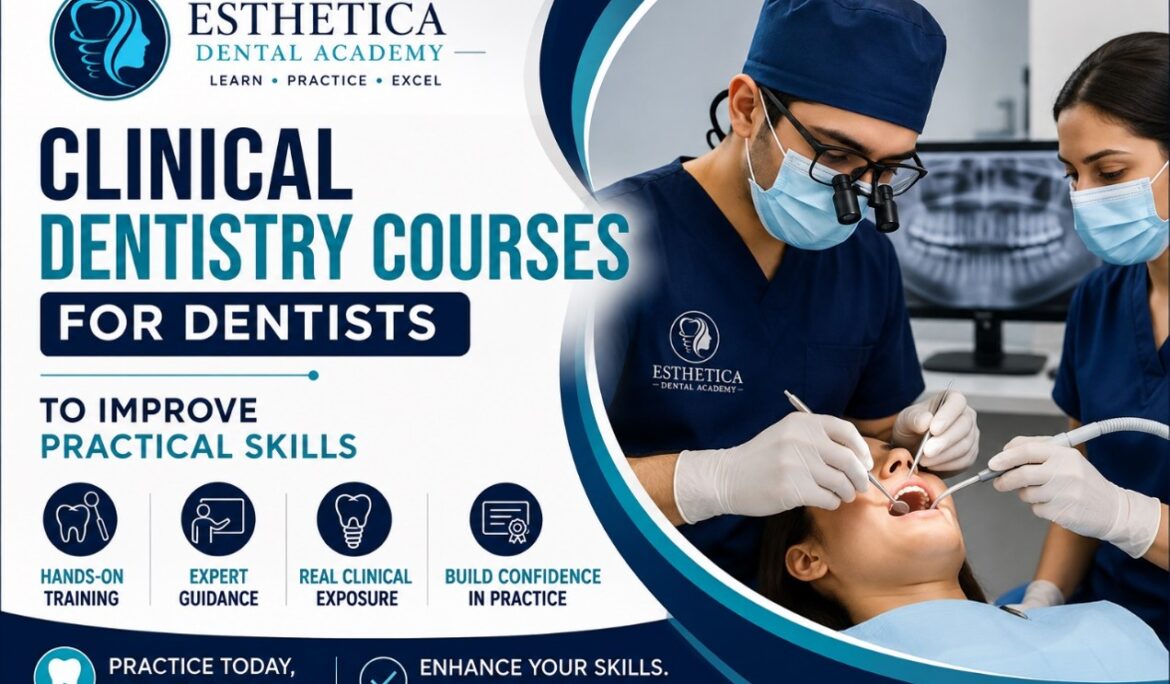
Watching a procedure is valuable, but performing it is a different experience. During these clinical training programs, participants can practice techniques while an experienced instructor observes their work. Small details such as instrument angulation, hand positioning, preparation depth, or procedural sequence become easier to understand when they are demonstrated and corrected in practice.
This feedback can save time and prevent the repetition of avoidable mistakes. A dentist can stop, ask a question, try again, and understand the difference between an acceptable result and a better one. Repeated practice also helps make unfamiliar steps feel more manageable.
Treatment Planning Should Be Part of Training
Good clinical work starts before the handpiece, instrument, or surgical kit is used. Diagnosis, case selection, radiographic assessment, patient communication, and treatment sequencing all influence the outcome. A useful training program therefore needs to look beyond isolated procedures.
Dentists should have opportunities to discuss cases, identify treatment priorities, consider limitations, and think about possible complications. Learning how to decide when not to proceed can be just as important as learning how to perform a procedure. This broader approach encourages dentists to connect individual techniques with the patient’s complete treatment plan.
At Esthetica Dental Academy, this kind of learning can help participants connect classroom concepts with clinical decision-making. Discussions around cases can make the reasoning behind each step clearer and encourage dentists to look at treatment as a complete process rather than a collection of separate procedures.
Choosing a Course That Fits Your Goals
The right course depends on what you want to improve. A fresh BDS graduate may need broader exposure to routine procedures, while a practicing dentist might prefer focused training in one area. Before enrolling, check the curriculum and ask exactly how much practical exposure is included.
A good program should match your current ability. Advanced training may be frustrating if foundational skills are developing, while an introductory course may not challenge an experienced practitioner enough. Clear objectives guide selection well.
Learning From Esthetica Dental Academy
An instructor’s role is not limited to showing a procedure once. Useful teaching involves observation, discussion, correction, and explanation. Dentists should feel comfortable asking why a particular approach is preferred and what could happen if a step is performed differently.
At Esthetica Dental Academy, guided instruction can give dentists an opportunity to discuss techniques and understand common clinical errors. Constructive feedback is especially valuable because participants can make corrections while the learning situation is still fresh. That immediate connection between action and feedback can make practical education more memorable.
Who Can Benefit From Clinical Training?
Clinical training can be useful at several stages of a dental career. Fresh graduates may want additional exposure before taking on more demanding cases. Dentists already in practice may want to refresh skills, improve efficiency, or learn procedures they currently refer to other clinicians.
It can also help dentists who are changing their professional focus. Someone interested in cosmetic dentistry, implants, prosthodontics, or oral surgery may benefit from structured education before incorporating new procedures into practice. The important point is to choose training based on an honest assessment of current skills and future goals.
From Training to Better Patient Care
A certificate alone does not create clinical expertise. Real improvement comes when learning is followed by careful practice, case review, continued education, and appropriate clinical experience. Dentists should know their limits and seek guidance when a case is outside their current competence.
The purpose of clinical dentistry courses for dentists is therefore bigger than learning a list of procedures. Good training can improve the way dentists assess cases, organize treatment, handle instruments, communicate decisions, and respond when a procedure does not go exactly as planned.
Esthetica Dental Academy can support that learning journey by providing structured opportunities for dentists who want to strengthen practical skills. The most useful course is one that leaves participants with clearer clinical reasoning, better technique awareness, and a realistic understanding of where further practice is needed.
Build Confidence Through Consistent Practice
Practical dental education works best when it is focused, supervised, and relevant to everyday clinical work. The right course can give dentists an opportunity to practice techniques, receive feedback, discuss cases, and understand treatment decisions in a more practical setting.
For dentists comparing training options, look beyond the course title. Review the curriculum, practical components, faculty, supervision, and relevance to your professional goals. Most importantly, choose a program that encourages learning rather than simply promising quick expertise. With continued practice and responsible application, focused training can become a useful part of long-term professional development.
FAQs
1. What are clinical dentistry courses for dentists?
They are professional programs designed to improve practical techniques, treatment planning, clinical judgment, and procedural confidence.
2. Are these courses suitable for fresh BDS graduates?
Yes. They can provide additional practical exposure and help graduates become more comfortable with common clinical procedures.
3. Do clinical courses include hands-on training?
It depends on the program, but many courses combine demonstrations with supervised practical sessions.
4. What procedures can dentists learn?
Depending on the course, training may cover restorative work, endodontics, prosthodontics, oral surgery, implants, or cosmetic procedures.
5. How do I choose the right dental course?
Compare the curriculum, hands-on exposure, faculty experience, supervision, duration, and match with your current skill level.
6. Can practical training improve treatment planning?
Yes. Case discussions and guided planning can help dentists understand diagnosis, sequencing, case selection, and clinical limitations.
7. Does completing a course make a dentist an expert?
No. Courses support learning, but expertise develops through continued practice, experience, feedback, and ongoing education.