








All-on-X Implant Training in India for UK Dentists | Limited Seats
Ready to Take Your Full-Arch Skills to the Next Level?
If you are a dentist in the UK and want to offer fixed, full-arch rehabilitation with confidence, All-on-X implant training in India for UK dentists is an option worth exploring. Patient demand for fixed teeth in a single treatment journey keeps growing, yet hands-on exposure can be hard to find at home. Many clinicians now look abroad for structured, practical learning. This guide explains what such a programme covers, how to judge its quality, and what to plan before you book.
Why UK Dentists Are Looking Beyond Borders for Implant Skills
Implant dentistry has moved fast in the last few years. Patients with failing dentition or loose dentures expect a fixed solution, and they ask their own dentist first. Yet many UK practitioners find that waiting lists for courses are long, seats are few, and live surgical exposure is limited to observation.
That gap is why a All-on-X implant course for UK dentists delivered overseas has become a real talking point. Clinicians want case volume, close mentoring and a clear workflow they can carry back to their own surgery. Training in a high-volume clinical setting can offer all three in one focused trip.
What Is All-on-X? A Quick Refresher
All-on-X is a full-arch concept in which a complete set of fixed teeth is supported by a limited number of strategically placed implants. The “X” simply stands for the number of implants chosen for the case, commonly four or six. Angled posterior implants often help the clinician avoid grafting in suitable patients.
The approach appeals because it can shorten the treatment path for people who have lost most or all of their teeth. Immediate loading, where a provisional bridge is fitted soon after surgery, is a major reason patients value it. Success depends on careful case selection, sound planning and a well-fitted prosthesis, which is exactly what good training should teach.
What You Should Learn in a Full Arch Implant Training Programme
A strong full arch implant training in India programme should go well beyond placing fixtures. Look for teaching that follows the whole patient journey, from the first consultation to long-term maintenance. A well-built curriculum usually includes:
- Diagnosis and case selection using CBCT imaging
- Digital implant planning and surgical guides
- Implant placement protocols, including angulated posterior implants
- Immediate loading and provisional prosthesis workflows
- Soft tissue management and bone considerations
- Final prosthetic rehabilitation and follow-up care
Esthetica Dental Academy, for example, describes its implant courses as covering All-on-6 rehabilitation, full-mouth restoration, immediate loading, digital planning and advanced prosthetic workflows. Always ask for a day-by-day outline so you know exactly what you will practise.
Why India? Volume, Value and Hands-On Mentoring
India has a large patient base seeking implant treatment, and busy clinics see a wide variety of full-arch cases. For a visiting dentist, that variety can speed up learning. You see different bone conditions, different arch forms and different prosthetic challenges, all within a short period.
Cost is another factor. Compared with many European programmes, training and travel packages in India can be more affordable, though you should compare the full cost carefully. Small group sizes also matter. When only a handful of delegates attend, each person gets more direct guidance, more questions answered and more time with the mentor.
A Typical Learning Journey: From Theory to Live Cases
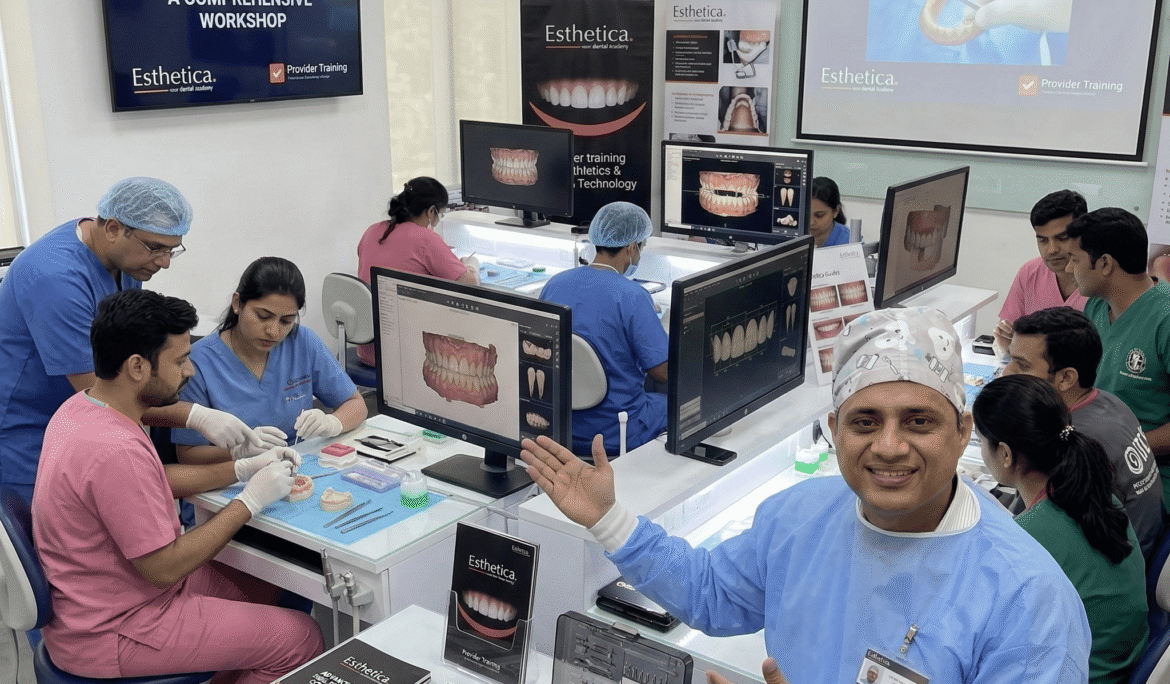
Good programmes blend knowledge with practice instead of relying on slides alone. You might begin with the biological and biomechanical principles behind full-arch treatment, then move to treatment planning on real scans. This builds the reasoning skills that protect you when a case does not look textbook perfect.
Next comes the clinical phase. Delegates typically watch live demonstrations, discuss cases with the mentor, and work step by step through surgical and prosthetic stages. The final stage is a review of complications and how to avoid them. Ending with troubleshooting is a sign that a course is built for real-world confidence, not just certificates.
How to Choose Among Advanced Dental Implant Courses in India
Not every programme is equal, and the search results can be crowded. When comparing advanced dental implant courses in India, use a simple checklist before paying any deposit:
- Mentor credentials: Who teaches, and what is their clinical track record?
- Group size: Smaller groups usually mean better supervision.
- Clinical exposure: Is it live observation, assisted practice or both?
- Technology: Does the clinic use CBCT, digital planning and modern implant systems?
- Support: Is there guidance on travel, scheduling and post-course questions?
- Transparency: Are fees, refund terms and certification wording stated clearly?
If a provider is vague about any of these points, ask direct questions. A reliable academy will answer openly and in writing.
Be Clear About Credentials: CPD, Not a Qualification
This point deserves honesty. Most short clinical training programmes are continuing professional development, not a degree or a licence to practise in a new country. The Esthetica Academy itself states that its mentorship programme is not a degree, diploma or statutory qualification, and that its certificate only confirms participation.
For UK dentists, the practical question is how the training fits your own registration and scope of practice. Before enrolling, check General Dental Council standards and speak with your indemnity provider about the implant work you plan to carry out after returning. Training builds skill, but you remain responsible for working within your competence.
Who Will Benefit Most From This Training?
This kind of course suits general dentists who already place single implants and want to move into complex rehabilitation. It also helps clinicians who refer full-arch cases and would like to bring them in-house with proper preparation.
Dentists who already have a prosthodontic or surgical background may join to refine their workflow and learn digital planning methods. If you are completely new to implants, consider starting with foundation-level learning first. Full-arch work demands a solid base, and honest self-assessment protects both you and your patients.
Practical Planning: Travel, Time and Preparation
Plan your trip well in advance. Check visa requirements for your passport, confirm course dates, and allow a buffer day for travel recovery. Many delegates choose to combine the course with a short stay nearby, which keeps the schedule relaxed and focused.
Prepare academically as well. Review implant anatomy, occlusion principles and your own case photographs before you travel. Bringing a few of your own cases for discussion can turn a good course into a personal masterclass, because the mentor can respond to the exact challenges you face at home.
What to Do When You Return to Your Practice
Training only pays off when you apply it carefully. Start with simpler, well-selected full-arch cases and build a clear internal protocol for planning, surgery, provisionalisation and review. Work with a trusted laboratory so the prosthetic phase is predictable.
Keep a record of your cases and outcomes, and stay in touch with your mentor for guidance on difficult situations. Ongoing communication is often the most valuable part of any course. It turns a few days of learning into a long-term professional relationship.
Frequently Asked Questions
1. What is All-on-X implant training?
It is a structured clinical education programme that teaches dentists how to plan and deliver full-arch fixed rehabilitation supported by a small number of implants. Courses usually combine theory, digital planning, live demonstrations and prosthetic workflows.
2. Is All-on-X implant training in India suitable for UK dentists?
Yes, many overseas clinicians attend because of the case variety and small-group mentoring. Still, you should confirm how the training fits your GDC registration and indemnity cover before you apply the skills in the UK.
3. How long does a full arch implant training course take?
Duration varies by provider, from a few intensive days to multi-stage programmes. Ask the academy for the exact schedule, daily timetable and the amount of hands-on time included.
4. Will I receive a recognised qualification?
Typically you receive a certificate of participation for CPD purposes. It is generally not a degree or statutory qualification, so read the provider’s disclaimer carefully before enrolling.
5. How much do advanced dental implant courses in India cost?
Fees depend on course length, mentoring level and clinical exposure. Request a written breakdown, and include flights, accommodation and any non-refundable registration fees in your comparison.
6. Do I need implant experience before joining?
Basic implant knowledge is strongly recommended. Full-arch treatment is advanced, so dentists new to implantology should first complete foundation training and gain experience with simpler cases.
7. How do I reserve a seat?
Contact the academy directly to check available dates and group sizes. Small cohorts fill quickly, so early enquiry gives you more choice and time to arrange travel.
Reserve Your Seat and Start Your Full-Arch Journey
Choosing the right implant course is a career decision, and it deserves careful research, honest questions and clear expectations. If you want focused, practical learning in a small-group setting, speak with a team that teaches full-arch dentistry every day. At Esthetica Advanced Dental Academy, delegates can explore All-on-6 and full-mouth rehabilitation training led by experienced mentors in Mohali, India.
Ready to enquire? Call or WhatsApp 9817230279, email contact@estheticadentalchandigarh.com, or visit estheticadentalchandigarh.com to check upcoming dates. Limited seats are available per batch, so contact us today.
All-on-X Implant Training in India for UK Dentists
Open to International Dentists
Free Pre-Course Consultation | Limited Seats Per Batch