









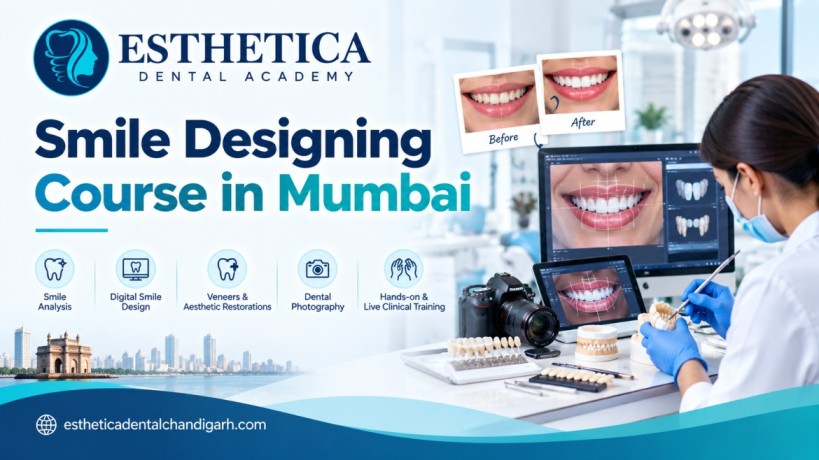
Smile Designing Course in Mumbai – Hands-On Training: Is It Worth It for Dentists?
Looking for a smile designing course in Mumbai usually starts with one honest worry: “Will I really be able to treat patients after this?” Plenty of dentists leave a weekend seminar with beautiful slides but shaky confidence at the chair. This guide explains what genuine hands-on training looks like, who gains the most from it, and how to pick a program that builds real skill instead of adding another certificate to the wall.
Why Mumbai Dentists Can’t Stop Talking About Smiles
Mumbai is a city where first impressions matter. Weddings, corporate meetings, social media, and the entertainment industry all push patients to care about how their teeth look. Requests for veneers, whitening, and gum contouring keep rising, and patients now arrive with reference photos saved on their phones. Dentists who can turn those photos into a realistic plan stand out quickly.
Routine fillings and root canals will always matter, but the market for them is crowded. Cosmetic cases let you offer something more personal and better rewarded, provided the results are predictable. That is why so many young clinicians search for a cosmetic dentistry course in Mumbai soon after graduation.
What Smile Designing Really Means (Hint: It Isn’t Just Veneers)
Smile designing is the art of planning the shape, size, colour, and position of teeth so they suit a patient’s face, lips, and gum line. Veneers and laminates are only one option. Depending on the case, you may combine whitening, composite bonding, gum contouring, crowns, or aligners to reach a natural, balanced result.
The most important work happens before any tooth is touched. Photographs, facial analysis, a digital or wax mock-up, and a trial smile let the patient approve the outcome in advance. Skipping this stage is the most common reason cosmetic cases end in disappointment, so a good course should spend real time on it.
Smile Designing Course for Dentists: What You Should Actually Learn
A well-built smile designing course for dentists should move you from theory to the operatory in clear steps. Look for a curriculum that covers at least the following:
- Facial and smile analysis, including midline, smile arc, and tooth proportions
- Digital smile design and mock-up planning
- Tooth preparation for veneers and laminates
- Shade selection and coordination with the dental lab
- Composite bonding and direct smile corrections
- Gum contouring and soft tissue considerations
- Temporary restorations and final cementation
- Patient communication and treatment acceptance
That last point is a clinical skill, not sales talk. Explaining options in simple words helps patients say yes with trust, and that habit matters as much as your bur control.
Hands-On Training vs Watching Videos: The Real Difference
Watching a veneer preparation on screen is very different from doing one yourself. Depth control, margin placement, and gentle handling of soft tissue only sink in when your hands have done them. Hands-on training builds that muscle memory in a guided setting, so a mentor corrects your mistakes instead of an unhappy patient discovering them.
Live patient exposure adds another layer. You see how real people react during a mock-up, how they describe what they want, and how a case changes from plan to finish. Models and typodonts are useful for practice, but real cases teach judgement, and judgement is what makes your results consistent.
Advanced Smile Designing Course: Are You Ready for the Next Level?
A foundation program builds the basics: analysis, simple veneer cases, and bonding. An advanced smile designing course goes further into full-smile makeovers, multiple-unit planning, and trickier problems such as worn teeth, uneven gum lines, and midline discrepancies. It also teaches you to balance looks and function in a single treatment plan.
You are probably ready when you have handled a few basic cases and want more predictable, higher-value outcomes. Another good sign is that you can already spot flaws in your own work and want a mentor to help fix them. If you are brand new, start with the foundation level rather than rushing ahead.
Skills That Turn Into Real Practice Growth
After proper training, you can run cosmetic consultations with clarity, plan cases with confidence, and offer smile makeovers as a regular service. Satisfied cosmetic patients also tend to talk about their results, and word of mouth is one of the strongest growth tools a clinic has.
Be careful with income promises, though. Results depend on your location, your patient base, and the effort you put into practice building, so treat any guaranteed-earnings claim in an ad with caution.
How to Choose the Right Cosmetic Dentistry Course in Mumbai
Not every course is equal, so compare them on substance rather than slogans. Ask who teaches, and whether those faculty still treat patients every week. Ask how many participants share a batch, how many live cases you will personally perform, and whether support continues after the course ends. Clear answers usually signal a serious program.
Be equally direct about location and paperwork. Some institutes advertise a city but hold the practical sessions elsewhere, so ask for the exact clinic address, dates, and travel needs before you pay. Find out what the certificate actually means, and confirm fees and refund terms in writing so there are no surprises later.
Smile Designing Training for Canadian Dentists and Overseas Graduates
Cosmetic dentistry is a growing service across Canada, especially in busy urban areas like Toronto, Vancouver, and Brampton. Dentists based there, along with internationally trained graduates preparing for Canadian licensing, often want practical experience that classroom study cannot offer. A focused smile designing program can fill that gap in a short time.
Keep your expectations realistic, though. A course improves your clinical skill and treatment planning, but it does not replace the licensing steps required to practise in Canada. Check current requirements with the relevant Canadian dental regulators, and treat training as a way to build confidence for both exams and real patients.
A Message from Dr. Sharad Arya, Founder – Esthetica Dental Academy
When I started Esthetica Dental Clinic in 2012, my vision was simple — to combine clinical excellence with genuine patient care. Over the years, as our practice grew across Punjab, Himachal, and Chandigarh, I realized that the biggest gap in Indian dentistry wasn’t a lack of talent, but a lack of accessible, hands-on implant training for practicing dentists.
That’s why we built Esthetica Dental Academy — not as another certificate mill, but as a mentorship-driven program where dentists actually work on live cases, under supervision, until they’re confident enough to do it on their own. I’ve seen BDS graduates walk in unsure of their surgical skills and walk out ready to plan and execute full-arch implant cases independently.
If you’re serious about growing your implant practice, I’d encourage you to invest in training that prioritizes real clinical exposure over theory alone. That’s the philosophy behind everything we teach here.
— Prof. Dr. Sharad Arya, MDS
Every batch we train is small by design, because implant surgery demands individual attention, not a classroom of fifty watching a screen. Whether it’s digital implant planning, guided surgery, or full-arch rehabilitation, we make sure every participant leaves confident enough to apply it in their own practice.
Frequently Asked Questions
1. What is a smile designing course, and who can join?
It teaches how to plan and deliver aesthetic smile makeovers using veneers, bonding, whitening, and gum contouring. It is usually meant for BDS graduates and practising dentists. Always check eligibility on the course page.
2. How long is a smile designing course?
Duration varies, from short foundation formats to longer fellowship-style training. Ask the academy for the exact schedule, number of live cases, and dates before booking.
3. Is a smile designing course worth it for fresh BDS graduates?
Yes, if it includes real hands-on practice. Cosmetic skills help you offer higher-value treatments and stand out early in your career. Start with a foundation program and build up gradually.
4. Will I work on live patients?
Good programs include supervised live-patient exposure. Confirm how many cases you will personally perform, not just observe.
5. What is the difference between a foundation and an advanced smile designing course?
Foundation training covers analysis, basic veneers, and bonding. The advanced level handles full-smile, multi-unit, and complex cases with more refined planning.
6. Can dentists from Canada join, and will it help with the NDBE?
International dentists, including those from Canada, do attend programs like this. Some academies offer exam-oriented guidance, but a course is not a licence. Verify current licensing rules with Canadian authorities.
7. Is the certificate a degree or a specialist qualification?
No. Short clinical courses are usually continuing education, not statutory degrees. Read the academy’s disclaimer to understand exactly what your certificate represents.
Start Your Smile Designing Journey with Esthetica Advanced Dental Academy
If you want mentor-led, hands-on smile designing training, Esthetica Advanced Dental Academy is worth a closer look. Its programs are taught by practising clinicians, including prosthodontist and implantologist Dr. Sharad Arya, and range from foundation to advanced and fellowship levels. Training is based in Mohali (Chandigarh Tricity), and its alumni list includes dentists from Canada and the USA. Its certificate is for professional development rather than a statutory degree, so read the disclaimer before enrolling.
Dental Course in India
Short term dental course in india
Implant Fellowship India for General Dentists
Dental Fellowship Program for Advanced Dental Training
https://www.estheticadentalchandigarh.com/cosmetic-dentistry-course-in-india/