




Fellowship in Dental Implantology in Hisar
A Fellowship in Dental Implantology in Hisar can help dental professionals expand their knowledge and develop practical skills in implant dentistry. As more patients explore implants to replace missing teeth, dentists need to understand diagnosis, treatment planning, surgical principles, restoration, and maintenance.
Why Choose a Fellowship in Dental Implantology in Hisar?
Dental implantology combines surgery, restorative dentistry, diagnosis, and patient management. Dentists need to understand how each treatment stage connects and how clinical decisions affect care.
A Fellowship in Dental Implantology in Hisar offers a focused learning pathway for eligible graduates and practising dentists. Depending on the programme, subjects may include patient evaluation, imaging, treatment planning, implant positioning, prosthetic principles, and follow-up care.
Structured learning can strengthen clinical reasoning, patient communication, and recognition of cases that require specialist input.
It is useful to ask how the programme links diagnosis with restorative goals, because implant placement should be guided by the intended final restoration and the patient’s needs.
Why Is Dental Implantology a Valuable Career Choice?
Dental implants replace missing teeth and support restorations that may improve chewing, speech, and appearance. For suitable patients, they can be an alternative to conventional tooth replacement, making implant dentistry an important area of professional development.
Learning implantology broadens understanding of oral rehabilitation and encourages collaboration between surgical and restorative disciplines. It also develops awareness of diagnosis, planning, maintenance, and patient expectations.
Training may help dentists recognise cases requiring further assessment or referral. A course does not replace supervised experience, ongoing education, or qualifications required for particular procedures.
What Will You Learn During Dental Implantology Training?
A fellowship should connect academic principles with practical learning. Curricula and clinical exposure vary, so confirm the details before applying.
1. Patient Assessment and Diagnosis
Treatment begins with assessment of medical and dental history, oral hygiene, periodontal health, bone availability, and healing risks. Participants may learn to assess suitability, identify risks, discuss expectations, and recognise when further investigations or specialist advice are needed.
2. Implant Treatment Planning
Planning reflects the patient’s anatomy, restorative needs, and oral health. Training may cover imaging, digital planning, implant positioning, and the link between restoration design and surgery. Individualised planning supports function, aesthetics, and maintenance.
3. Surgical Principles and Clinical Techniques
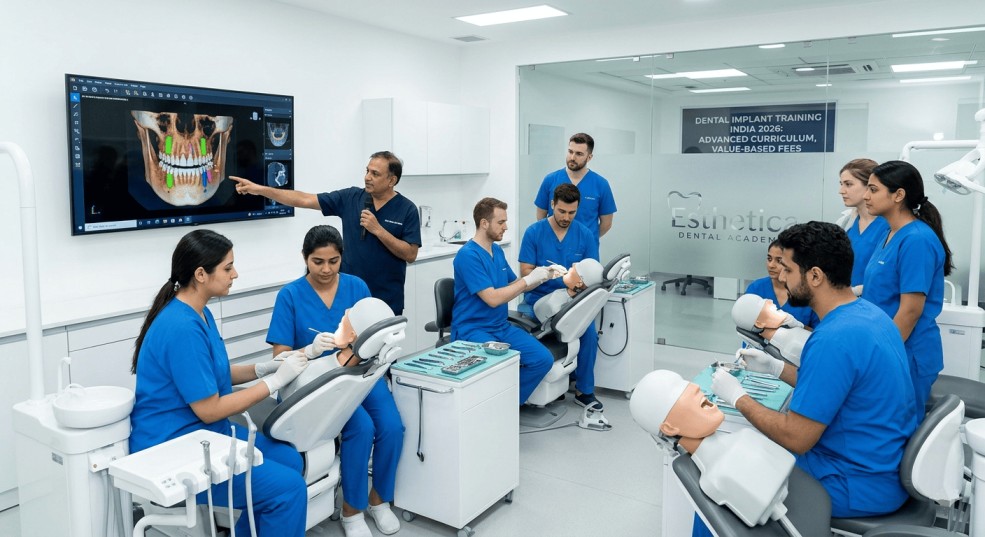
Implant surgery requires knowledge of anatomy, infection control, tissue management, and surgical protocols. Learning may include lectures, demonstrations, simulation, observation, or supervised procedures. Patient-based training must involve informed consent, qualified supervision, and appropriate safety measures.
4. Prosthetic Rehabilitation
The restorative stage considers implant position, bite relationships, restoration design, and materials. A programme may introduce implant-supported crowns, bridges, and other restorations, showing how surgical and prosthetic planning work together.
5. Complication Prevention and Maintenance
Long-term care involves monitoring hygiene, assessing tissues around implants, and identifying complications. Participants may study maintenance, risk factors, and patient education. Early recognition helps clinicians decide when intervention or referral is needed.
Who Should Consider a Fellowship in Dental Implantology in Hisar?
A Fellowship in Dental Implantology in Hisar may suit eligible professionals, depending on admission criteria.
- BDS graduates: Dentists seeking structured implantology learning.
- MDS professionals: Specialists expanding knowledge of implant planning and rehabilitation.
- Practising dentists: Clinicians strengthening their understanding of implant options.
- Experienced dentists: Practitioners updating their knowledge of current concepts.
Confirm qualifications, duration, attendance, assessments, and practical arrangements before applying. Ask whether training includes simulation, observation, or supervised patient cases, and clarify participants’ responsibilities.
Why Explore Esthetica Dental Academy?
Choose a training institution after comparing its curriculum, faculty credentials, facilities, supervision, and continuing-learning opportunities.
Esthetica Dental Academy is worth exploring when researching implantology education. Request current programme information and clarify learning outcomes, course structure, and clinical exposure. Good training should connect theory with clinical reasoning and reinforce ethical care, appropriate case selection, and awareness of treatment risks.
How to Choose the Right Implantology Fellowship
Programmes differ in academic depth and practical exposure. Compare these factors:
- Curriculum: Ensure it covers diagnosis, planning, surgery, prosthetics, and maintenance.
- Faculty: Check qualifications and clinical experience.
- Practical training: Confirm hands-on learning and supervision.
- Patient safety: Look for consent, infection-control, and supervision protocols.
- Assessment: Ask how competencies are evaluated.
- Certification: Verify the awarding institution and completion requirements.
- Schedule: Check duration and attendance expectations.
A good Fellowship in Dental Implantology in Hisar should support meaningful learning, not merely provide a certificate. Review written details before paying fees.
Career Opportunities After Implantology Training
Implantology education may support general practice, restorative planning, implant consultations, and collaborative care. Based on qualifications, experience, competence, and regulations, dentists may improve case assessment or pursue further training.
A fellowship does not automatically confer specialist status or authorise procedures beyond a dentist’s registration, training, and legal scope. Mentorship, clinical experience, case discussions, and continued education remain important.
How to Prepare Before Joining
Review oral anatomy, periodontics, radiology, restorative dentistry, and surgical principles. Identify skills to develop, such as treatment planning, implant-supported restorations, patient communication, or complication management.
Ask about equipment, clinical responsibilities, supervision, safety, and assessment. Applicants to Esthetica Dental Academy should confirm admission details directly before enrolling.
Frequently Asked Questions
1. What is a Fellowship in Dental Implantology in Hisar?
A Fellowship in Dental Implantology in Hisar is a professional learning programme intended to develop eligible dental professionals’ knowledge of implant dentistry. Course content and practical exposure differ between institutions.
2. Who can apply for an implantology fellowship?
Eligibility depends on the institution. BDS graduates, MDS professionals, and practising dentists may qualify for certain programmes. Check the current admission requirements before applying.
3. Does the fellowship include hands-on training?
Practical exposure varies. Ask whether the programme includes simulation, demonstrations, observation, or supervised patient procedures.
4. How long does the fellowship take?
Duration depends on the curriculum, schedule, and clinical requirements. Contact the institution for confirmed course dates and attendance expectations.
5. What topics are covered in implantology training?
Common topics include patient assessment, diagnosis, treatment planning, surgical principles, prosthetic rehabilitation, complication prevention, and implant maintenance.
6. Can general dentists benefit from implantology training?
Eligible general dentists can strengthen their understanding of patient selection, treatment planning, restorative requirements, and when to refer cases for specialist care.
7. Why consider Esthetica Dental Academy?
Esthetica Dental Academy is an option to research when exploring implantology education. Applicants should verify its current curriculum, faculty credentials, clinical supervision, practical exposure, and certification details directly.
Conclusion
A Fellowship in Dental Implantology in Hisar can help dental professionals strengthen their knowledge of advanced clinical concepts. Patient assessment, planning, surgical principles, restoration, and maintenance all contribute to responsible implant care.
Advance Your Skills with Esthetica Dental Academy
Ready to take the next step in your dental career? Explore the Fellowship in Dental Implantology in Hisar with Esthetica Dental Academy to learn more about available training opportunities, curriculum, and admission requirements. Connect with the academy to discuss your professional goals and find a programme that suits your learning needs.
Take the next step towards advanced implantology learning with Esthetica Dental Academy today!
Call Now: 9817230279