







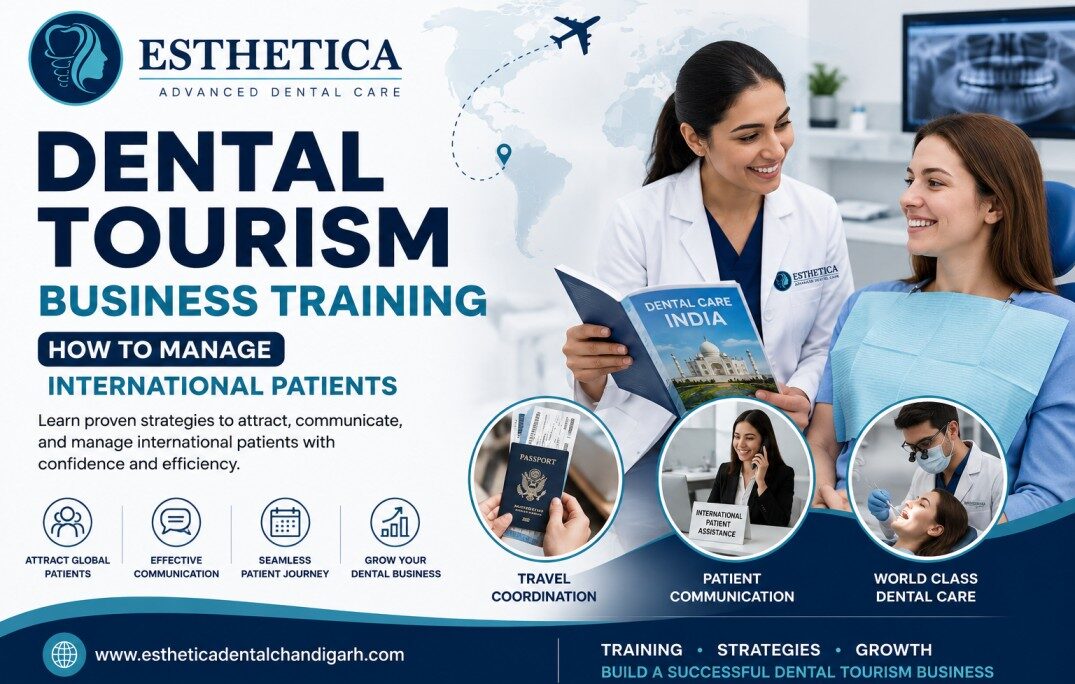
Dental Tourism Business Training
Dental tourism is more than offering treatment to patients from other countries. It involves planning, clear communication, and support throughout every stage of the patient journey. International patients often have limited time because they must coordinate flights, hotels, work, family responsibilities, and appointments. Their experience depends on how effectively a clinic guides them from the first enquiry to the final follow-up.
Dental Tourism Business Training helps dentists, treatment coordinators, receptionists, and clinic staff understand international patient expectations. A well-organized process can build trust, encourage positive reviews, and support long-term relationships.
Why International Patient Management Is Different
International patients may not have flexibility for several unexpected visits. They may travel for only a few days or weeks, making treatment planning especially important.
Patients contact clinics through email, phone calls, WhatsApp, website forms, or video consultations. They may ask about treatment options, costs, appointment schedules, recovery time, and length of stay. A trained team can organize these questions and provide consistent information instead of allowing details to become lost or confused.
Understanding the International Patient Journey
The patient journey begins long before arrival. It usually starts with an enquiry, followed by information gathering, remote consultation, preliminary treatment planning, cost estimation, scheduling, travel, clinical visits, treatment, and post-treatment communication.
Every stage influences patient confidence. A delayed response, conflicting information, or unclear instruction can make a patient question the clinic. Esthetica Dental Tourism can structure its process around this journey. Connecting communication, coordination, scheduling, and follow-up helps patients understand what to expect and gives staff a consistent framework for international cases.
Communicating Clearly With Overseas Patients
Clear communication is one of the most important parts of international patient management. Staff should use respectful, simple language and avoid unnecessary technical terms when explaining appointments, procedures, preparation, or recovery. Important information should also be provided in writing through emails or documents.
If treatment requires multiple visits, the team should explain the purpose of each appointment, expected timing, and likely duration of the stay.
Replies help build confidence and reduce misunderstandings. Staff should know which questions they can answer and when a dentist should provide guidance.
Managing Treatment Plans and Expectations
International patients often arrange travel around their proposed treatment plan. Dentists may review photographs, X-rays, scans, and medical records before arrival to develop preliminary guidance.
However, remote information cannot always replace a clinical examination. Findings after arrival may change the diagnosis, treatment sequence, or recommended procedures. Clinics should explain this possibility before travel so patients understand that preliminary plans are not always final.
Treatment coordinators should avoid promising results or timelines that cannot be guaranteed. They should separate confirmed information from possibilities requiring clinical assessment. Realistic expectations protect patients and help maintain trust throughout treatment.
Organizing Appointments Efficiently
Scheduling international patients requires accuracy. Multiple procedures may need to fit into a limited stay, while laboratory work, healing periods, reviews, or unexpected findings can affect the timetable.
A shared scheduling system can help receptionists, coordinators, dentists, assistants, and laboratories remain aligned. Patients should receive written confirmation containing appointment dates, times, clinic details, preparation instructions, and contact information. If a change becomes necessary, patients should be informed promptly.
The team should understand which procedures can reasonably be completed during one visit and which require additional appointments. Honest scheduling protects the patient’s time and improves clinic efficiency.
Training the Entire Dental Tourism Team
International patient management is not the responsibility of one coordinator. Receptionists, treatment coordinators, dental assistants, finance staff, dentists, and managers can all influence the patient experience.
Training should cover enquiry handling, documentation, appointment coordination, privacy, cultural awareness, cost communication, professional boundaries, and escalation procedures. Team members should know when an issue requires the dentist’s attention rather than attempting to provide clinical answers themselves.
Regular meetings can reveal recurring problems. If patients repeatedly ask the same question, the clinic may need to improve its website, information documents, or consultation process. Training should therefore be ongoing rather than a one-time activity.
Handling Costs With Transparency
Cost is important because treatment is only one part of an international patient’s travel budget. Patients may also pay for flights, accommodation, meals, transportation, and time away from work.
Clinics should provide clear quotations explaining what is included, what may cost extra, payment terms, and circumstances that could affect the final cost. Treatment complexity or additional clinical findings may influence pricing.
Transparent financial communication reduces misunderstandings and gives patients a clearer basis for planning.
Creating a Reliable Follow-Up Process
The relationship with an international patient does not end when the patient leaves the country. Follow-up can be important for recovery guidance, maintenance, medication instructions, and addressing concerns.
Before departure, patients should receive appropriate post-treatment instructions and clear information about whom to contact if questions arise. If additional treatment or monitoring is required after returning home, the clinic should explain the recommended process clearly.
A dependable follow-up system demonstrates that patient care extends beyond the appointment.
Protecting Patient Information
International dental coordination involves personal and clinical information, so privacy should be considered at every stage. Staff should understand how patient records are received, stored, shared, and accessed according to clinic procedures and applicable requirements.
Communication and record-handling processes should use appropriate security measures, with access limited to people who need information for care or coordination. Team members should know how to respond when patients request records, treatment details, invoices, or appointment information.
Esthetica Dental Tourism can include privacy awareness in staff training so team members recognize that professional service includes responsible information handling. Clear procedures help staff respond consistently while reducing confusion and unnecessary exposure of patient information.
Building Trust Through Professional Training
Dental Tourism Business Training helps clinics prepare their teams for the practical challenges of managing international patients. A strong international patient system combines clear communication, realistic treatment planning, organized scheduling, transparent pricing, trained staff, privacy awareness, and reliable post-treatment support. Esthetica Dental Tourism can use these principles to build a patient-focused approach that balances service with professional responsibility.
Consistent systems, regular training, and patient feedback can create a smoother experience for patients and clinic teams.
FAQs
1. What is dental tourism business training?
It trains dental teams to manage international patients, communication, scheduling, treatment coordination, costs, privacy, and follow-up.
2. Why do international patients need coordination?
They often have limited travel time and need treatment appointments and related arrangements organized before arrival.
3. Can treatment be planned before a patient travels?
Preliminary planning may use records, but final treatment decisions may require an in-person clinical examination.
4. How can clinics improve communication?
Use simple language, respond consistently, document important information, and explain appointments, treatment stages, and expectations clearly.
5. How should dental treatment costs be communicated?
Provide clear quotations covering included services, possible additional costs, payment terms, and factors that may change after assessment.
6. Who should receive dental tourism training?
Dentists, treatment coordinators, receptionists, assistants, finance staff, and managers can all benefit from role-specific training.
7. Why is follow-up important after dental treatment?
Follow-up helps patients understand recovery and maintenance while allowing the clinic to address concerns after they return home.