









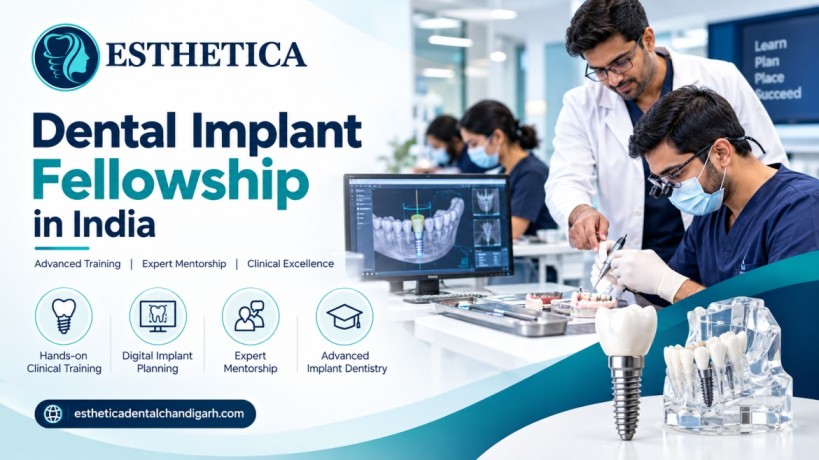
Implant Fellowship for Dentists | Live Surgery Training India
Are you a dentist ready to move beyond textbooks and actually place implants with confidence? A Dental Implant Fellowship in India is quickly becoming the go-to path for BDS graduates and practicing dentists who want real surgical exposure instead of theory-heavy lectures. If you’ve been searching for hands-on Dental Implant Training in India, this guide breaks down what a fellowship really involves, why live surgery training matters, and how to pick the right program for your career goals.
Why Every Dentist Needs Hands-On Implant Training Today
Dental colleges teach the fundamentals, but implantology is a skill you can only master by doing it repeatedly on real patients. That’s exactly why an Implantology Course for Dentists built around live surgeries has become so valuable. Watching a demonstration once is not the same as planning a case, placing the implant yourself, and managing the outcome under expert supervision.
Patients today expect fixed, permanent solutions rather than removable dentures. Dentists who can confidently offer implant treatment simply earn more, retain more patients, and build a stronger reputation. A fellowship gives you that missing clinical exposure fast, often in a matter of months rather than years of trial and error in your own clinic.
What Makes a Dental Implant Fellowship Different from a Regular Course
Most short workshops give you a certificate after a few hours of lecture and maybe one model demonstration. A proper fellowship is structured very differently.
A genuine fellowship program typically includes:
- Multiple live surgeries performed by you, not just observed
- Step-by-step case planning with a mentor reviewing every decision
- Prosthetic training so you understand the full workflow, not just the surgical part
- Small batch sizes so you actually get surgery time, not a crowded room watching one demo case
- A structured curriculum moving from basic to advanced protocols
This is the real difference between a Dental Implant Course in India that just adds a line to your resume and one that actually changes how confidently you treat patients on Monday morning.
Who Should Join an Implant Fellowship
You don’t need years of experience to start. Most fellowship programs are designed for a wide range of dentists, including:
- Fresh BDS graduates who want clinical confidence before starting practice
- General dentists who refer implant cases out and want to keep that revenue in-house
- Dentists preparing for international licensing exams who need documented clinical exposure
- Clinic owners who want to add implantology as an in-house service
- NRI dentists and overseas practitioners looking for affordable, high-quality hands-on training back in India
If you’ve ever hesitated to take on an implant case because you weren’t sure you could handle a complication, that hesitation is exactly what structured live surgery training is meant to remove.
Live Surgery Training: The Real Differentiator
The phrase “live surgery training” gets used loosely, so it’s worth asking pointed questions before you enroll anywhere. Ask how many implants you will personally place, not just observe. Ask whether patients are provided by the academy or whether you need to bring your own. Ask about the mentor-to-student ratio during the actual surgery days.
Programs that genuinely deliver live surgery training usually structure fellowships around a fixed number of surgeries — for example, five surgeries for a foundational track, ten for a fellowship-level program, and fifteen or more for diploma-level training. This surgery-count model gives you a transparent way to compare programs instead of relying on vague marketing language like “extensive hands-on exposure.”
Choosing the Right Dental Implant Training in India
India has become a global hub for affordable, high-quality implant education, attracting not just domestic dentists but also overseas practitioners from Canada, the US, Australia, and the Gulf. When comparing programs, look beyond the course fee and consider these factors:
Faculty experience matters more than flashy marketing. A mentor with over a decade of hands-on implant and full-mouth rehabilitation experience will teach you things no textbook covers — how to handle unexpected bone density, how to manage a patient mid-surgery, and how to plan prosthetics that actually fit.
Case variety is equally important. A fellowship that only exposes you to simple single-tooth cases won’t prepare you for the complex full-arch or All-on-4 cases that pay the most and build the strongest reputation.
Location and facility also matter for logistics. Training centers based in dental hubs like Chandigarh, Mohali, Delhi, or Mumbai typically have a steady patient flow, which directly affects how many real surgeries you’ll get to perform during your fellowship window.
From Basic to Advanced: Understanding the Implantology Ladder
Most well-structured Implantology Course for Dentists programs follow a tiered pathway rather than a single one-size-fits-all course. A typical progression looks like this:
A one-day foundation program introduces case selection and treatment planning basics. A short course with one live surgery lets you witness and assist in a real placement. A basic-to-advanced program with around five surgeries builds genuine hands-on confidence. A fellowship-level program with ten surgeries pushes you toward independent practice readiness. Finally, a diploma or mini-residency track with fifteen to twenty-five surgeries develops true specialist-level skill, including complication management and full-arch rehabilitation.
Choosing where to start on this ladder depends on your current experience. A fresh graduate should not skip straight to advanced full-arch training without first mastering single-implant placement fundamentals.
The Career and Income Impact of Implant Training
Implantology consistently ranks among the highest-earning dental specialties, and for good reason — patients are willing to pay a premium for a permanent, natural-looking solution. Dentists who complete structured Dental Implant Training in India frequently report being able to start offering implant consultations and simple cases within weeks of completing their fellowship, rather than years of hesitant self-teaching.
Beyond direct treatment income, implant skills also open doors to referral partnerships, clinic expansion, and even teaching or mentoring opportunities down the line. It’s a skill that compounds in value the more consistently you apply it.
What to Expect During Your Fellowship Journey
A well-run fellowship generally moves through three phases. First comes the didactic phase, where you cover anatomy, radiographic interpretation, implant systems, and treatment planning principles. Next comes the pre-clinical or simulation phase, where you practice on models before touching a real patient. Finally comes the clinical phase, where you plan, place, and often restore implants on real patients under direct mentor supervision.
Throughout this journey, expect regular case discussions, feedback sessions, and a growing sense of independence as your surgeries progress from closely supervised to nearly autonomous by the final sessions.
Esthetica Advanced Dental Academy: Turning Clinical Confidence Into Practice
If you’re ready to stop referring out implant cases and start placing them yourself, Esthetica Advanced Dental Academy offers a structured, mentorship-driven fellowship pathway designed around real live surgeries rather than passive observation. With experienced faculty, a tiered curriculum from foundation to full-arch mastery, and a facility built for consistent patient flow, it’s designed to take you from clinical hesitation to independent implant practice step by step. If you’re comparing your options for hands-on implant training in India, it’s worth exploring what a genuinely surgery-focused fellowship can do for your career.
A Message from Dr. Sharad Arya, Founder – Esthetica Dental Academy
When I started Esthetica Dental Clinic in 2012, my vision was simple — to combine clinical excellence with genuine patient care. Over the years, as our practice grew across Punjab, Himachal, and Chandigarh, I realized that the biggest gap in Indian dentistry wasn’t a lack of talent, but a lack of accessible, hands-on implant training for practicing dentists.
That’s why we built Esthetica Dental Academy — not as another certificate mill, but as a mentorship-driven program where dentists actually work on live cases, under supervision, until they’re confident enough to do it on their own. I’ve seen BDS graduates walk in unsure of their surgical skills and walk out ready to plan and execute full-arch implant cases independently.
If you’re serious about growing your implant practice, I’d encourage you to invest in training that prioritizes real clinical exposure over theory alone. That’s the philosophy behind everything we teach here.
— Prof. Dr. Sharad Arya, MDS
Every batch we train is small by design, because implant surgery demands individual attention, not a classroom of fifty watching a screen. Whether it’s digital implant planning, guided surgery, or full-arch rehabilitation, we make sure every participant leaves confident enough to apply it in their own practice.
Frequently Asked Questions
What is the duration of a dental implant fellowship in India?
Most fellowship programs run anywhere from a few weeks to six months, depending on the number of surgeries and modules included, with intensive weekend or block formats common for working dentists.
Can Canadian dentists join an implant fellowship in India?
Yes, many international dentists, including those from Canada, join Indian fellowship programs for affordable, high-quality hands-on training, often to build clinical exposure alongside preparing for exams like the NDEB.
Do I need prior implant experience to enroll?
No, most programs are structured in tiers, so fresh graduates can start with foundational courses before progressing to fellowship-level live surgery training.
How many live surgeries will I actually perform?
This varies by program tier, ranging from one demonstration surgery in basic courses to ten or more independent placements in fellowship and diploma-level tracks.
Is the fellowship certificate recognized internationally?
Certificates typically confirm clinical training and participation rather than acting as a statutory qualification, so it’s important to check how a specific certificate is viewed by the licensing board in your target country.
How much does a dental implant fellowship cost in India?
Costs vary widely based on surgery count, duration, and location, but Indian programs are generally significantly more affordable than equivalent hands-on training in North America, Europe, or Australia.
Will this training help me pass the NDEB or ADC exam?
While it’s not exam-specific coaching, structured clinical training strengthens practical skills and case-based understanding, which many candidates find valuable when preparing for international licensing exams.
Ready to Start Placing Implants With Confidence?
The gap between knowing implant theory and actually placing implants confidently only closes through real surgical experience. Whether you’re a fresh graduate or a practicing dentist ready to expand your services, a structured fellowship is the fastest, most reliable way to get there. Explore your options, ask the right questions about live surgery numbers, and take the next step toward a stronger, more confident clinical practice.