







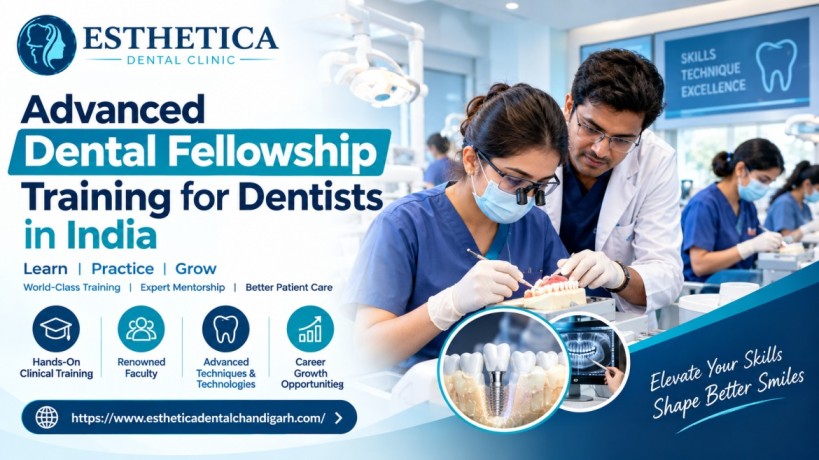
Fellowship in All-on-X Implant Course in India for Dentists
If you have been placing single implants for a while, you have probably met the patient who sits in your chair with a failing lower arch and asks, “Can you fix all of this in one go?” That question is why a Fellowship All-on-X Implant Course India is now one of the most searched topics among general dentists. A good fellowship takes you from single-tooth confidence to full-arch rehabilitation, with real cases, real planning and real prosthetics. In this guide, we walk through what such a course covers, who should join, what to check before paying, and how it can change your practice. We also cover All-on-X dental implant training in India, the All-on-X implantology fellowship format and full mouth implant training for dentists in plain, practical language.
Why Every Growing Implant Practice Is Talking About All-on-X
Full-arch treatment has moved from a rare specialty service to a mainstream request. Patients with loose dentures, advanced gum disease or many missing teeth want fixed teeth that look natural and work well. Dentists who can offer this safely gain trust, referrals and a far more satisfying clinical life.
The concept behind All-on-X is simple. Instead of one implant for every missing tooth, a carefully planned set of implants supports a full-arch bridge. The number of implants can vary, which is why the letter “X” is used. The idea is easy to explain. The execution is not, and that gap is where All-on-X implant training becomes valuable.
What Exactly Is an All-on-X Implantology Fellowship?
Think of a fellowship as a guided journey rather than a one-day lecture. Short workshops give you information. A fellowship gives you repetition, feedback and mentoring over a longer period, so your hands and your judgment both improve.
A proper All-on-X implantology fellowship usually blends three parts:
- Theory sessions that explain bone biology, implant positioning and prosthetic design.
- Hands-on practice on models and, where permitted, supervised clinical exposure.
- Case discussions where you present your own patients and receive honest feedback.
The real value lies in that third part. When someone experienced reviews your treatment plan before surgery, many avoidable mistakes disappear.
Who Should Consider a Fellowship in All-on-X Implants?
Not every dentist needs the same starting point. Here are the groups who benefit most.
Dentists Who Already Place Single Implants
You know the surgical basics, but full-arch cases feel like a big jump. A fellowship fills the gap in planning, angulation and immediate loading.
Prosthodontists and Specialists
You may be strong in prosthetics but want deeper surgical exposure, or the reverse. Cross-skill learning helps you manage the whole case without handing it off.
Younger Dentists Building a Future-Proof Practice
If you are early in your career, learning full-arch protocols now can set you apart in a crowded market.
A Quick Self-Check Before You Join
- Are you comfortable with basic implant surgery and flap handling?
- Do you have access to CBCT imaging for your patients?
- Can you commit time for sessions and follow-up learning?
If you answered yes to most of these, you are probably ready.
Inside the Curriculum: What a Good Course Should Teach You
Curriculum quality varies widely. Use the list below as a benchmark when you compare programs.
Diagnosis and Patient Selection
Not every patient suits full-arch treatment. You learn how to read bone volume, assess medical history, check occlusion and decide who is a good candidate and who needs another path.
Digital Planning and CBCT Interpretation
Modern full mouth implant training for dentists relies on 3D scans and digital planning. You study nerve positions, sinus anatomy and bone density, then plan implant positions before the patient ever sits in your chair.
Surgical Protocols and Implant Placement
This section covers tilted and straight implants, multi-unit abutments, torque values and soft tissue handling. Good teaching shows you why each decision is made, not only how.
Immediate Loading and Provisional Prosthetics
Many patients want teeth on the same day. You learn when immediate loading is appropriate, how to build a strong temporary bridge and how to manage the healing phase.
Final Prosthetic Workflow
The case is not finished at surgery. A long-lasting result depends on bite, hygiene access and material choice, so a strong course spends real time on the final restoration.
Complication Management
Every experienced clinician has faced a surprise. Learning how to handle bleeding, loose implants or fractured temporaries builds calm confidence.
Fellowship vs Short Workshop: Which One Fits You?
Both have a place, but they serve different goals.
- A short workshop suits you if you only want an introduction or a quick refresher.
- A fellowship suits you if you want to treat full-arch patients independently and keep learning through mentoring.
If you are serious about adding full-arch care to your services, the longer, mentored route usually gives better results than a single weekend course.
Seven Things to Check Before You Pay for Any Implant Course
Choosing a program is a career decision, so look carefully.
- Faculty experience. Check that the trainers actually treat full-arch patients regularly.
- Hands-on time. Ask how many hours you personally spend practicing, not watching.
- Group size. Small groups mean more feedback for you.
- Digital tools. Look for CBCT-based planning and guided workflows.
- Case support. Find out whether you can discuss your own patients after the course.
- Clear terms. Read fees, refund policy and certificate details before registering.
- Honest claims. Be careful with programs that promise instant expertise.
On the last point, remember that a training certificate shows participation. It is not a degree or a statutory qualification, and it does not change your registration status. Any honest institute will say so openly. You can read how one academy presents its dental implant and clinical courses to see what clear information looks like.
How an All-on-X Fellowship Can Change Your Practice
The benefits go beyond new skills.
More Confidence in Complex Cases
When you understand the full workflow, you stop avoiding difficult patients. You plan, explain and treat with a clear roadmap.
Better Patient Communication
Patients trust a dentist who can explain each step in simple words. A fellowship teaches you to present options, timelines and expectations honestly.
Stronger Practice Growth
Full-arch care is a high-value, high-trust service. Done well, it brings word-of-mouth referrals and long-term relationships.
Fewer Referrals Out
Instead of sending complex cases elsewhere, you keep them in your own clinic, which improves continuity of care.
Learning From Real Cases, Not Just Slides
Slides explain theory, but cases teach judgment. Reviewing before-and-after results helps you see how planning decisions affect the final smile and function. If you want to understand what finished full-arch work looks like, browse these before and after treatment cases and notice the details of gum shape, tooth proportion and bite.
It also helps to understand the patient side of the story. Reading about full mouth dental implants from a patient’s perspective helps you communicate better, because you learn which questions patients actually ask.
Opportunities for International Dentists
India has become a popular destination for clinical training because of its case volume and variety. Dentists from other countries often look for programs that combine learning with exposure to different patient situations. If you are planning to train from abroad, check this overview of the international dentist training program in India and confirm visa, travel and schedule details early.
Common Mistakes Dentists Make When Starting Full-Arch Work
Knowing the pitfalls saves you time and stress.
- Taking cases that are too complex too early.
- Skipping proper CBCT planning.
- Ignoring the patient’s hygiene ability and long-term maintenance.
- Rushing immediate loading without enough stability.
- Underestimating the importance of the final prosthesis.
A mentored fellowship helps you start with simpler cases and move up gradually, which is a safer path than learning alone.
Frequently Asked Questions
1. What is an All-on-X implant fellowship?
It is a structured, mentored training program that teaches dentists how to plan and place a set of implants supporting a full-arch fixed bridge. It combines theory, practice and case discussion over a longer period than a single workshop.
2. Who can join a fellowship in All-on-X implants in India?
Most programs welcome registered dentists, including general practitioners and specialists. Some prefer that you already have basic implant experience, so check the entry requirements first.
3. How long does an All-on-X implant course take?
Duration differs from one institute to another, from a few days to several months with follow-up learning. Always ask for the full schedule and the amount of hands-on time.
4. Will I become an expert after the course?
A course gives you knowledge and a safe starting point. Expertise grows with careful case selection, practice and continued mentoring over time.
5. Is the certificate a degree or an official qualification?
No. A training or fellowship certificate normally shows participation and skill development only. It is not a degree, diploma or statutory qualification, and it does not change your registration status.
6. Do I need CBCT access to practice full-arch implants?
Yes, 3D imaging is considered essential for safe planning of full-arch cases. You can arrange it in your own clinic or through a nearby imaging center.
7. Can international dentists attend All-on-X training in India?
Yes, many institutes accept overseas participants. Plan your travel, visa and accommodation early, and confirm the exact dates and terms with the organizer.
Your Next Step Toward Confident Full-Arch Care
A fellowship is not about collecting another certificate. It is about building skills that make you a calmer, safer and more capable clinician when a full-arch patient walks in. Compare programs carefully, ask direct questions and choose mentoring over marketing.
Ready to Take the First Step?
Want to talk through your learning goals? Book a consultation and get your questions answered by the team.
For more reading on implants, planning and patient care, visit the dental blog or learn about the clinician behind the training on the Dr. Sharad Arya profile page.
If you are looking for hands-on, mentor-led learning in All-on-X dental implant training in India, Esthetica Dental Academy offers small-group, case-based programs designed to help dentists build real full-arch confidence.
Fellowship in All-on-X Implant Course in India for Dentists
2-Day
Implantology
An intensive introduction for dentists who want to understand the complete implant workflow.
- ✓2 Days intensive training
- ✓Basic implantology concepts
- ✓Surgical kit demonstration
- ✓Hands-on training
- ✓Live implant surgery exposure
- ✓Certificate
Basic to Advanced
Comprehensive clinical training covering implant placement, bone grafting, sinus lift and prosthetic workflows.
- ✓5–7 Days training
- ✓Live patient surgeries
- ✓Implant placement
- ✓Bone grafting
- ✓Sinus lift
- ✓CBCT planning
- ✓Prosthetic workflow
Implant Diploma
Advanced structured training for dentists seeking deeper implant surgery and prosthetic exposure.
- ✓7 Days intensive program
- ✓15 implant procedures
- ✓Advanced surgery
- ✓Bone management
- ✓Sinus lift
- ✓Prosthetic rehabilitation
- ✓Extended mentorship
Customize Your
Course
Need a program designed around your specific clinical requirements? Build a customized implantology training plan with our team.
- ✓Choose your training duration
- ✓Select specific clinical procedures
- ✓Personalized learning objectives
- ✓Hands-on clinical exposure
- ✓Advanced implantology topics
- ✓Individual mentorship options