








Soft Tissue Management for Implants
Dental implants do more than replace missing teeth. Successful implant treatment also depends on the health and appearance of the gum tissue surrounding the implant. Soft Tissue Management for Implants is an important part of modern implant dentistry because healthy gums can support the appearance, comfort, and long-term maintenance of an implant.
For Canadian patients considering dental implants, understanding how the soft tissues are evaluated, protected, shaped, and maintained can make the treatment process easier to understand. Your dentist will consider your gum health, tissue thickness, bone condition, implant position, and overall oral health when developing an individual treatment plan.
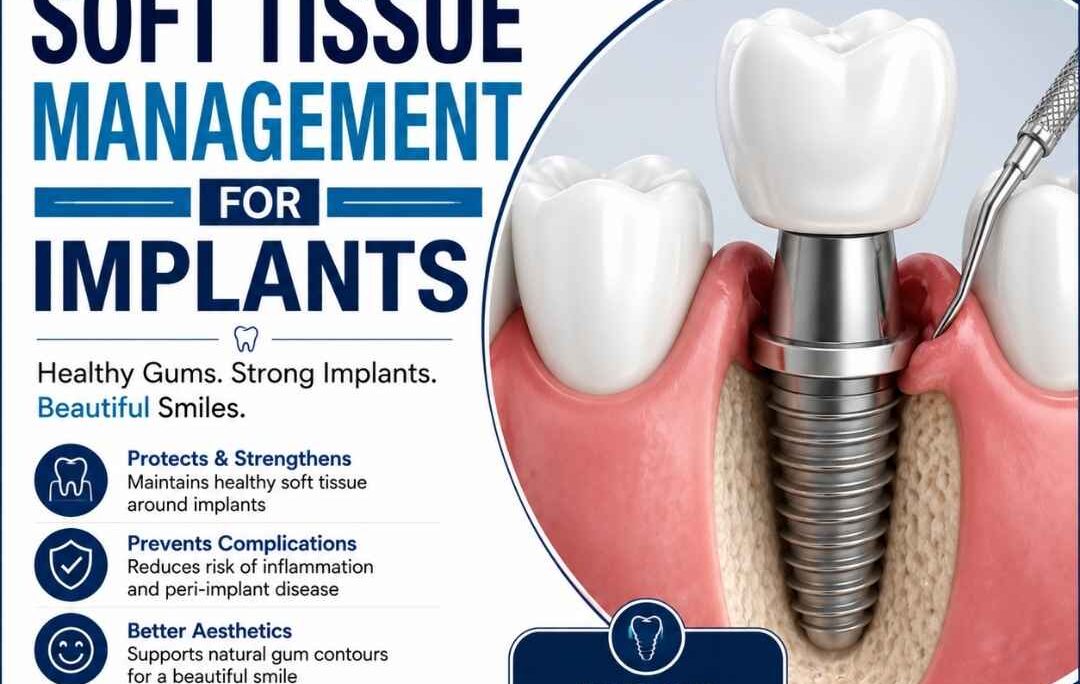
Soft tissue around an implant includes the gums and mucosal tissues that form a protective barrier around the treatment area. Their health and appearance can influence both the function and aesthetics of the final restoration.
Why Soft Tissue Management for Implants Matters
The health of the gums around an implant is an important part of successful implant care. Healthy and stable soft tissue can help create a supportive environment around the restoration while also contributing to a natural-looking smile.
Soft tissue management can be particularly important when an implant replaces a visible front tooth. Changes in gum thickness, gum height, or the position of the gumline may affect how natural the final restoration looks.
For this reason, soft tissue should be considered before, during, and after implant placement. Your dentist or implant specialist can assess your gums and determine whether additional treatment may be beneficial.
The Connection Between Gum Health and Implant Success
Healthy gums help maintain a stable environment around dental implants. Plaque buildup and inflammation can affect the tissues surrounding an implant, which is why good oral hygiene and regular dental care are important.
Patients with existing gum disease may need periodontal treatment before receiving an implant. Treating active inflammation first can help create healthier conditions for the next stage of treatment.
Even after an implant has healed, regular oral hygiene remains essential. While an implant itself cannot develop tooth decay like a natural tooth, the gums and supporting tissues around it can still become inflamed.
What Is the Role of Soft Tissue Around a Dental Implant?
The soft tissue around an implant acts as a protective barrier between the oral environment and the underlying structures. Its health, thickness, position, and overall condition are all considered when planning implant treatment.
Soft tissue also has an important aesthetic role. A well-shaped gumline can help the implant crown blend more naturally with the surrounding teeth.
This becomes especially important when an implant is placed in the front of the mouth, where even small changes in gum contours can be noticeable.
How Tissue Thickness Can Affect Aesthetic Results
Gum thickness varies from person to person. Some patients naturally have thicker gum tissue, while others have thinner or more delicate tissue.
Thin tissue may require additional planning because changes in the underlying structures can sometimes be more visible through the gums.
During your examination, your dentist can evaluate the thickness and condition of the tissue and determine whether additional soft tissue treatment may be appropriate.
How Is Soft Tissue Evaluated Before Implant Treatment?
A thorough assessment should be completed before implant surgery. Your dentist may examine the gums, gum contours, tissue thickness, surrounding teeth, bite, and available bone.
Dental X-rays, digital imaging, or 3D scans may also be recommended. These tools can help the dental team understand the anatomy of the implant site and plan treatment more accurately.
Your medical and dental history is also important. Previous gum disease, tooth loss, trauma, previous surgery, smoking, and existing dental restorations may all influence the treatment plan.
Why Treatment Planning Matters
Good implant planning considers the final restoration before the implant is placed. This approach is often referred to as prosthetically driven implant planning.
The goal is to position the implant in a way that supports both function and aesthetics. The surrounding soft tissue is considered as part of the overall treatment rather than being treated as a separate issue.
Common Soft Tissue Procedures Used With Dental Implants
Not every patient requires a soft tissue procedure. However, additional treatment may sometimes be recommended depending on gum thickness, tissue position, implant location, bone condition, and aesthetic goals.
One commonly used procedure is gum grafting. It involves adding tissue to a specific area to increase tissue thickness or improve soft tissue coverage.
Another option is connective tissue grafting, which may be considered in selected cases where additional tissue support is needed. The most appropriate technique depends on the patient’s individual anatomy and treatment requirements.
Gum Grafting for Dental Implants
Gum grafting may be recommended when additional tissue volume or thickness is needed around an implant. It can be particularly useful in areas where thin tissue may affect aesthetics or provide less soft tissue protection.
The procedure should be carefully planned by a qualified dental professional. Healing time and results can vary depending on the technique used and the patient’s individual health.
A gum graft cannot guarantee a specific cosmetic result. Before treatment, your dentist should explain the expected benefits, limitations, healing process, and possible risks.
Managing the Gum Contour Around an Implant
The shape of the gum around an implant can have a significant effect on the appearance of the final restoration. Ideally, the gum contours should complement the natural gumline of the neighbouring teeth.
Several factors can influence the final gum contour, including implant position, tissue thickness, the temporary restoration, and the design of the final crown.
In some cases, a temporary restoration may be used to gradually guide the soft tissue into a more natural shape before the final crown is placed.
Immediate vs. Delayed Implant Placement
The timing of implant placement can influence soft tissue treatment planning. In selected cases, an implant may be placed at the same appointment as tooth extraction. In other situations, the extraction site may need time to heal before implant placement.
Immediate implant placement may reduce the number of surgical appointments for suitable patients, but it is not appropriate in every case.
The decision between immediate and delayed placement depends on several factors, including infection, bone quality, soft tissue condition, tooth position, and the overall treatment plan.
Soft Tissue Management During Implant Surgery
Careful handling of the gum tissue during implant surgery can support proper healing. The surgical technique should be selected according to the patient’s anatomy and the planned restoration.
The goal is not simply to place an implant. The treatment should also create favourable conditions for long-term function, tissue health, and aesthetics.
Your dental professional may also evaluate the amount and quality of keratinized or attached tissue around the implant. The importance and management of this tissue can vary depending on the individual case.
What Is the Healing Process Like?
Healing is an important part of implant treatment. Depending on the procedure, patients may experience some swelling, tenderness, discomfort, or minor bleeding during the early recovery period.
Your dentist or oral surgeon will provide specific postoperative instructions. These may include recommendations about eating, brushing, rinsing, medications, and activities to avoid during the initial healing period.
Avoid touching or disturbing the surgical area unnecessarily. Follow the recommended oral hygiene instructions carefully while allowing the treated tissues enough time to heal.
When Should You Contact Your Dentist?
Some discomfort after implant surgery can be expected, but unusual or worsening symptoms should not be ignored.
Contact your dentist if you experience severe or increasing pain, significant swelling, persistent bleeding, fever, or any other symptoms that concern you.
Prompt professional assessment can help determine whether healing is progressing normally or whether additional care is required.
How Can You Keep the Soft Tissues Around Implants Healthy?
Good oral hygiene is one of the most important parts of maintaining healthy tissues around an implant. Brush your teeth twice a day and carefully clean around the implant and surrounding gumline.
Depending on your restoration and individual needs, your dentist may recommend floss, interdental brushes, a water flosser, or another cleaning method.
Regular dental appointments are also important. During these visits, your dental team can examine the implant, surrounding gums, bite, crown, and neighbouring teeth.
Lifestyle Habits Also Matter
Smoking and tobacco use can negatively affect oral health and may interfere with healing. If you smoke, discuss this openly with your dental professional before implant treatment.
Maintaining good oral hygiene, attending regular dental examinations, following professional recommendations, and avoiding tobacco can all contribute to better long-term oral health.
What Can Happen If Soft Tissue Is Not Properly Maintained?
Inflammation around an implant can cause changes in the surrounding soft tissues. If inflammation continues, it may eventually affect the deeper supporting structures.
Inflammation limited to the soft tissue around an implant is commonly referred to as peri-implant mucositis. If the condition progresses and involves loss of supporting bone, it may develop into peri-implantitis.
This is why regular dental checkups and good home care are so important. Identifying inflammation early may allow your dental professional to manage the problem before it becomes more advanced.
Why Is Soft Tissue Planning Important for Front Teeth?
Replacing a front tooth requires careful attention to aesthetics because the implant and crown are highly visible.
The shape of the gums, the papillae between the teeth, the crown design, tooth colour, and implant position can all influence the final appearance.
For this reason, soft tissue planning should be an important part of treatment when replacing teeth in the smile zone.
Creating a Natural-Looking Smile
An aesthetic implant should look like a natural part of the overall smile. Ideally, the implant crown should complement the surrounding teeth and gumline rather than appear separate from them.
Achieving this result may require collaboration between the dentist, implant specialist, and dental laboratory. Digital photographs and imaging can also help the treatment team plan and communicate the desired outcome.
Patients should also have realistic expectations. Individual anatomy can influence the final result, and no two implant cases are exactly alike.
How Much Do Soft Tissue Procedures Cost in Canada?
The cost of soft tissue procedures in Canada can vary considerably. Factors may include the type of procedure, number of treatment sites, complexity of the case, dental professional involved, and location of the practice.
For example, the cost of a gum graft may differ from other periodontal procedures. Soft tissue treatment may also be included as part of a larger dental implant treatment plan.
Canadian patients should ask for a detailed treatment estimate and confirm exactly what is included. Insurance coverage can also vary, so it is important to check your individual dental benefits before beginning treatment.
Frequently Asked Questions
1. Why is soft tissue important around dental implants?
Soft tissue helps protect the area around a dental implant and contributes to the health and appearance of the gumline. Maintaining healthy tissue is an important part of long-term implant care.
2. What is a gum graft for dental implants?
A gum graft is a procedure used to add or increase soft tissue in a specific area. It may be recommended when additional tissue thickness or coverage is needed around an implant.
3. Is soft tissue surgery always required for dental implants?
No. Many patients can receive dental implants without additional soft tissue surgery. The need depends on factors such as gum thickness, tissue position, implant location, and aesthetic requirements.
4. How long does gum tissue take to heal after implant surgery?
Healing time varies depending on the procedure and the individual patient. Your dental professional will explain the expected healing period and provide specific postoperative care instructions.
5. Can gum recession happen around dental implants?
Yes. Changes in the gumline can occur around implants. The risk may be influenced by factors such as tissue thickness, implant position, inflammation, oral hygiene, and individual anatomy.
6. How can I keep my gums healthy around an implant?
Brush twice a day, clean carefully around the implant, follow your dentist’s maintenance recommendations, and attend regular dental appointments. Avoiding tobacco can also support better oral health.
7. What is peri-implantitis?
Peri-implantitis is an inflammatory condition affecting the tissues around a dental implant and is associated with loss of supporting bone. Regular professional monitoring and good oral hygiene can help reduce the risk of implant-related complications.
Conclusion
Effective Soft Tissue Management for Implants involves careful planning, healthy gums, appropriate surgical techniques, proper healing, and ongoing maintenance. Canadian patients considering dental implants should discuss gum health, tissue thickness, aesthetic expectations, treatment options, and aftercare with a qualified dental professional. Because every patient has different anatomy and oral health needs, a personalized examination is essential for developing an appropriate treatment plan.