



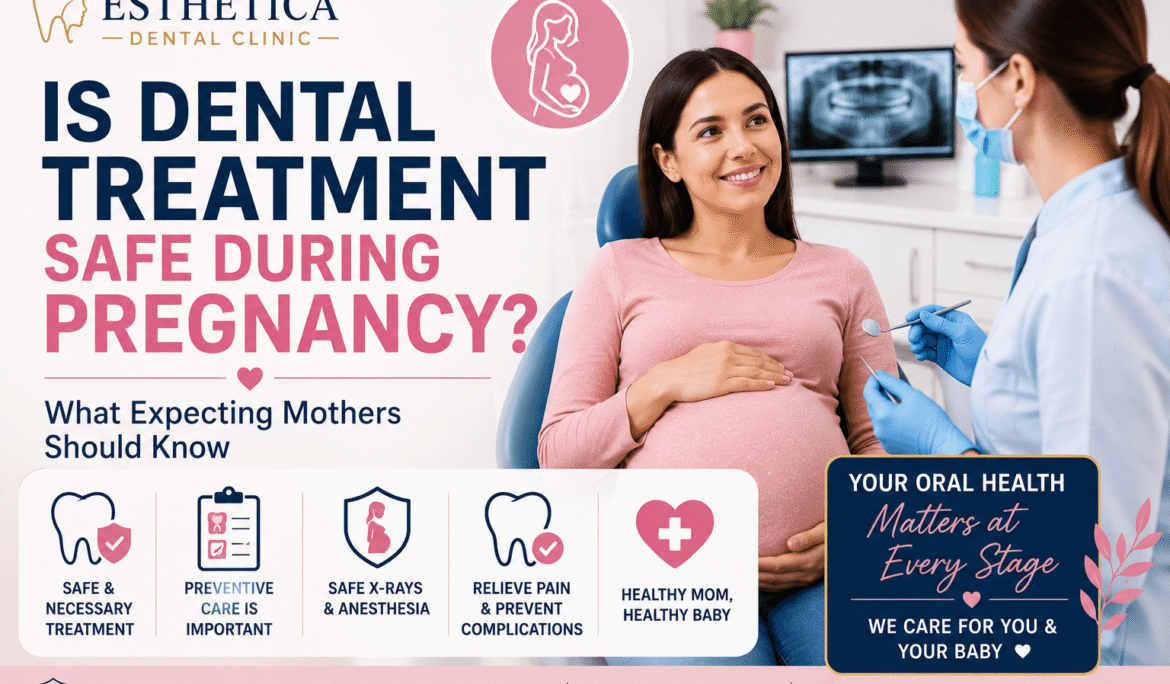
Is Dental Treatment Safe During Pregnancy? What Expecting Mothers Should Know
Pregnancy brings many changes to your body—including changes that can affect your teeth and gums. Hormonal changes may make the gums more sensitive, while nausea, vomiting, dietary changes, or dry mouth can increase the risk of certain oral health problems.
This often leads to an important question:
Is it safe to visit the dentist during pregnancy?
In most cases, yes. According to the American Dental Association (ADA), preventive, diagnostic, and restorative dental care can be safely provided during pregnancy. Emergency dental treatments such as fillings, root canals, and extractions can also be performed when clinically necessary. Delaying needed treatment can sometimes allow a dental problem to become more complicated.
At Esthetica Dental Clinic, we believe pregnant patients should receive appropriate dental care while keeping their pregnancy and overall health in mind. Treatment should always be planned individually, with your dentist and, when appropriate, your obstetrician working together.
Why Is Dental Care Important During Pregnancy?
Pregnancy can affect your oral health in several ways.
Hormonal changes may contribute to:
Swollen or tender gums
Pregnancy gingivitis
Gum bleeding
Increased plaque sensitivity
Changes in saliva
Greater susceptibility to dental problems in some patients
Morning sickness and frequent vomiting can also expose teeth to stomach acid, potentially contributing to enamel erosion.
Maintaining good oral hygiene and addressing dental problems early can help prevent discomfort and more extensive treatment later.
Is Dental Treatment Safe in the First Trimester?
Routine dental care can generally be provided during the first trimester when it is needed. The ADA states that preventive, diagnostic, and restorative dental treatment is safe throughout pregnancy.
However, pregnancy is different for every patient.
If you are in your first trimester, tell your dentist that you are pregnant and provide information about your pregnancy and any medications you are taking. Your dentist can then determine which treatment is appropriate and whether anything should be modified.
For non-urgent elective procedures, your dental team may choose to discuss timing with you and your obstetrician.
What About Dental Treatment During the Second Trimester?
The second trimester is often a comfortable period for many pregnant patients to receive necessary dental care.
Depending on your individual condition, your dentist may provide:
Dental examinations
Professional cleaning
Fillings
Treatment for gum disease
Root canal treatment when necessary
Other clinically indicated restorative procedures
The treatment should be based on your oral health needs rather than assuming that all dental procedures should automatically be postponed until after delivery.
Can You Visit the Dentist During the Third Trimester?
Yes, necessary dental care can still be provided during the third trimester.
However, your comfort becomes especially important as pregnancy progresses. Sitting in one position for a prolonged period may be uncomfortable, and your dentist may make adjustments to positioning and appointment duration.
For non-urgent elective treatment, your dentist may recommend postponing treatment until after delivery when appropriate.
If you have pain, swelling, infection, or another urgent dental problem, do not simply ignore it because you are pregnant. Speak with your dentist about the safest treatment approach.
Are Dental X-Rays Safe During Pregnancy?
This is one of the most common concerns among expecting mothers.
The ADA states that dental radiographs can be safely used during pregnancy when they are clinically necessary. Current recommendations emphasize that X-rays should be justified by the diagnostic need and that exposure should be kept as low as reasonably achievable.
Modern dental imaging uses very low radiation doses, and dental X-rays are directed at the area being examined rather than the abdomen.
The important principle is not to take unnecessary X-rays, but also not to avoid clinically necessary imaging when it is needed to diagnose or treat a dental problem.
If you are pregnant or think you may be pregnant, always tell your dental team before imaging.
Is Local Anesthesia Safe During Pregnancy?
Local anesthesia may be used when dental treatment requires it.
The ADA notes that local anesthetics, including commonly used agents with or without epinephrine, may be used during pregnancy.
Your dentist will select the appropriate anesthetic and dosage based on your treatment needs and medical circumstances.
Never hesitate to tell your dentist about your pregnancy before receiving anesthesia.
What About Dental Medicines During Pregnancy?
Medication selection requires individual consideration.
If you need antibiotics, pain medication, or another prescription following dental treatment, your dentist should know that you are pregnant and should consider your pregnancy when selecting medication.
Some antibiotics are considered appropriate for use during pregnancy, but medication should never be self-prescribed.
Always:
Tell your dentist how far along you are
Provide a list of your current medications
Tell your dentist about allergies
Inform your obstetrician about significant dental treatment when appropriate
Take medication only as directed by your healthcare professional
What About Nitrous Oxide or Dental Sedation?
Nitrous oxide requires special consideration during pregnancy. The ADA recommends that pregnant patients avoid exposure to nitrous oxide because of potential fetal risk.
If you are anxious about dental treatment, tell your dentist. Your dental team can discuss appropriate ways to make the appointment more comfortable while considering your pregnancy.
Do not assume that a sedation option is suitable simply because it is routinely used for other patients.
Which Dental Treatments Can Be Done During Pregnancy?
Depending on your condition and the advice of your dental and medical team, clinically necessary treatment may include:
Dental Cleaning
Professional cleaning and preventive dental care are important during pregnancy, particularly if you experience gum bleeding or inflammation.
Fillings
Untreated cavities do not necessarily become safer simply because you are pregnant. Necessary restorative treatment can be performed during pregnancy.
Root Canal Treatment
If a tooth is infected or severely inflamed, delaying treatment may allow the problem to worsen. Root canal treatment can be performed when clinically indicated.
Treatment for Gum Disease
Pregnancy-related hormonal changes can make gums more sensitive. Appropriate periodontal care can help manage gum inflammation and maintain oral health.
Dental Extractions
An extraction may be necessary when a tooth cannot be saved or when an infection requires treatment. Emergency extractions can be performed during pregnancy when clinically indicated.
What Dental Treatments Are Usually Postponed?
Not every dental procedure needs to be performed during pregnancy.
If treatment is purely elective and there is no immediate dental health concern, your dentist may discuss postponing it until after delivery.
Examples may include certain:
Cosmetic procedures
Elective smile enhancements
Non-urgent extensive dental rehabilitation
Procedures involving medications or sedation that are not appropriate during pregnancy
The decision depends on the procedure, your pregnancy, your oral health, and your healthcare team’s recommendations.
Tips for Maintaining Healthy Teeth During Pregnancy
Good home care becomes particularly important during pregnancy.
Brush Twice a Day
Use a fluoride toothpaste and a soft-bristled toothbrush.
Clean Between Your Teeth
Floss or use an appropriate interdental cleaning method regularly to reduce plaque buildup.
Manage Morning Sickness
If vomiting occurs, rinse your mouth with water afterward rather than brushing immediately. This can help reduce the effect of acid on softened enamel.
Maintain a Balanced Diet
Choose nutritious foods and limit frequent sugary snacks and drinks.
Stay Hydrated
Drinking water regularly can help when pregnancy-related dry mouth occurs.
Keep Dental Appointments
Do not avoid routine dental check-ups simply because you are pregnant.
When Should a Pregnant Woman See a Dentist Immediately?
Contact your dentist promptly if you experience:
Severe toothache
Facial or gum swelling
Dental infection
Fever associated with a dental problem
Bleeding that concerns you
A broken or damaged tooth
Difficulty swallowing
Significant trauma to the mouth
A dental infection should not simply be ignored during pregnancy. Appropriate treatment can often be provided safely when medically necessary.
Benefits of Getting Appropriate Dental Care During Pregnancy
Early diagnosis can help prevent minor problems from developing into more complicated conditions.
Helps Manage Gum Problems
Pregnancy can increase gum sensitivity and inflammation, making professional dental care valuable.
Provides Relief From Dental Pain
Necessary treatment can address pain rather than leaving you uncomfortable throughout pregnancy.
Supports Good Oral Hygiene
Professional guidance can help you maintain healthy teeth and gums during pregnancy.
Reduces the Risk of Delaying Necessary Care
The ADA and ACOG support providing necessary oral healthcare during pregnancy rather than automatically postponing treatment.
Frequently Asked Questions
Can I go to the dentist while pregnant?
Yes. Routine preventive, diagnostic, and restorative dental care can generally be provided during pregnancy.
Is dental cleaning safe during pregnancy?
Yes. Preventive dental care and professional cleaning are considered safe during pregnancy and can be particularly helpful if you are experiencing gum inflammation.
Can I have a cavity filled while pregnant?
Yes, when treatment is clinically necessary. Your dentist will consider your pregnancy and overall health when planning treatment.
Can I have a root canal during pregnancy?
Yes, a root canal can be performed when clinically necessary. Delaying treatment for an infected or severely inflamed tooth may allow the problem to become more complicated.
Are dental X-rays safe during pregnancy?
Dental X-rays can be used when clinically necessary. Current ADA guidance emphasizes appropriate patient selection and minimizing unnecessary radiation exposure.
Is local anesthesia safe during pregnancy?
The ADA states that local anesthetics may be used during pregnancy. Your dentist will choose the appropriate medication and dose for your circumstances.
Can I get my wisdom tooth removed during pregnancy?
If a wisdom tooth is causing significant pain, infection, or another urgent problem, extraction may be considered during pregnancy. Your dentist will evaluate the situation and determine the safest approach.
Should I tell my dentist that I am pregnant?
Absolutely. Tell your dentist if you are pregnant or think you may be pregnant. Also provide information about your stage of pregnancy, medications, allergies, and any pregnancy-related medical concerns.
Can I get cosmetic dental treatment during pregnancy?
Elective cosmetic procedures may be better postponed depending on the treatment and medications or sedation involved. Discuss your specific procedure with your dentist before proceeding.
Pregnancy & Dental Care at Esthetica Dental Clinic
At Esthetica Dental Clinic, we understand that pregnancy requires extra attention to your comfort, medical history, and treatment needs.
Our dental team can assess your oral health and help determine whether treatment is necessary now or whether a procedure can safely wait until after delivery.
If you are experiencing tooth pain, gum swelling, bleeding, sensitivity, a broken tooth, or another dental concern during pregnancy, do not ignore the symptoms.
Book a Consultation
Contact Esthetica Dental Clinic to discuss your dental concern and pregnancy before starting treatment.
📞 Call / WhatsApp: +91 9817230279
📧 Email: contact@estheticadentalchandigarh.com
Esthetica Dental Clinic
Mohali, Punjab, India
Important Note
This article is for general educational information and does not replace advice from your dentist, obstetrician, or other healthcare professional. Every pregnancy is different. Your dental treatment should be planned according to your individual medical and dental circumstances.