








Implant Fellowship for Foreign Dentists in India: Your Complete Guide to Hands-On Implant Training
Implant dentistry is one of the fastest-growing areas of modern practice, and many dentists abroad feel stuck because they cannot find enough real surgical exposure. An implant fellowship for foreign dentists India offers a practical answer. Programs here are built around live patients and close mentorship, not slides alone. If you are comparing a dental implant fellowship India with options back home, this guide explains what to expect. It also covers the implantology fellowship for foreign dentists pathway and how a dental fellowship in India for foreign dentists can fit into your career plans.
Why Are So Many International Dentists Looking Toward India for Implant Training?
The first reason is patient volume. India has a very large patient population, and many people need tooth replacement. Training centers see a wide range of cases in a short time, from single missing teeth to complex full mouth rehabilitation. That variety is hard to find in smaller markets, where a trainee may see only a handful of implant cases in a month.
The second reason is cost. Training, accommodation and living expenses are often lower than in North America, Europe or Australia. Many dentists find they can complete an intensive course in India for the price of a single weekend seminar elsewhere. That does not mean quality should be ignored. It means the budget goes further when you choose carefully.
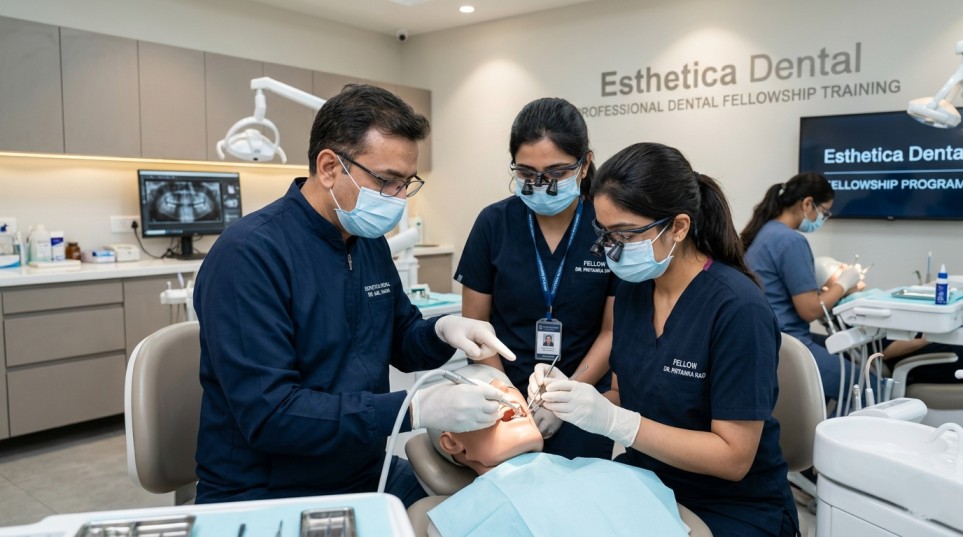
The third reason is mentorship. Clinician-led programs let you stand beside the surgeon, ask questions in the moment and see how decisions are made on the chair. That is very different from watching a recorded procedure on a screen.
What Exactly Is a Dental Implant Fellowship?
A fellowship is a structured, short-term training program that goes deeper than a one-day workshop. It usually blends theory, treatment planning, model practice and supervised work on patients. Participants move step by step from basic concepts to more demanding surgical and prosthetic steps.
Most fellowships also include case discussions. You bring a scenario, the faculty reviews it, and the group talks through options. This habit of planning before drilling is what separates a confident implant dentist from someone who simply knows the steps.
One honest point worth knowing: a fellowship is continuing professional development. It is not the same as a university degree or a government-recognized specialty qualification. Treat it as a skills upgrade, and always ask exactly what the certificate represents.
Is This Fellowship Right for You? Check Who Benefits Most
This kind of training suits several types of dentists. A recent graduate who studied implants only in theory can gain a first taste of real surgery. A general dentist who refers every implant case to a specialist can learn to keep that work in the practice. An experienced clinician placing a few implants a year can sharpen planning and handle harder cases.
It can also help dentists preparing to relocate, since exposure to varied cases builds confidence for future clinical work. If you already place implants but feel uneasy with bone grafting, sinus issues or immediate loading, a focused program can fill those gaps.
If you have never held a handpiece, start with a basic foundation course first. A good program will tell you honestly which level suits you rather than selling the biggest package.
What Will You Actually Learn During an Implantology Fellowship?
The curriculum usually starts with diagnosis. You learn to read radiographs and CBCT scans, judge bone quality and decide whether a patient is a good candidate. Many failures begin at this stage, so strong programs spend real time on it.
Next comes surgical technique. Topics often include flap design, drilling sequences, implant placement, suturing and managing bleeding. You also study complications, such as nerve proximity, poor primary stability and infection, and how to respond calmly.
The prosthetic side matters just as much. Impressions, abutment selection, temporary teeth and final restorations decide whether a patient is happy two years later. Advanced modules may cover immediate loading, tilted implants, full arch protocols and overdentures for patients who need an affordable option.
Why Live Surgery Experience Changes Everything
Practicing on models teaches your hands the motions. Live surgery teaches your judgment. Real tissue bleeds, patients move, and anatomy never looks like a textbook picture. Seeing how an experienced surgeon adapts in those moments is where much of the learning happens.
Before you enrol, ask exactly how hands-on the program is. Will you only observe, or will you place implants yourself under supervision? How many surgeries are included, and how are they assigned? A clear, specific answer is a good sign. A vague one deserves more questions.
Remember that working on patients carries legal and ethical conditions, including consent and the scope of what visiting dentists may do. A trustworthy program explains these rules openly instead of avoiding the topic.
Understanding the Cost Advantage Without Falling for Hype
Prices vary widely depending on duration, number of surgeries and facilities included. Rather than chasing the lowest fee, compare what each package actually contains. Does the fee cover materials, implant systems, model kits and prosthetic work, or are those extras?
Be careful with heavy discounts and countdown offers. A genuine promotion is fine, but you should still receive the full course outline, schedule and refund terms in writing before paying anything. Many institutes treat registration fees as non-refundable, so read that clause closely.
Add travel, accommodation, local transport and food to your budget. Staying close to the training center saves time and tiredness, which matters when you are learning surgical skills all day.
What to Check Before You Book Your Flight
Start with legality and paperwork. Visiting India for training usually requires the right visa category, and rules can change. Confirm the correct option with the Indian embassy or consulate in your country instead of relying on a training center’s summary alone.
Next, look into your home country’s rules. If you plan to use this training toward practice abroad, find out how your dental board views short courses. Many boards care about licensing exams and recognized qualifications more than certificates from private programs.
Finally, verify the faculty. Look for clinicians who actively treat patients and can show real case records. Ask to speak with past international participants, and check independent reviews, not only the testimonials on the institute’s own site.
How to Choose the Right Program for Your Goals
Begin by defining what you want. If your aim is to place simple single implants safely, a shorter program with a few supervised surgeries may be enough. If you want to handle full arch cases, you will need a longer path with more cases and more prosthetic training.
Compare class size too. Smaller groups mean more chair time for each participant. A course with dozens of trainees sharing a handful of patients can leave you watching more than doing.
Also ask about follow-up support. The best programs do not disappear after the certificate. They let you send cases, ask questions later and stay connected with a community of dentists who face the same challenges.
What a Typical Journey Looks Like, From Enquiry to Certificate
It usually begins with an enquiry, where you share your experience and goals. A good team will suggest the right level and send a detailed schedule. After that, you confirm dates, handle the booking amount and arrange travel and your visa.
On arrival, the first sessions often cover orientation, treatment planning and model work. Then come observed and supervised surgeries, with daily feedback. Towards the end, you review your cases, discuss mistakes and plan how to apply what you learned at home.
Many dentists say the real change shows up weeks later, when they face their first implant case back in their own clinic. If you took notes, photos and planning templates, that moment feels far less stressful.
Frequently Asked Questions About Implant Fellowships in India
1. Can foreign dentists join a dental implant fellowship in India?
Yes, many training centers welcome international dentists. You will need to hold a valid dental degree, and you should confirm visa requirements and the scope of hands-on work with the institute before travelling.
2. How long does an implantology fellowship take?
Duration depends on the program. Some are intensive courses of a few days, while others stretch across several modules or weeks. Longer programs generally include more supervised surgeries and prosthetic training.
3. Will I place implants on real patients?
Many fellowships include live surgery, but the level of participation varies. Ask whether you will observe, assist or place implants yourself, and how consent and supervision are handled.
4. Is the fellowship certificate valid in my home country?
Usually, it serves as proof of continuing education, not a licence or specialty degree. Check with your national dental board to see how they treat such certificates.
5. How much does a dental fellowship in India cost for foreign dentists?
Fees differ by program length, number of surgeries and included materials. Request a written breakdown, and add accommodation, travel and visa costs to your total budget.
6. Do I need prior implant experience?
Not always. Beginner-level courses exist for dentists new to implants. If you are already experienced, you can look for advanced modules covering full arch, grafting or complex planning.
7. What should I look for when choosing a training center?
Look for practising clinicians, clear course outlines, small groups, written terms and genuine reviews from past international participants. Be cautious about promises of guaranteed income or instant expertise.
Take the Next Step Toward Confident Implant Dentistry
Choosing where to learn implants is a big decision, and it deserves patience. Compare programs, ask direct questions and focus on real hands-on exposure over flashy marketing. If you want guidance from clinicians who work with patients every day, Esthetica Advanced Dental Academy offers implant training pathways built around live cases and personal mentorship, so you can reach out, discuss your goals and find the level that fits you.
2-Day
Implantology
An intensive introduction for dentists who want to understand the complete implant workflow.
- ✓2 Days intensive training
- ✓Basic implantology concepts
- ✓Surgical kit demonstration
- ✓Hands-on training
- ✓Live implant surgery exposure
- ✓Certificate
Basic to Advanced
Comprehensive clinical training covering implant placement, bone grafting, sinus lift and prosthetic workflows.
- ✓5–7 Days training
- ✓Live patient surgeries
- ✓Implant placement
- ✓Bone grafting
- ✓Sinus lift
- ✓CBCT planning
- ✓Prosthetic workflow
Implant Diploma
Advanced structured training for dentists seeking deeper implant surgery and prosthetic exposure.
- ✓7 Days intensive program
- ✓15 implant procedures
- ✓Advanced surgery
- ✓Bone management
- ✓Sinus lift
- ✓Prosthetic rehabilitation
- ✓Extended mentorship
Customize Your
Course
Need a program designed around your specific clinical requirements? Build a customized implantology training plan with our team.
- ✓Choose your training duration
- ✓Select specific clinical procedures
- ✓Personalized learning objectives
- ✓Hands-on clinical exposure
- ✓Advanced implantology topics
- ✓Individual mentorship options