








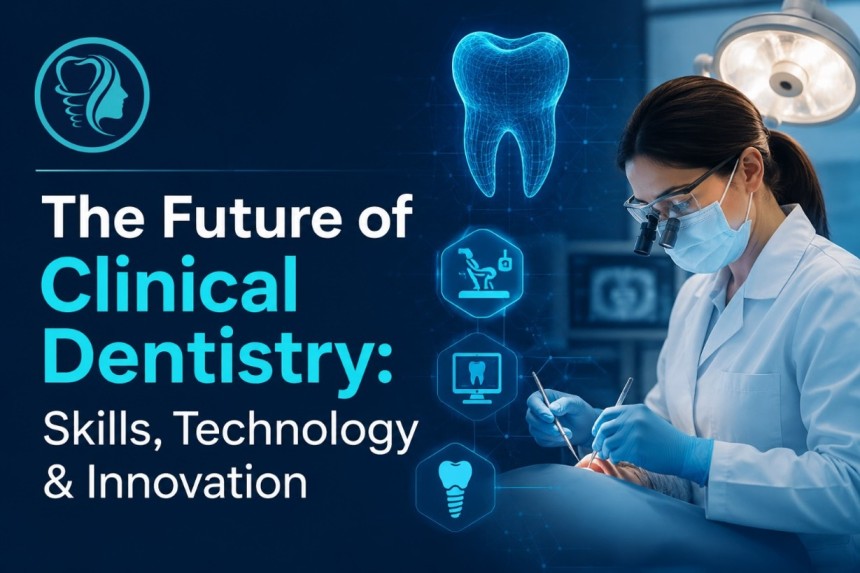
Future of Clinical Dentistry Skills Technology And Innovation
Clinical dentistry is changing quickly. Future-ready dental skills now involve more than learning individual procedures. Dentists need clinical judgment, practical confidence, digital awareness, communication abilities, and a willingness to keep learning as techniques evolve. Esthetica Dental Academy focuses on practical education that connects academic knowledge with clinical skills through hands-on learning, mentorship, digital dentistry, and contemporary treatment planning.
Emerging Trends Are Changing Clinical Dental Practice
The role of a dentist is moving beyond procedures. Patients are increasingly informed and often expect clear explanations, comfortable experiences, and predictable outcomes. Modern clinicians therefore need to consider diagnosis, treatment planning, aesthetics, restorative dentistry, communication, and technology together.
This environment gives dentists an opportunity to use technology intelligently. New tools are most valuable when combined with sound judgment and an understanding of patient needs.
Bridging the Gap Between Knowledge and Confidence
Dental education provides an important theoretical foundation, but theoretical knowledge does not always translate into confidence during clinical practice. Dentists may understand a procedure yet feel uncertain when selecting cases, adapting techniques, or managing unexpected situations.
Clinical exposure can help close this gap. Discussions, demonstrations, simulations, supervised practice, repeated experience, and feedback allow dentists to understand how knowledge works in real situations. Esthetica Dental Academy uses practical learning to support competency through procedures, demonstrations, discussions, simulations, and supervised clinical exposure.
Hands-on learning also encourages practical questions. Experienced professionals can explain details that textbooks may not cover, including case selection, communication, and treatment sequencing.
Digital Dentistry Is Becoming Part of Everyday Care
Digital dentistry is reshaping modern practice. Intraoral scanning, dental photography, digital design concepts, and computer-assisted technologies can support diagnosis, documentation, treatment planning, and communication.
Dentists need to understand where technology genuinely improves a clinical process. Digital scans can support records and communication, while computer-assisted design can help clinicians visualize proposed outcomes.
Digital workflows can make information easier to organize and share. Understanding these tools is an important part of professional growth.
Artificial Intelligence and the Human Role in Dentistry
Artificial intelligence is becoming relevant to dental practice. AI-assisted systems may support documentation, image analysis, and treatment planning. These developments can improve workflows, but they do not remove professional responsibility.
Dentists must understand the possibilities and limitations of automated systems. Clinical decisions should remain connected to professional expertise, patient circumstances, and appropriate judgment. Technology should supplement a dentist’s skills rather than replace critical thinking.
Future-ready clinicians need digital literacy alongside clinical competence and ethical awareness.
Why Hands-On Experience Matters
Dentistry is a practical profession, and competence develops through observing, practicing, and receiving feedback. Demonstrations, phantom-head exercises, simulations, case discussions, and supervised clinical practice can turn theoretical concepts into practical understanding.
Repeated practice helps dentists become comfortable with procedures and decision-making while learning to adapt their approach to each case.
Mentorship adds another important layer. Guidance from experienced professionals can help dentists understand clinical reasoning and develop greater confidence when approaching unfamiliar situations.
Comprehensive Treatment Planning for Modern Dentistry
Future-ready dentists need to look at the whole patient rather than focusing on one isolated tooth. Comprehensive treatment planning considers different aspects of care and how they influence one another.
A patient may require restorative, endodontic, periodontal, orthodontic, implant, or aesthetic treatment. Each option has indications, contraindications, advantages, disadvantages, functional considerations, aesthetic implications, and financial consequences.
Good treatment planning also considers patient expectations. Understanding priorities, budget, comfort, and long-term goals can help clinicians create a plan that is clinically appropriate and realistic.
Skills That Will Shape the Future Dentist
Technical skills remain essential, but future dentists need broader competencies. Diagnosis and treatment planning, minimally invasive dentistry, digital workflows, implant-related knowledge, restorative dentistry, dental aesthetics, photography, and communication are valuable areas for professional development.
Patient communication matters. Patients want to understand diagnosis, treatment choices, costs, outcomes, and maintenance. Clear explanations can build stronger relationships.
Continuing education is equally important. Graduation should be viewed as the beginning of professional development, not the end of learning throughout their professional journey.
The Value of Mentorship in Clinical Development
Mentorship can make learning more structured and practical. Instead of trying to understand every clinical challenge alone, dentists can learn through guided discussions, supervised procedures, and feedback.
Esthetica Dental Academy uses mentorship-based learning to help dental professionals develop practical skills and confidence. Effective mentorship should help dentists gradually build knowledge, judgment, and confidence for independent practice.
A supportive mentor can encourage questions and honest discussion, making uncertainty an opportunity for improvement.
Building a Connected and Ethical Dental Profession
Modern dentistry is increasingly connected. Online education and professional communities give dentists more opportunities to exchange ideas and learn.
Innovation should always be balanced with ethics and professionalism. New technologies and treatment methods should be adopted responsibly and used when appropriate for the patient.
Being future-ready does not mean chasing every trend. It means understanding new developments, evaluating their relevance, and using them thoughtfully.
Choosing the Right Clinical Learning Environment
Dental training programs can differ significantly in their approach. Dentists should ask whether a program provides practical exposure, mentorship, case discussions, updated knowledge, and opportunities to develop clinical skills.
A strong learning environment should move from fundamentals toward advanced concepts and provide structured guidance.
For professional growth, learning quality matters more than collecting certificates. Skills become valuable when applied confidently and responsibly.
Preparing for the Future Starts Today
The future today belongs to professionals who remain curious and adaptable. Technology will continue to develop, but diagnosis, reasoning, planning, communication, and patient-centered care will remain essential.
Esthetica Dental Academy combines practical knowledge, mentorship, digital dentistry, and contemporary treatment planning to support dentists who want to strengthen their clinical abilities. A future-focused approach encourages practical competence alongside theoretical understanding.
Frequently Asked Questions
1. What skills will future dentists need?
Future dentists will need clinical reasoning, treatment planning, digital dentistry, communication, aesthetics, restorative skills, and continuous learning abilities.
2. Why is hands-on training important in dentistry?
Hands-on training helps dentists develop practical skills, understand procedures, gain experience, and build confidence through guided practice.
3. How is digital technology changing dentistry?
Digital technology can support scanning, diagnosis, documentation, treatment planning, communication, and restorative workflows.
4. Will artificial intelligence replace dentists?
AI may support selected dental tasks, but professional judgment, decision-making, communication, and patient responsibility remain essential.
5. Is digital dentistry useful for general dentists?
Yes. Digital knowledge can help general dentists improve communication, documentation, planning, and selected treatment workflows.
6. Why should dentists continue learning after graduation?
Dentistry continually evolves, so ongoing education helps professionals develop knowledge, skills, and awareness of new technologies.
7. How can dentists build clinical confidence?
Dentists can develop confidence through hands-on practice, mentorship, supervised exposure, case discussions, repetition, and constructive feedback.
A Message from Dr. Sharad Arya, Founder – Esthetica Dental Academy
When I started Esthetica Dental Clinic in 2012, my vision was simple — to combine clinical excellence with genuine patient care. Over the years, as our practice grew across Punjab, Himachal, and Chandigarh, I realized that the biggest gap in Indian dentistry wasn’t a lack of talent, but a lack of accessible, hands-on implant training for practicing dentists.
That’s why we built Esthetica Dental Academy — not as another certificate mill, but as a mentorship-driven program where dentists actually work on live cases, under supervision, until they’re confident enough to do it on their own. I’ve seen BDS graduates walk in unsure of their surgical skills and walk out ready to plan and execute full-arch implant cases independently.
If you’re serious about growing your implant practice, I’d encourage you to invest in training that prioritizes real clinical exposure over theory alone. That’s the philosophy behind everything we teach here.
— Prof. Dr. Sharad Arya, MDS
Every batch we train is small by design, because implant surgery demands individual attention, not a classroom of fifty watching a screen. Whether it’s digital implant planning, guided surgery, or full-arch rehabilitation, we make sure every participant leaves confident enough to apply it in their own practice.
Final Thought
The future of clinical dentistry is not simply about adopting more technology. It is about combining innovation with practical skills, thoughtful treatment planning, communication, ethics, and continuous professional development. Dentists who remain open to learning can adapt confidently as the profession evolves. Strong clinicians will understand new tools without losing sight of the human side of dentistry. Building practical competence today can prepare dental professionals to deliver thoughtful, responsible, and patient-focused care tomorrow.