







Full Mouth Rehabilitation Course in India | Live Case Training
Every dentist reaches a point where simple fillings and single crowns no longer feel like enough. Patients arrive with worn, missing or failing teeth across the whole mouth, and they expect one confident plan. A full mouth rehabilitation course in India gives you the structured knowledge to deliver that plan. In this guide, you will learn what such a course covers, why live case training matters, who should join, and how to choose a program that truly builds clinical skill.
What Is Full Mouth Rehabilitation, and Why Should Every Dentist Care?
Full mouth rehabilitation is the process of restoring all the teeth in both jaws so that they work, look and feel right together. It combines several fields, including implantology, prosthodontics, occlusion, periodontal care and cosmetic design. The goal is a stable bite, healthy gums and a smile that suits the patient’s face. Because so many branches meet in one case, it is one of the most demanding treatments in modern dentistry.
For the patient, the benefits are life-changing. Chewing becomes comfortable again, jaw strain reduces, and confidence returns. For the dentist, mastering this treatment opens the door to high-value, long-term cases and a reputation as a complete clinician. That is exactly why more practitioners now look for full mouth rehabilitation training in India instead of learning only through trial and error.
Why Demand for Full Mouth Rehabilitation Training in India Keeps Rising
Indian patients today research treatment online before they walk into a clinic. They compare options, ask about implants, and expect a clear explanation of cost, time and results. At the same time, lifestyle habits, delayed treatment and ageing populations mean more people live with extensive tooth loss or severe wear. Clinics that can handle these complex cases stand out immediately.
Dental tourism has added another layer. International patients travel to India for advanced work at fair prices, and they look for dentists who follow modern, evidence-based protocols. Training in digital planning and predictable workflows helps you serve both local and global patients with equal confidence. In short, the market rewards dentists who invest in advanced skills.
What an Advanced Rehabilitation Course for Dentists Should Teach You
A strong advanced rehabilitation course for dentists begins with diagnosis. You learn how to examine the bite, read CBCT scans, assess bone and soft tissue, and record the details that guide your plan. Without a correct diagnosis, even the best surgical or prosthetic skill can fail, so this stage deserves serious attention. Look for programs that teach you to think before you treat.
Next comes treatment planning. This covers smile design, vertical dimension, occlusal schemes, digital workflows and the sequence of care from start to finish. Many courses also include implant placement techniques, immediate loading protocols, soft tissue management and the final prosthetic stage. When all these parts are taught together, you see how each decision affects the next one.
Live Case Training vs. Lecture-Only Courses: Which Builds Real Confidence?
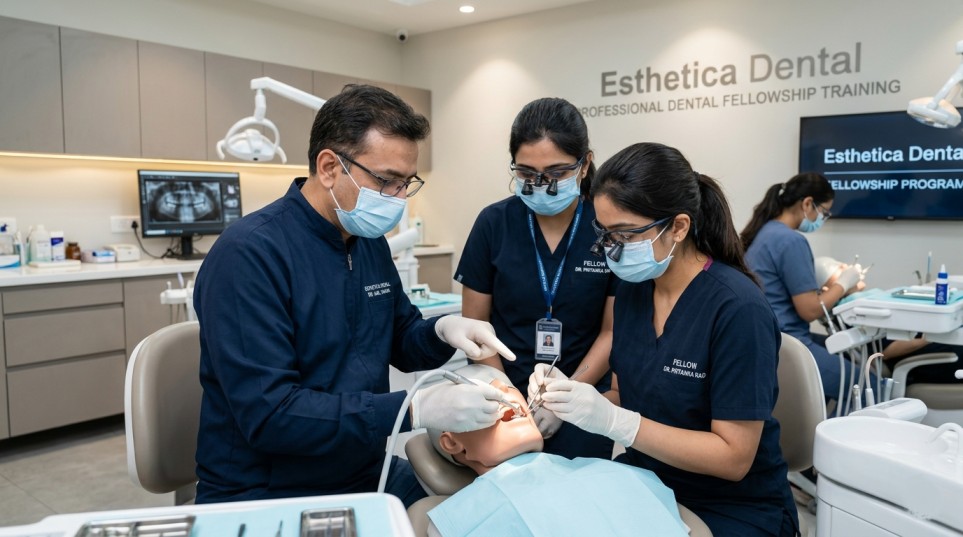
Slides and videos explain concepts, but live case training shows you how those concepts behave in a real mouth. You observe how the clinician handles unexpected bone levels, adjusts a plan mid-treatment and talks to a nervous patient. These small moments rarely appear in textbooks, yet they shape your own decisions later. That is why live demonstrations are a highlight of any good program.
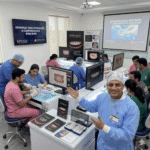
Small groups make the experience even better. When fewer participants share one clinical session, you can ask questions freely, see each step closely and receive feedback that fits your skill level. Case-based discussions then help you compare treatment options and understand why one path was chosen over another. This mix of watching, discussing and practising turns knowledge into confidence.
Who Should Join a Full Mouth Reconstruction Course in India?
A full mouth reconstruction course in India suits general dentists who want to move into complex cases. It also helps implant beginners who wish to build a solid foundation before taking on larger treatments. Specialists such as prosthodontists, periodontists and oral surgeons often attend as well, because they want to refine their planning and workflow. Even experienced clinicians find value in seeing a different team’s protocols.
International dentists are welcome too. Many travel to India to learn in a clinical setting where real patients are treated every day. If you are considering this route, check whether the program offers an international dentist training program in India with clear guidance on schedule and structure.
How to Choose the Right Course: A Simple Checklist
Start with the faculty. Find out who will teach you, how long they have practised, and whether they treat these cases regularly. A mentor who works with full mouth cases every week can share practical lessons that a purely academic trainer may miss. You can read about the lead clinician’s background on the Dr. Sharad Arya profile page to see the kind of experience you should expect.
Then look at the format. Ask how many participants join each batch, how much of the program is hands-on, and whether live patient cases are included. Review the topics covered, the materials provided and the follow-up support after the course ends. Finally, read the fine print about certificates, since a genuine program is honest about what its certificate does and does not represent.
Skills You Can Take Back to Your Clinic
After completing quality training, you should be able to examine a complex patient and build a clear, sequenced treatment plan. You will understand when to use fixed implant-supported solutions, such as the options described under full mouth dental implants, and when another approach suits the patient better. You will also communicate more clearly, which helps patients say yes to the care they truly need.
Beyond technical skill, you gain judgment. You learn to spot risks early, manage patient expectations and work with a lab or digital team smoothly. Many dentists also find that handling bigger cases raises their confidence in everyday procedures, including routine dental implant treatment. Each new skill adds value to your practice.
Frequently Asked Questions
1. What is a full mouth rehabilitation course?
It is a professional training program that teaches dentists how to restore function and appearance across both jaws. Topics usually include diagnosis, occlusion, implants, prosthetics and smile design. Good courses combine lectures with live demonstrations.
2. Who can join a full mouth rehabilitation course in India?
Qualified and registered dentists, including general practitioners and specialists, can usually join. Some programs accept beginners, while others expect prior implant experience. Always check the eligibility details before you apply.
3. How long does full mouth rehabilitation training take?
Duration varies from short intensive workshops to longer mentorship programs spread over several sessions. The right length depends on your current skill and how much hands-on exposure you want. Ask the organizer for a clear schedule.
4. What is the difference between full mouth rehabilitation and full mouth reconstruction?
The two terms are often used together. Rehabilitation focuses on restoring health and function, while reconstruction highlights rebuilding damaged or missing structures. In practice, both involve a complete, planned approach to the whole mouth.
5. Is live case training really necessary?
It is not mandatory, but it is extremely helpful. Seeing real cases teaches decision-making, patient handling and troubleshooting in a way that theory cannot. Most dentists find it the most valuable part of a program.
6. Will the certificate make me a specialist?
No. A participation certificate from a continuing education program is proof of training, not a degree, diploma or statutory qualification. It does not change your registration or scope of practice.
7. How do I choose between different courses?
Compare faculty experience, batch size, hands-on content, curriculum depth and post-course support. Read honest reviews, ask questions, and choose the program that matches your goals. You can also browse the full list of dental academy courses to compare options.
Take the Next Step with Esthetica Advanced Dental Academy
If you are ready to build real confidence in complex dentistry, Esthetica Advanced Dental Academy offers practical, mentor-led training with live clinical exposure and small training groups. To discuss the right course for your experience level, book a consultation with the team today.
Full Mouth Rehabilitation Course in India for Dental Professionals
Open to International Dentists
Free Pre-Course Consultation | Limited Seats Per Batch