








Fellowship in Smile Designing in Indore for Dental Professionals
Patients no longer walk into a clinic asking only for a cleaning or a filling. They bring phone photos, celebrity smiles and one big question: “Can you make mine look like this?” If you are a dentist who wants to answer that question with confidence, a fellowship in smile designing in Indore can be the turning point in your practice. A good smile designing course in Indore gives you more than theory. It teaches you to plan, simulate and deliver smiles that look natural and last. And if you are also exploring cosmetic dentistry training in Indore, this guide will show you what to look for and what to expect.
Why Smile Designing Has Become a Must-Have Skill
Cosmetic dentistry is one of the fastest-growing areas of modern practice. Patients are more image-aware than ever, social media keeps raising expectations, and people are happy to travel for a dentist who delivers predictable results. For a young practitioner, this means one thing: general skills alone may not set you apart anymore.
Smile designing blends art with science. You study facial proportions, tooth shape, gum levels, lip movement and colour, then turn those details into a clear treatment plan. When you can show a patient their future smile before you touch a single tooth, trust grows fast and so does case acceptance.
What Exactly Is a Fellowship in Smile Designing?
Think of a fellowship as a guided learning journey rather than a one-day workshop. Instead of sitting through a few lectures, you learn step by step over a set period, usually with case discussions, demonstrations and practical sessions. The goal is to build real clinical judgement, not just to collect notes.
A well-built fellowship usually covers diagnosis, digital planning, mock-ups, tooth preparation, material selection and finishing. You also learn how to talk with patients, manage expectations and handle cases that do not go exactly to plan. That last part is where experience really counts.
Fellowship or Short Course: Which One Fits You?
Both have a place, and the right pick depends on where you stand in your career. A short course is great if you want a quick introduction or need to refresh one technique. A fellowship suits you better if you want to build a complete, repeatable workflow.
Here is a simple way to decide. Choose a short course if you are testing the waters and have limited time. Choose a fellowship if you want to treat full smile cases, add cosmetic services to your clinic and grow into a recognised name in your city. Many dentists start with a short program and then move into a deeper one once they see how much they enjoy the work.
Who Should Join Cosmetic Dentistry Training in Indore?
This kind of training is not limited to one type of dentist. It works well for several groups, each with a different goal.
- Recent BDS graduates who want a strong cosmetic base early in their careers.
- General practitioners who want to add veneers, laminates and full smile makeovers to their services.
- Clinic owners who want to raise the value of their practice and stand out from nearby competitors.
- Specialists such as prosthodontists and orthodontists who want to coordinate better on complex cosmetic cases.
If you fall into any of these groups, structured learning can save you years of trial and error.
What You Can Expect to Learn
A solid programme should leave you ready to plan and treat real patients. While every academy designs its own syllabus, these are the core areas worth looking for:
- Facial and dental aesthetics: understanding midlines, smile arcs, buccal corridors and tooth proportions.
- Digital smile design: using photos and software to simulate results and share them with patients.
- Mock-ups and trial smiles: testing the look in the mouth before any final work begins.
- Veneers and laminates: case selection, minimal preparation, bonding steps and finishing.
- Gum contouring and soft tissue: shaping the frame around the teeth for a balanced result.
- Shade selection and material choice: matching colour and picking ceramics that suit each case.
- Patient communication: presenting options clearly, setting honest expectations and handling consent.
The point is not just to learn techniques. It is to learn when to use them and, just as important, when not to.
Why Hands-On Learning Changes Everything
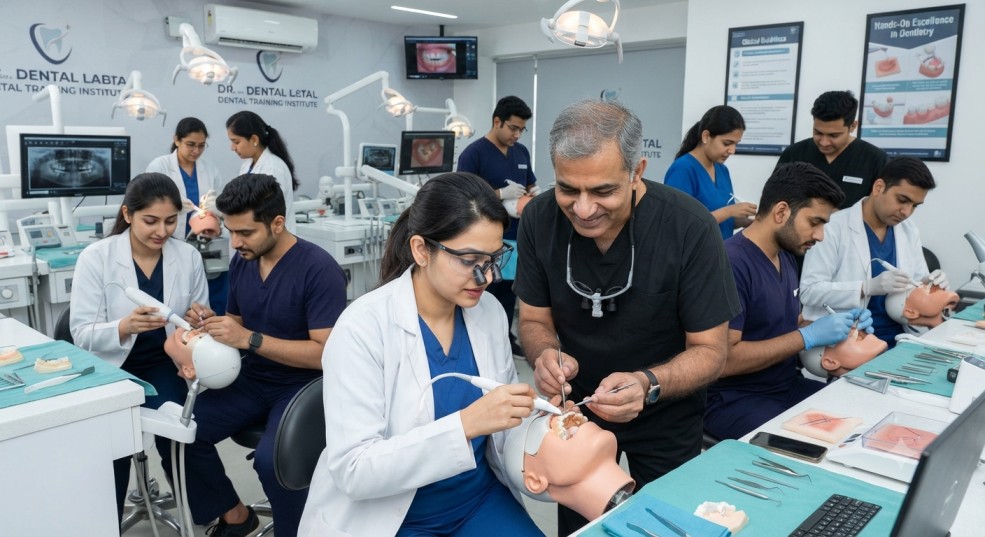
You can read about veneer preparation for hours, but nothing replaces doing it under guidance. Practical sessions let you ask questions in the moment, fix small mistakes early and build steady hands. Live demonstrations also show you how an experienced clinician thinks through a case from the first consultation to the final polish.
Small batches matter here. When the group is limited, every participant gets personal feedback, and that feedback is often what turns knowledge into skill.
What a Cosmetic Dentistry Fellowship Can Do for Your Career
Let us be practical. Most dentists invest in advanced training for two reasons: better clinical confidence and better practice growth. A fellowship in cosmetic dentistry in India can support both. You gain the ability to take on higher-value cases, explain treatments with clarity and build a portfolio of before-and-after results that speaks louder than any advertisement.
Patients also notice the difference. A dentist who plans smiles carefully, shows previews and follows a clear process tends to earn stronger word of mouth. Over time, that can turn a general clinic into a go-to place for cosmetic care. Just keep in mind that results depend on your effort, your case mix and your local market, so treat any program as a tool and not a guarantee.
How to Choose the Right Program
With so many options online, picking one can feel confusing. Use this short checklist to stay focused:
- Check the faculty. Look for clinicians who actively treat cosmetic cases, not just teach them.
- Ask about live work. Find out how many practical sessions and patient demonstrations are included.
- Look at batch size. Smaller groups usually mean more personal guidance.
- Read the fine print. Understand what the certificate represents. Responsible academies state clearly whether a program is a statutory qualification or a continuing education and mentorship course.
- Review the case gallery. Real before-and-after work tells you more than a brochure.
- Confirm support after the course. Mentorship for your first few cases can make a big difference.
Smile Designing Training Across India: What Is Trending
The way dentists learn is changing. Digital workflows, 3D planning and minimally invasive techniques are now part of most serious cosmetic programs. Dentists are also combining smile design with other services, such as clear aligners and implants, to treat the whole patient instead of a single tooth.
That is why many professionals now look beyond one city. If you are based in or near Indore, you may also compare programs held in other cities, and some dentists attend sessions in several places to see different clinical styles. The key is to pick a program that matches your level and gives you cases you can actually apply back in your own clinic.
Frequently Asked Questions
1. What is a fellowship in smile designing?
It is a structured, longer-format training program that teaches dentists how to plan and deliver aesthetic smile makeovers. It usually combines lectures, digital planning, demonstrations and practical work.
2. Who can join a smile designing course in Indore?
Most programs are open to registered dentists, including recent graduates, general practitioners and specialists. Always check the eligibility rules of the academy before you apply.
3. How long does cosmetic dentistry training take?
Duration varies. Some programs run over a few days, while fellowships may be spread across several months with sessions and mentorship. Ask for the exact schedule before you enrol.
4. Is a fellowship the same as a degree or diploma?
Not necessarily. Many fellowships are continuing education programs and are not statutory degrees recognised by a regulatory body. Read the program disclaimer carefully so you know exactly what the certificate represents.
5. Will I get hands-on practice?
Good programs include practical sessions, live demonstrations or case-based learning. Confirm how much hands-on time is included and whether it involves real patients or models.
6. What topics are covered in smile designing training?
Expect facial aesthetics, digital smile design, mock-ups, veneers and laminates, gum contouring, shade selection and patient communication. Some programs add advanced topics based on the batch.
7. Can I start offering smile makeovers after the program?
Training builds your skills, but you should start with simple, well-selected cases and use mentorship where available. Your existing registration and scope of practice still apply.
Final Thoughts
Choosing the right learning path is a big decision, so it helps to know what a strong program should give you. Here are four points worth keeping in mind as you decide.
Point 1: Learn a Complete Workflow
Look for training that takes you from consultation to final result, not just one isolated step.
Point 2: Practise Under Expert Guidance
Guided practice helps you build confidence safely and correct small errors before they become habits.
Point 3: Choose Transparency Over Hype
Pick an academy that is honest about what its certificate means and what results you can realistically expect.
Point 4: Keep Learning After the Course
Cosmetic dentistry keeps evolving, so ongoing mentorship and follow-up learning matter as much as the first program.
If you are ready to build advanced aesthetic skills with practical, mentor-led training, Esthetica Dental Academy welcomes dental professionals who want to learn smile designing and cosmetic dentistry in a supportive, hands-on environment.