








Dental Courses in India for International Dentists: Hands-On Training & Advanced Clinical Skills
For dentists looking to strengthen practical skills, gain exposure to modern clinical techniques, or explore advanced areas of dentistry, Dental Courses in India for International Dentists can provide a focused learning experience. India has developed a wide range of professional dental education and clinical training opportunities covering implantology, prosthodontics, endodontics, oral surgery, smile designing, and full-mouth rehabilitation.
For international dentists from countries such as Canada, the USA, the UK, Australia, and other regions, choosing a suitable course requires more than checking the course title. It is important to understand the curriculum, clinical exposure, duration, faculty experience, patient-case opportunities, and how the training fits into your existing professional goals.
India can also offer an opportunity to combine professional learning with exposure to different clinical environments. However, dentists planning to practise in another country should always check the licensing requirements of that country separately from any continuing education or hands-on course.
Why Are International Dentists Choosing India for Advanced Dental Training?
Learn More Than Theory With Practical Clinical Exposure
One of the biggest reasons dentists consider overseas continuing education is the opportunity to connect theoretical knowledge with practical clinical workflows. Dental Courses for International Dentists in India may include lectures, demonstrations, treatment planning, case discussions, simulation exercises, and supervised clinical exposure depending on the individual program.
Practical learning can help dentists understand how a procedure progresses from diagnosis and planning to treatment and follow-up. Instead of focusing only on textbook concepts, a well-structured course can demonstrate how clinicians approach different patient situations and treatment challenges.
For international dentists, this type of learning can be especially useful when they want to refresh existing knowledge or develop confidence in a particular clinical area.
What Can You Learn Through Dental Courses in India?
Explore Clinical Dentistry From Foundation to Advanced Techniques
The exact curriculum differs between academies and programs, but modern dental education can cover several important clinical disciplines. These may include:
- General dentistry
- Implantology
- Advanced prosthodontics
- Endodontics
- Oral surgery
- Smile designing
- Full-mouth rehabilitation
- All-on-4, All-on-6 and All-on-X concepts
- Digital treatment planning
- CBCT-based implant planning
- Patient communication and treatment planning
- Complication management
At Esthetica’s academy, the published course options include general dentistry, advanced prosthodontics, advanced endodontics, advanced oral surgery, smile designing, implantology, and full-arch rehabilitation pathways.
This variety allows dentists to select training according to their current experience rather than following a single learning path.
Hands-On Training in India for Foreign Dentists
Turn Clinical Concepts Into Practical Understanding
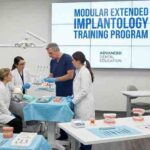
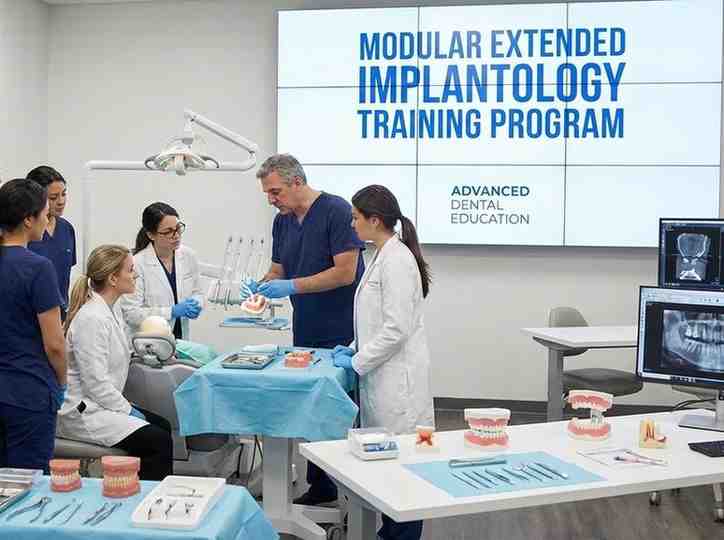
Hands-On Dental Training in India for Foreign Dentists can be particularly valuable for dentists who want more than classroom-based education. Depending on the selected course, practical components may include demonstrations, simulation exercises, supervised procedures, live patient cases, treatment planning, and discussions around clinical complications.
The purpose of hands-on education should be to understand the complete workflow rather than simply watch a procedure. A useful learning experience can include preparation, diagnosis, instrument selection, clinical execution, post-operative considerations, and case review.
The academy’s published programs describe hands-on and live-patient exposure across several areas, including implantology, general dentistry, oral surgery, endodontics, and prosthodontics.
Why Live Case Exposure Can Matter
Dental procedures can look straightforward in textbooks but may become more complex when real patient variables are involved. Bone quality, anatomy, previous treatment, patient expectations, medical history, and unexpected findings can influence clinical decisions.
Observing and participating in appropriately supervised cases can therefore help dentists understand how clinical decisions are made in real situations. It also creates an opportunity to discuss mistakes, complications, alternative approaches, and treatment sequencing with experienced clinicians.
The amount and type of patient exposure varies by course, so international dentists should confirm exactly what is included before registration.
Advanced Dental Courses in India for International Dentists
Choose a Specialization That Matches Your Career Goals
Advanced Dental Courses in India can cover focused areas for dentists who already have foundational clinical knowledge.
For example, an implant-focused program may introduce diagnosis, implant positioning, surgical protocols, prosthetic workflows, bone grafting concepts, sinus lift procedures, and complication management. More advanced programs may explore full-arch rehabilitation and complex implant cases.
Endodontic training may focus on rotary systems, apex locator use, rubber dam application, retreatment, calcified canals, broken-file management, and perforation management. Prosthodontic courses may include tooth preparation, temporization, veneers, implant impressions, bite registration, and full-mouth workflows.
This type of focused education can be useful for dentists who want to add a particular clinical skill set to their existing professional background.
Implantology Training for International Dentists
Build a Stronger Understanding of Modern Implant Workflows
Implant dentistry is one of the major areas available through advanced dental training in India. Courses can range from introductory implant programs to advanced full-arch and surgical training.
A structured implant program may cover:
- Patient selection
- Diagnosis and treatment planning
- CBCT interpretation
- Implant positioning
- Surgical protocols
- Prosthetic planning
- Immediate implant concepts
- Bone grafting
- Sinus lift techniques
- Implant complications
- Full-arch rehabilitation
The published academy curriculum includes several implant pathways, ranging from beginner programs to fellowship, diploma, and mini-residency-style training with varying levels of hands-on exposure.
International dentists should compare programs carefully because course names such as “fellowship,” “mastership,” or “advanced” can describe different types of continuing education depending on the institution.
Full-Arch and All-on-X Dental Training
Learn How Complex Edentulous Cases Are Planned
Full-arch rehabilitation requires an understanding of diagnosis, implant positioning, biomechanics, prosthetic design, occlusion, and patient management. For dentists interested in this field, specialized courses may introduce All-on-4, All-on-6, All-on-X, tilted implant concepts, implant-supported overdentures, and complex rehabilitation planning.
The academy’s international training material specifically lists All-on-4, All-on-6, All-on-X, and full-arch mastership options for international dentists.
These programs can be considered by clinicians who want to understand full-mouth implant workflows in a structured educational environment.
Dental Courses in India for Canadian Dentists
What Should Canadian Dentists Consider Before Travelling?
Canadian dentists and internationally trained dentists living in Canada may consider India for continuing education, hands-on exposure, or professional development. The learning objective, however, should be clearly separated from Canadian licensing requirements.
The National Dental Examining Board of Canada (NDEB) states that graduates of non-accredited dental programs have specific pathways for entering the Canadian certification process. These include the Equivalency Process and, where applicable, accredited qualifying or degree-completion programs.
In 2026, the NDEB also announced a new eligibility category connected to completion of an accredited Bridge Training to Dental Practice in Canada program.
Therefore, a short-term clinical training course in India should be viewed as continuing professional education unless the relevant regulatory authority specifically recognizes it for another purpose.
How to Select the Right Dental Course in India
Do Not Choose a Course Only Because of Its Title
International dentists should evaluate several factors before booking a program. A course that looks attractive online may not necessarily match your clinical level or learning objectives.
Consider these questions:
1. Who is the course designed for?
Check whether the program is intended for beginners, experienced dentists, specialists, or international participants.
2. How much practical exposure is included?
Ask whether the program involves demonstrations, simulation, observation, or supervised live-patient procedures.
3. What procedures are covered?
Review the curriculum carefully instead of relying only on words such as “advanced” or “masterclass.”
4. Who provides the training?
Review the faculty’s clinical and teaching background.
5. What is the course duration?
Short workshops and longer programs serve different learning needs.
6. What certificate is issued?
Understand whether it is a certificate of participation or completion and whether it has any regulatory recognition.
7. What support is available for international visitors?
Ask about scheduling, documentation, accommodation guidance, local transportation, and communication support if required.
Why Hands-On Learning Can Be Valuable
Dental education does not end with reading a textbook or watching an online lecture. Practical learning allows dentists to connect diagnosis, treatment planning, instruments, materials, clinical technique, and patient communication.
For example, an implant course can introduce the difference between planning a case digitally and translating that plan into a clinical workflow. Similarly, advanced endodontic training can demonstrate how clinicians approach difficult canals rather than only explaining the theoretical anatomy.
This approach can make continuing education more relevant to everyday clinical decision-making.
What International Dentists Should Prepare Before Coming to India
Plan Your Education Trip Around Your Learning Objectives
Before travelling, create a clear list of procedures and topics you want to study. Review the course syllabus and ask the academy what level of previous experience is expected.
It is also useful to prepare questions about:
- Course dates and daily schedule
- Clinical exposure
- Instruments and materials
- Faculty supervision
- Certificate details
- Accommodation options
- Airport or local travel
- Visa requirements
- Payment and cancellation terms
International participants should also keep their professional registration documents and identification available where required by the training provider.
India as a Dental Learning Destination
Combine Professional Education With a New Clinical Environment
India offers international visitors an opportunity to experience a different healthcare environment while continuing their professional education. Cities such as Chandigarh and Mohali have developed dental education and clinical training ecosystems serving both local and visiting dental professionals.
The academy’s published information specifically highlights international participants from countries including Canada and the USA and describes dedicated training pathways for international dentists.
For a visiting dentist, the value of the experience depends on the quality of the curriculum, faculty interaction, practical exposure, and how closely the course matches their learning objectives.
Is a Dental Course in India Right for You?
Match the Program With Your Current Skill Level
There is no single course that suits every international dentist. A recently graduated dentist may benefit from structured general dentistry training, while an experienced practitioner may be more interested in implantology, full-arch rehabilitation, advanced endodontics, or prosthodontics.
The academy currently lists learning pathways ranging from general dentistry and short programs to advanced specialty courses and implant-focused programs.
The important step is to select training based on your clinical experience and specific learning goals rather than choosing a course simply because it sounds advanced.
A Message from Dr. Sharad Arya, Founder – Esthetica Dental Academy
When I started Esthetica Dental Clinic in 2012, my vision was simple — to combine clinical excellence with genuine patient care. Over the years, as our practice grew across Punjab, Himachal, and Chandigarh, I realized that the biggest gap in Indian dentistry wasn’t a lack of talent, but a lack of accessible, hands-on implant training for practicing dentists.
That’s why we built Esthetica Dental Academy — not as another certificate mill, but as a mentorship-driven program where dentists actually work on live cases, under supervision, until they’re confident enough to do it on their own. I’ve seen BDS graduates walk in unsure of their surgical skills and walk out ready to plan and execute full-arch implant cases independently.
If you’re serious about growing your implant practice, I’d encourage you to invest in training that prioritizes real clinical exposure over theory alone. That’s the philosophy behind everything we teach here.
— Prof. Dr. Sharad Arya, MDS
Every batch we train is small by design, because implant surgery demands individual attention, not a classroom of fifty watching a screen. Whether it’s digital implant planning, guided surgery, or full-arch rehabilitation, we make sure every participant leaves confident enough to apply it in their own practice.
Frequently Asked Questions
1. Can international dentists take dental courses in India?
Yes. International dentists can participate in educational and clinical training programs in India, subject to the eligibility and participation requirements of the individual provider. Course participation should not automatically be considered a professional licence.
2. What are the best subjects for international dentists to study in India?
Common areas include implantology, prosthodontics, endodontics, oral surgery, smile designing, general dentistry, and full-arch rehabilitation. The appropriate subject depends on the dentist’s existing experience and learning objectives.
3. Do dental courses in India include hands-on training?
Some programs include practical exposure through demonstrations, simulation, or supervised clinical sessions. The exact format varies, so dentists should confirm the number and type of hands-on sessions before registering.
4. Can Canadian dentists take dental courses in India?
Yes, Canadian dentists can consider continuing professional education programs in India. However, Canadian licensing and certification are governed separately. The NDEB publishes the recognized pathways for internationally trained dentists seeking Canadian certification.
5. Do international dentists need implant experience before joining an implant course?
Not necessarily. Introductory implant programs may be designed for dentists with limited implant experience, while advanced programs generally require stronger foundational knowledge. Always check the individual course eligibility criteria.
6. How long do dental courses in India take?
Duration varies significantly. Some programs may run for a few days, while comprehensive clinical training can extend to several weeks or be customized according to the participant’s learning requirements.
7. Will I receive a certificate after completing the course?
Many professional training programs issue a certificate after successful completion. International dentists should confirm exactly what the certificate represents and whether it has any recognition in their country of practice.
Take the Next Step Toward Practical Dental Learning
If you are searching for Dental Courses in India for International Dentists, focus on a program that combines relevant clinical topics, practical exposure, experienced mentorship, and a curriculum aligned with your professional goals. Whether you want to strengthen general dentistry skills or explore implantology, prosthodontics, endodontics, or full-arch rehabilitation, careful course selection can make your learning experience more meaningful.
Before enrolling, review the complete syllabus, clinical exposure, duration, eligibility, certificate details, and applicable professional regulations. For dentists from Canada and other countries, also verify local licensing requirements independently before using any international training program as part of a broader career plan.
ESTHETICA DENTAL ACADEMY offers clinical training pathways for dental professionals, including general dentistry, specialty training, implantology, smile designing, and full-arch rehabilitation. International dentists can explore the available programs and discuss their learning objectives with the academy before planning their visit.