








All-on-4 vs All-on-6 Dental Implants
If you are missing most or all of your teeth in one arch, your dentist has probably mentioned two options: All-on-4 or All-on-6. Choosing between All-on-4 vs All-on-6 dental implants is one of the biggest decisions in full-arch dentistry, and it affects your cost, healing time, and long-term results. For Canadian patients facing implant quotes of $20,000 to $50,000 per arch at home, understanding the real difference matters even more.
This guide breaks down both options in plain language, so you can walk into your consultation with confidence and ask the right questions.
What Is the Difference Between All-on-4 and All-on-6 Dental Implants?
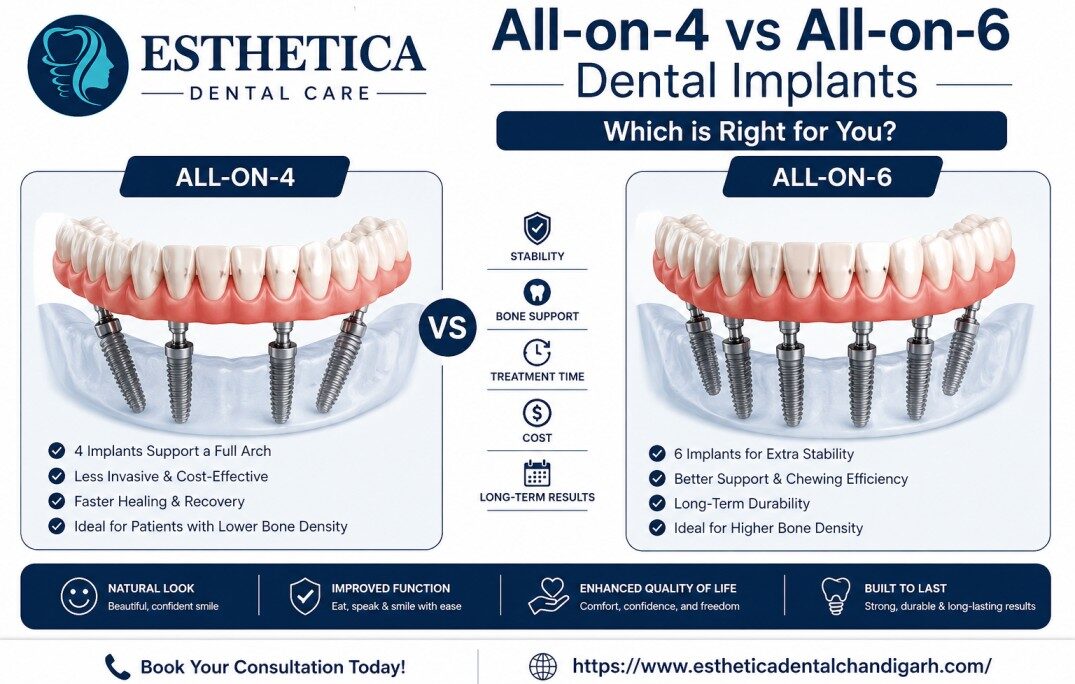
Both systems replace a full row of missing teeth using a fixed prosthetic bridge anchored by implants. The core difference is simple: All-on-4 uses four implant posts per arch, while All-on-6 uses six. That extra pair of implants changes how the bite force gets distributed across your jaw.
Think of it like a table. Four legs can hold a tabletop steady, but six legs spread the weight more evenly and reduce strain on any single point. That is essentially what the extra two implants do for your jawbone during chewing.
All-on-4 Dental Implants: Who It’s Best For
All-on-4 was designed to help patients avoid extensive bone grafting. The implants are placed at an angle in the strongest areas of the jaw, which means even patients with some bone loss can often qualify without additional grafting surgery.
This option tends to suit patients who:
- Have moderate bone loss but still enough density in key areas
- Want a shorter treatment timeline
- Are looking for a more budget-conscious full-arch solution
- Prefer fewer surgical implant sites
Because it requires fewer implants and often skips grafting, All-on-4 dental implants cost less than All-on-6 in most cases, and the healing period is typically shorter.
All-on-6 Dental Implants: Who It’s Best For
All-on-6 adds two more implants to the arch, which improves stability and long-term load distribution. This tends to matter most for patients who plan to eat a wide variety of foods, including harder items like nuts or steak, without worrying about pressure on the prosthetic.
All-on-6 is generally recommended for patients who:
- Have adequate bone density across more of the jaw
- Want maximum long-term stability
- Are replacing teeth in both arches
- Prefer a slightly lower risk of implant failure over time due to better weight distribution
The trade-off is a higher upfront cost and, in some cases, a longer healing period since more surgical sites are involved.
Cost Comparison: All-on-4 vs All-on-6 in Canada
Canadian pricing for full-arch implants varies widely by province and clinic, but the pattern is consistent. All-on-4 generally runs lower than All-on-6 because it involves fewer implants, less surgical time, and often no bone grafting.
| Treatment | Typical Canada Cost (per arch) |
| All-on-4 | $20,000 – $35,000 |
| All-on-6 | $30,000 – $50,000 |
| Bone Grafting (if needed) | $500 – $3,000 additional |
| Sedation | $500 – $2,000 additional |
Most Canadian dental insurance plans cap annual coverage between $1,500 and $5,000, which means the bulk of full mouth dental implants costs are typically paid out-of-pocket. This is one of the biggest reasons Canadian patients now compare local quotes against dental tourism destinations before committing.
Recovery Time: What to Expect with Each Option
Healing timelines depend on your individual case, but there are some general patterns worth knowing before you decide.
All-on-4 Recovery
Because All-on-4 uses fewer implant sites and is often placed with immediate loading (a temporary bridge fitted the same day), many patients return to normal activities within a few days, with full healing around 3 to 6 months.
All-on-6 Recovery
With two additional implant sites, some patients experience slightly more initial swelling and a marginally longer adjustment period, though the difference is usually measured in days, not months.
Which Option Should You Choose?
There is no universal “better” choice between All-on-4 vs All-on-6 dental implants — it depends entirely on your bone density, budget, and long-term goals. A dentist will typically confirm which option fits your case using a CT scan or digital imaging to assess bone volume before recommending a final treatment plan.
As a general rule:
- Choose All-on-4 if you want a faster, more affordable path to a full-arch smile and have adequate bone in the key implant zones
- Choose All-on-6 if you have more bone available and want the added stability for long-term chewing function
Why Canadians Are Exploring Affordable Dental Implants Abroad
Given that full-arch treatment in Canada often exceeds $25,000 per arch, many patients are now researching affordable dental implants abroad as a way to access the same implant brands and surgical protocols at a fraction of the price. Countries like India have become popular for this exact reason — patients get the identical All-on-4 or All-on-6 procedure, performed by internationally trained implantologists, often for 60 to 80 percent less than Canadian pricing, even after factoring in travel costs.
Conclusion
Deciding between All-on-4 vs All-on-6 dental implants comes down to your bone health, budget, and how much long-term stability you want from your new smile. Both options restore a full arch of teeth with a fixed, natural-looking bridge, but the right choice depends on what your dentist finds during your imaging and consultation. If the cost of full-arch implants in Canada has you exploring alternatives, Esthetica Advanced Dental Clinic offers a free video consultation to help you understand which option—All-on-4 or All-on-6 — fits your case, along with a transparent cost estimate before you travel.
Frequently Asked Questions
1. What is the main difference between All-on-4 and All-on-6 dental implants?
All-on-4 uses four implants per arch, while All-on-6 uses six. The extra implants in All-on-6 improve load distribution and long-term stability, but All-on-4 is generally faster to place and more affordable.
2. Which is cheaper, All-on-4 or All-on-6?
All-on-4 is typically cheaper because it requires fewer implants, less surgical time, and often no bone grafting. In Canada, All-on-4 usually costs $20,000–$35,000 per arch versus $30,000–$50,000 for All-on-6.
3. Do I need bone grafting for All-on-4 or All-on-6?
All-on-4 was specifically designed to reduce or eliminate the need for bone grafting by angling implants into denser bone areas. All-on-6 may require more bone volume, so grafting is sometimes needed depending on your jaw structure.
4. How long do All-on-4 and All-on-6 implants last?
With proper care, both All-on-4 and All-on-6 implants can last 15 to 25 years or longer. The titanium implant posts themselves often last a lifetime, while the prosthetic bridge may need replacement or relining over time.
5. Is All-on-6 more stable than All-on-4?
Yes, generally. The two additional implants in All-on-6 spread chewing force across more points in the jaw, which can offer slightly greater long-term stability, particularly for patients who eat a wide variety of foods.
6. How much do full mouth dental implants cost in Canada?
Full mouth dental implants in Canada typically range from $20,000 to $50,000 per arch depending on whether you choose All-on-4 or All-on-6, plus any additional costs for grafting, sedation, or prosthetic material upgrades.
7. Can I get All-on-4 or All-on-6 implants done more affordably outside Canada?
Yes. Many Canadian patients now travel to countries like India for full-arch implants, where the same globally certified implant brands and surgical techniques are used at 60 to 80 percent lower cost than Canadian pricing.