



All on 4 and Full Arch Implant Training
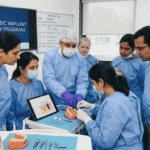
Full-arch implant rehabilitation involves much more than implant placement. It combines diagnosis, treatment planning, digital technology, surgical positioning, prosthetic design, occlusion, and teamwork. All-on-4 and Full Arch Implant Training gives dental professionals a structured understanding of these stages, from full-arch planning and implant positioning to immediate loading concepts and prosthetic workflows. Training helps dentists understand how clinical decisions influence later stages while maintaining safety, function, aesthetics, and maintenance.
Why Full-Arch Implant Training Is Necessary
Full-arch implant cases can be complex because many factors need consideration before treatment. Bone structure, periodontal condition, occlusion, facial aesthetics, medical history, patient expectations, restorative space, and prosthetic indications can influence planning and treatment. A structured training program helps dentists develop a systematic approach instead of considering surgery and prosthetic rehabilitation as separate procedures.
Case discussions cover treatment sequencing, implant positioning, abutments, provisionalization, and definitive restoration. Dentists can also learn to recognize cases that may require additional expertise or referral.
Full-Arch Planning: Begin With the Prosthetic Goal
Successful full-arch rehabilitation starts with the desired prosthetic result. Before implant placement, dentists need to consider tooth position, smile aesthetics, lip support, occlusion, restorative space, and hygiene access. These factors guide the surgical plan.
Digital planning can combine CBCT information, intraoral scans, and a virtual prosthetic design. This allows the team to relate the proposed restoration to the patient’s anatomy. Surgical guides and CAD/CAM workflows can support communication between clinical and laboratory teams.
Implant Positioning: Connect Surgery With Prosthetics
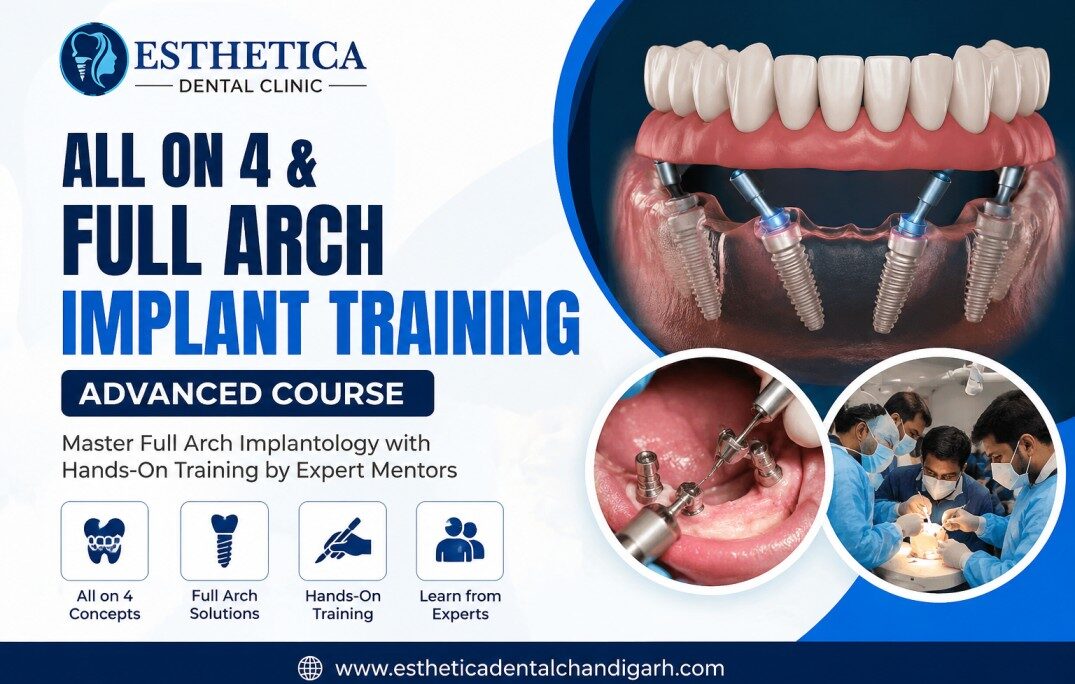
Implant positioning is one of the most important stages of full-arch rehabilitation because implant number, position, angulation, and depth can influence the final restoration. The traditional All-on-4 concept uses two anterior implants placed more axially and two posterior implants placed with distal angulation.
Training helps dentists understand implant distribution in relation to anatomical limitations, restorative space, and prosthetic requirements. The focus is prosthetically driven planning, where the desired restoration helps guide surgical decisions.
Immediate Loading Concepts: Understand the Complete Sequence
The All-on-4 concept is associated with the possibility of providing a fixed provisional restoration soon after implant placement in appropriately selected cases. However, immediate loading is not suitable for every patient. Each case requires individual assessment, and factors such as implant stability, surgical planning, occlusion, implant selection, and prosthetic design can influence treatment.
Training helps dentists understand the sequence involved in immediate loading. Participants can learn about provisionalization after surgery, abutment selection, and occlusal records.
Prosthetic Workflow: From Implant Placement to Final Restoration
The prosthetic stage is central to full-arch rehabilitation. After implants are placed, the team must accurately record their positions, establish the desired occlusion, and develop a restoration that meets functional and aesthetic requirements.
A comprehensive program can cover conventional impressions, digital scans, implant position records, occlusal records, provisional prostheses, framework concepts, occlusal evaluation, and definitive restoration. Digital workflows can improve laboratory communication and support CAD/CAM design and fabrication.
Dentists should understand that surgical and prosthetic planning cannot be completely separated. The final restoration should influence implant planning, while implant position must support the planned prosthesis.
Provisional Prosthesis: Evaluate Before the Final Restoration
A provisional prosthesis provides an opportunity to assess the rehabilitation before the definitive restoration is completed. It can help the dentist and patient evaluate aesthetics, phonetics, occlusion, comfort, tooth position, and lip support.
It can also reveal issues involving vertical dimension, hygiene, functional contacts, and expectations. Training can demonstrate how to select an appropriate provisional approach, evaluate fit and occlusion, make adjustments, and communicate findings with the laboratory.
Changes can therefore be considered before final fabrication.
Occlusion and Prosthetic Design: Support Function
Full-arch restorations may involve different materials, frameworks, crowns, and abutments, making occlusal planning an important part of treatment. Dentists need to understand how anatomy, restorative materials, implant positions, and chewing forces influence prosthetic design.
Training introduces basic occlusal principles and helps dentists consider implant distribution, restorative space, and cantilever relationships. Appropriate load distribution, suitable material selection, and thoughtful occlusal design can contribute to prosthetic and implant maintenance.
The restoration should also support hygiene, comfort, function, and maintenance.
Digital Technologies in Full-Arch Rehabilitation
Digital technology can be used at several stages of full-arch treatment. CBCT imaging and intraoral scanning can contribute to assessment and planning, while digital software can support implant positioning, surgical guides, provisional design, and definitive CAD/CAM restorations.
Training can help dentists understand how digital data is collected, organized, evaluated, and shared with the laboratory. A connected digital workflow can improve communication and make design more efficient. Accurate data collection and clinical judgment remain essential.
Building Confidence Through Case-Based Learning
Confidence in full-arch rehabilitation develops through knowledge, planning, practical understanding, and case experience. Training gives dentists an opportunity to review cases, compare treatment options, discuss challenges, and understand how different factors affect outcomes.
Practitioners should assess the patient and identify treatment needs before selecting a strategy. Patient selection, planning, interdisciplinary communication, and appropriate follow-up remain important throughout treatment.
Education should help dentists recognize suitable cases, understand limitations, and know when specialist support is appropriate.
Choosing the Right All-on-4 and Full-Arch Implant Course
When selecting a training program, dentists should look for comprehensive coverage rather than focusing on implant placement alone. Important areas include full-arch treatment planning, CBCT assessment, implant positioning, immediate loading concepts, multi-unit abutments, provisionalization, occlusion, digital technology, definitive restoration, maintenance, and compromised cases.
A useful course should explain why interventions are performed and how surgical and prosthetic decisions influence one another.
Conclusion
All-on-4 and Full Arch Implant Training can help dental professionals understand the stages of full-arch rehabilitation and develop a systematic approach to complex implant cases. Full-arch planning, implant positioning, immediate loading concepts, provisionalization, occlusion, digital workflows, and definitive restoration all contribute to the overall treatment process.
Successful rehabilitation depends on patient selection, planning, surgical and prosthetic coordination, and long-term maintenance. Continuous education can improve decision-making while maintaining patient safety and appropriate referral.
Frequently Asked Questions
1. What does All-on-4 implant training cover?
It covers planning, positioning, immediate loading, and prosthetic workflows.
2. Does the course include full-arch treatment planning?
Yes, it covers prosthetic planning, assessment, anatomy, and sequencing.
3. What are immediate loading concepts?
They explain fixed provisional restoration after implant placement in suitable cases.
4. Does training cover implant positioning?
Yes, it covers prosthetically driven positioning, distribution, angulation, and restorative requirements.
5. Are digital workflows included?
Yes, it introduces CBCT, scanning, digital planning, guided workflows, and CAD/CAM.
6. Is prosthetic training included?
Yes, it covers provisional and definitive workflows, occlusion, impressions, and laboratory communication.
7. Can dentists gain confidence through this training?
Yes, case-based learning can improve planning, decision-making, and understanding.