








All on 4 Implant Training in India for USA Dentists: Is the Journey Worth It?
If you have been searching for all on 4 implant training in India for USA dentists, you are in good company. Full-arch rehabilitation is one of the fastest-growing services in American dental practices, yet good mentorship is often pricey, crowded, or booked months ahead. India has built a reputation as a place where clinicians can see many cases and learn practical workflows. This guide explains what to expect, what to verify, and how to decide if the trip fits your career.
Think of it as a checklist you can use before you spend a single dollar on flights or tuition. By the end, you will know which questions separate a solid program from a glossy brochure.
Why Are More American Dentists Looking Overseas for Full-Arch Skills?
Implant education in the US has become a busy market. Weekend courses fill fast, tuition keeps climbing, and many programs limit how much you personally do. Dentists who want repeated exposure to planning, surgery, and prosthetic steps naturally start comparing options abroad.
India offers a large pool of patients who need full-arch solutions. Participants may therefore see more variety in bone quality, anatomy, and prosthetic challenges in a short stay. Seeing many cases in a compact window helps you build pattern recognition, which theory alone cannot give you. Volume only helps, though, when it comes with structured teaching.
What Is All-on-4, and Why Is It Worth Mastering?
All-on-4 replaces a full arch of teeth using four strategically placed implants. The two rear implants are often angled to use the available bone and, in many cases, avoid grafting. A fixed prosthesis is then attached, sometimes on the same day. Patients love it because a failing dentition can become a stable, fixed smile.
For a practice owner, it is also a high-skill service. It demands accurate diagnosis, careful surgery, and precise prosthetic planning, and mistakes are expensive. That is why structured training matters more here than it does for a single-tooth implant.
What Should All on 4 Dental Implant Training India Programs Actually Teach?
A strong curriculum goes well beyond “how to place the implants.” Look for a course that walks you through the whole patient journey, from the first consultation to long-term maintenance. Here is a quick list of the topics that matter:
- CBCT reading and diagnosis
- Digital treatment planning and guided surgery basics
- Angled implant placement and anchorage principles
- Immediate loading protocols and provisional prosthesis
- Soft tissue management and healing care
- Complication handling and patient maintenance
If a program brags about surgery but skips prosthetics and complications, treat that as a warning sign. A full-arch case succeeds or fails in the details that come after the implants are in place.
What Does Hands On Implant Training in India Really Mean?
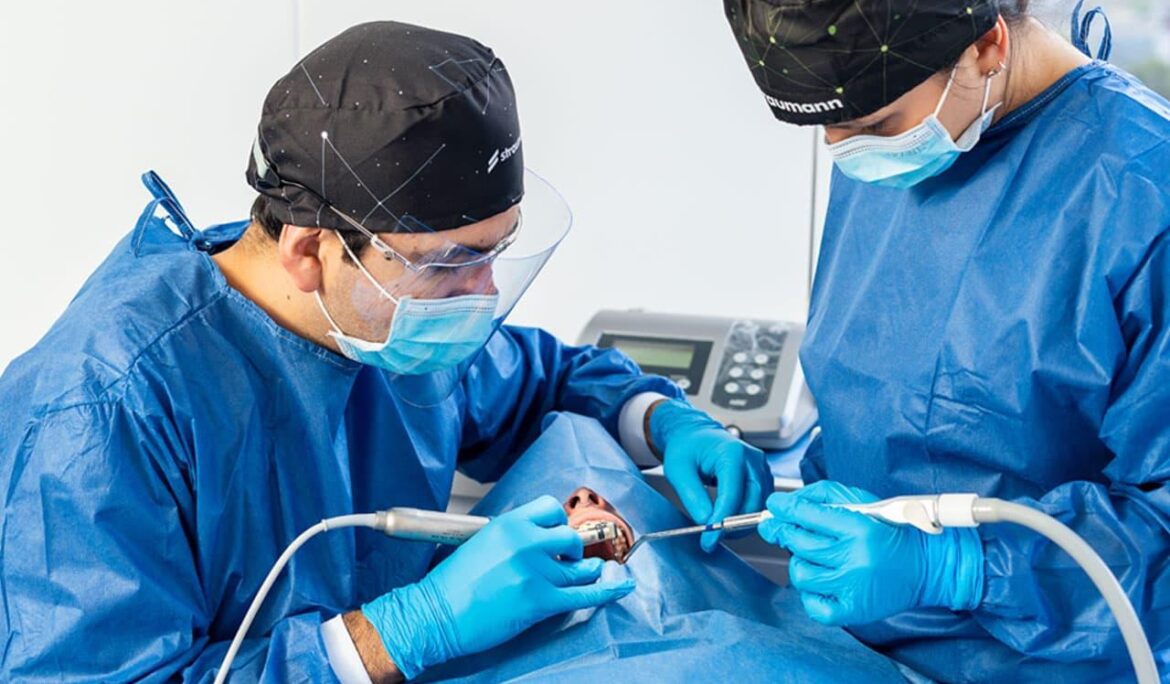
“Hands-on” is the most abused phrase in dental education, so define it before you book. It can mean practicing on models, working with simulation tools, observing live surgery, or assisting a supervising clinician. Each has real value, but they are not the same thing.
There is also a legal point that many brochures gloss over. Foreign dentists generally cannot treat patients in India without registering with the Indian dental regulator. Depending on the rules, your hands-on time may be limited to models, simulations, and supervised observation. Ask the academy to explain in writing exactly what you will and will not do.
Dental Implant Training for USA Dentists: Credits, Licensing, and Legal Points
Before you fly anywhere, check how your state dental board treats continuing education taken abroad. Rules on credit hours and approved providers vary from state to state. A training certificate proves you attended, but it is not a license, a specialty title, or a permission slip to place implants beyond your existing scope.
Insurance deserves a call too. Your malpractice carrier may have views on procedures you have only recently learned. Many dentists start with simpler cases after returning home and build up gradually, ideally with a mentor available for questions. That approach protects your patients and your reputation.
How Should You Budget for Travel, Time, and Total Cost?
Tuition is only one line in the budget. Add airfare, visa fees, hotel or guesthouse stays, local transport, meals, and the income you lose while your practice is closed. Check current visa rules early, because processing times and requirements can change.
Jet lag is real, so plan a buffer day at each end if you can. A short course in a well-organized city can feel easier than a long one in a chaotic schedule. Compare programs on total cost and total learning, not just the tuition figure on the website.
Frequently Asked Questions
1. Is all on 4 dental implant training in India suitable for US dentists?
Yes, it can be, especially for general dentists who already place single implants and want to move into full-arch work. If you are brand new to implants, start with foundation courses first. All-on-4 is easier to learn once you are comfortable with basic surgery and prosthetics.
2. Can US dentists operate on patients in India during training?
Usually not without registration with the Indian regulator. Most programs for visiting dentists focus on models, simulations, planning exercises, and observed or assisted live cases. Always ask the academy what its hands-on scope is under current rules.
3. How long does All-on-4 training take?
It varies widely. Some programs run a few days, while others are spread across several weeks or split into modules. A longer format often allows more practice and case discussion, but the best length depends on your schedule and experience.
4. Will the certificate be valid in the USA?
Treat it as proof of attendance and skill development, not a license or specialty recognition. Whether it counts toward continuing education credit depends on your state board, so confirm before you enroll.
5. Is this training open to Canadian dentists too?
Generally, yes. Many international academies welcome dentists from Canada as well as the USA. Canadian dentists should check requirements with their provincial dental regulator and confirm any visa needs before booking.
6. Do Canadian dentists get continuing education credit for overseas courses?
It depends on the province and the regulator’s rules. Some accept self-reported learning with documentation, while others prefer approved providers. Contact your provincial college first and keep your course outline and certificate.
7. What should I prepare before attending?
Refresh your CBCT interpretation, review basic implant surgery, and bring a few of your own cases to discuss. Come with a list of questions about complications you have faced. The more prepared you are, the more you will take home.
A Message from Dr. Sharad Arya, Founder – Esthetica Dental Academy
When I started Esthetica Dental Clinic in 2012, my vision was simple — to combine clinical excellence with genuine patient care. Over the years, as our practice grew across Punjab, Himachal, and Chandigarh, I realized that the biggest gap in Indian dentistry wasn’t a lack of talent, but a lack of accessible, hands-on implant training for practicing dentists.
That’s why we built Esthetica Dental Academy — not as another certificate mill, but as a mentorship-driven program where dentists actually work on live cases, under supervision, until they’re confident enough to do it on their own. I’ve seen BDS graduates walk in unsure of their surgical skills and walk out ready to plan and execute full-arch implant cases independently.
If you’re serious about growing your implant practice, I’d encourage you to invest in training that prioritizes real clinical exposure over theory alone. That’s the philosophy behind everything we teach here.
— Prof. Dr. Sharad Arya, MDS
Every batch we train is small by design, because implant surgery demands individual attention, not a classroom of fifty watching a screen. Whether it’s digital implant planning, guided surgery, or full-arch rehabilitation, we make sure every participant leaves confident enough to apply it in their own practice.
Ready to Take Your Full-Arch Skills to the Next Level?
Choosing where to train is a career decision, so take your time and compare carefully. Ask for the syllabus, confirm the hands-on scope, and verify what the certificate means for your practice. A good academy will welcome those questions instead of avoiding them.
If you want a structured place to start your research, Esthetica Advanced Dental Academy offers implant education for dentists, covering full-arch rehabilitation, digital planning, and prosthetic workflows in small training groups. Contact the academy directly to confirm current course dates, the hands-on scope, and the certificate terms before you plan your trip.