








All-on-4 Course in India for USA Dentists with Live Training: Is It Worth It Now?
If you practice in the United States and want to add full-arch rehabilitation to your services, an All-on-4 course India for USA dentists may be closer to your goals than you think. More American clinicians now look overseas for focused, hands-on programs that give more chair time than a typical weekend lecture. This guide explains what such a course covers, what to check before you book, and how to decide if it fits your career. Whether you are comparing All-on-4 dental implant training in India with local options or just exploring, read on.
Why More US Dentists Are Looking at India for Implant Education
The gap between lectures and real surgery
Many clinicians finish a long implant lecture series and still feel unsure the first time a full-arch case walks in. Theory helps, but surgical confidence comes from seeing cases planned, placed and restored. That gap is a big reason dental implant courses in India for USA dentists keep trending in search results.
Case volume matters
India has a large patient base needing tooth replacement. For a training clinic, that can mean a steady flow of varied cases, from straightforward arches to demanding bone situations. Seeing that variety in a short window is hard to match elsewhere.
Mentorship in small groups
Small batches let participants ask questions during the case, not after it. When an instructor can stop, explain a decision and let you repeat the step, learning sticks far better than watching a slide.
What Is the All-on-4 Technique? A Plain-Language Explanation
All-on-4 is a full-arch method where a whole row of teeth is supported by four strategically placed implants, often with two tilted at the back to use available bone. A fixed bridge is then attached. For patients with failing teeth or loose dentures, it can mean stable teeth without a graft-heavy, many-implant plan.
Fewer implants, simpler planning
Four implants per arch can reduce surgical complexity and patient cost compared with one implant for every missing tooth.
Immediate loading
In suitable cases, a temporary fixed bridge is placed shortly after surgery, so patients are not left without teeth during healing.
Digital guidance
CBCT scans and planning software map bone, nerves and sinus position before the first incision. This is now standard thinking in modern full-arch work.
What You Can Expect to Learn in All-on-4 Dental Implant Training in India
A solid program covers the whole journey, not just the surgery. Look for these building blocks.
Case selection and diagnosis
Knowing who is a good candidate, and who is not, protects both patient and practice. Expect training on reading CBCT scans, judging bone quality and spotting risks such as uncontrolled diabetes or heavy smoking.
Surgical protocol
This includes flap design, extraction with immediate placement, angulated implant positioning, bone shaping and achieving primary stability. Good teaching explains why each step happens, not only how.
Prosthetic workflow
A successful arch depends on the bridge as much as the implants. Topics should include multi-unit abutments, temporary bridge fabrication, occlusion and the move to a final prosthesis.
Complication management
Every surgeon meets problems eventually. Training that covers what to do when an implant lacks stability, or soft tissue heals poorly, prepares you for real life.
Why Live Patient Implant Training in India Changes Everything
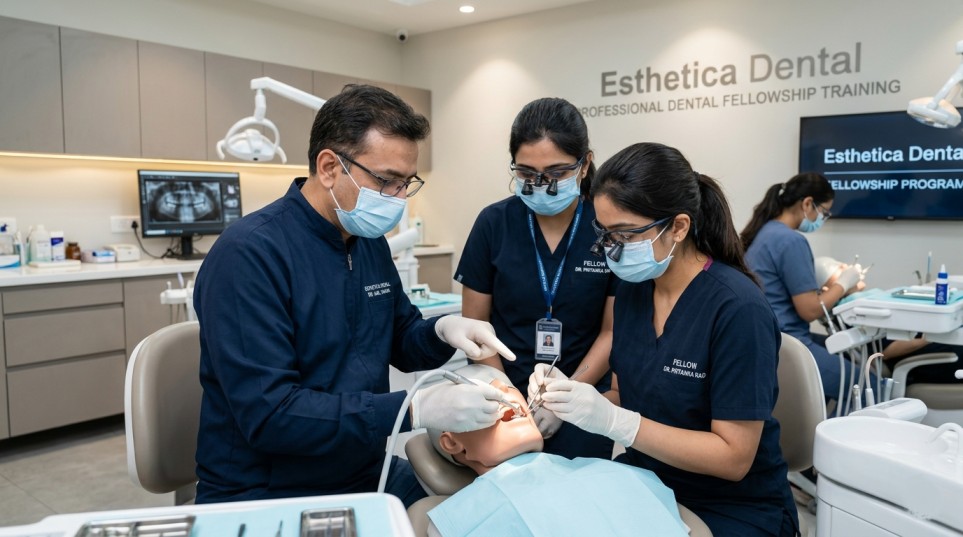
Watching a recorded surgery is helpful. Standing beside a mentor during a live case is a different level of learning. Live patient implant training in India puts you in the room as decisions are made in real time, from reading the scan to tightening the final screw.
What live exposure gives you
You see how a clinician adapts when bone is softer than expected or a tooth fractures during extraction. You hear the reasoning out loud. You notice small details, like patient positioning and irrigation, that textbooks skip.
What it does not replace
Be realistic. A short program builds knowledge and supervised experience, but real skill grows with repetition once you return home. Treat it as a strong launch point, start with simpler cases, and build up to full arches.
Dental Implant Courses in India for USA Dentists: Checklist Before You Enrol
Not every program is equal. Before paying a deposit, ask these questions.
Who will teach you?
Check the lead clinician’s qualifications, years of implant experience and whether they place full-arch cases regularly. You can read about the clinical team on the about Dr. Sharad Arya page.
How hands-on is it, honestly?
Ask for the ratio of observation to participation. Find out whether you will work on models, supervised cases or both, and how many participants share each session.
What does the certificate actually mean?
Many training certificates confirm participation only and are not a degree or licence. Read the fine print so you know exactly what you receive.
What is included?
Clarify tuition, materials, scan or software access, and any follow-up support. Hidden extras are a common frustration.
Licensing and Legal Reality for American Clinicians
This section is easy to overlook and costly to ignore. Completing a course abroad does not change your scope of practice at home. Your state dental board decides what procedures you may perform and whether extra documentation is needed. Before you travel, check your board’s rules on implant placement and continuing education credit, and confirm with your malpractice insurer that your coverage fits the procedures you plan to offer.
To explore the formal side of overseas education, see the International Dentist Training Program in India and check how it lines up with your own requirements.
Planning the Trip: Time, Travel and Practical Details
How long should you plan for?
Short immersive programs can run several days, while deeper mentorship tracks stretch over multiple visits. Decide whether you want a quick skill boost or a long-term learning path.
Travel and stay
Most visitors fly into Delhi or Chandigarh and travel onward. Many dentists combine the trip with a few days of sightseeing. The page on dental tourism in India gives helpful context on how overseas visitors experience the process.
Visa and paperwork
Check the visa category that suits a training visit and apply early. Rules change, so confirm with official government sources close to your travel date.
Is This Course Right for You?
A program like this suits you if you already place single implants and want to grow into full-arch work, if you want supervised exposure to live cases, or if you own a practice and want to bring more procedures in-house instead of referring out. It is less suitable if you have never handled implant surgery. In that case, start with foundation-level training and browse the full range of dental academy courses to find a sensible starting point.
To see how full-arch treatment looks from the patient’s side, the full mouth dental implants page explains the process in simple terms.
Frequently Asked Questions
1. Is an All-on-4 course in India worth it for USA dentists?
For many clinicians, yes, particularly when the program offers real supervised exposure and small groups. The value depends on your current skill level, your goals and how honestly the course describes what it delivers.
2. How long does All-on-4 dental implant training take?
Length varies. Some programs are compact multi-day intensives, while others are spread over several sessions. Ask for a day-by-day outline before booking.
3. Will I operate on patients during the course?
That depends on the format. Some programs focus on observation and model work, others allow supervised participation. Ask directly what is included, because this is the most important detail.
4. Can I legally place implants in the US after training abroad?
Your state dental board sets the rules. A training certificate does not replace licensing or board approval, so check regulations and your insurance coverage first.
5. What is the difference between All-on-4 and All-on-6?
All-on-4 uses four implants per arch, while All-on-6 uses six, which can spread bite forces more widely. The right choice depends on bone quality, arch shape and the patient’s needs.
6. Do I need prior implant experience?
It helps a lot. Most advanced full-arch programs expect basic implant knowledge, so beginners should start with fundamentals first.
7. How do I choose between different dental implant courses in India?
Compare the instructor’s experience, hands-on ratio, group size, what the certificate means, and what the fee includes. Speak with past participants if possible.
Final Thoughts
Advanced implant dentistry rewards preparation, patience and good mentorship. If you have been searching for a practical way to build full-arch skills, a focused overseas program can be a smart investment, as long as you choose carefully and understand the legal limits at home. To keep learning, browse more articles in the dental implant course category or the main blog.
Ready to ask about dates, format and fees? Book your consultation today and speak directly with the team at Esthetica Dental Academy.
All-on-4 Course in India for USA Dentists with Live Training Now
2-Day
Implantology
An intensive introduction for dentists who want to understand the complete implant workflow.
- ✓2 Days intensive training
- ✓Basic implantology concepts
- ✓Surgical kit demonstration
- ✓Hands-on training
- ✓Live implant surgery exposure
- ✓Certificate
Basic to Advanced
Comprehensive clinical training covering implant placement, bone grafting, sinus lift and prosthetic workflows.
- ✓5–7 Days training
- ✓Live patient surgeries
- ✓Implant placement
- ✓Bone grafting
- ✓Sinus lift
- ✓CBCT planning
- ✓Prosthetic workflow
Implant Diploma
Advanced structured training for dentists seeking deeper implant surgery and prosthetic exposure.
- ✓7 Days intensive program
- ✓15 implant procedures
- ✓Advanced surgery
- ✓Bone management
- ✓Sinus lift
- ✓Prosthetic rehabilitation
- ✓Extended mentorship
Customize Your
Course
Need a program designed around your specific clinical requirements? Build a customized implantology training plan with our team.
- ✓Choose your training duration
- ✓Select specific clinical procedures
- ✓Personalized learning objectives
- ✓Hands-on clinical exposure
- ✓Advanced implantology topics
- ✓Individual mentorship options