








All-on-6 Implant Training in India for Spain Dentists: A Practical Guide for Your Next Clinical Step
If you practise in Spain and want to offer full-arch rehabilitation with confidence, an All on 6 Dental Implant Course in India is worth a serious look. More dentists now travel abroad for focused, case-based learning that they can’t always find close to home. All-on-6 implant training in India for Spain dentists combines surgical planning, prosthetic workflow and live clinical exposure in one programme. This guide covers what the training includes, who it suits, and how to choose the right one.
Why Spanish Dentists Are Looking Beyond Europe for Implant Skills
Implant dentistry is one of the fastest-growing areas of modern practice, and patients increasingly ask for fixed teeth instead of removable dentures. Many Spanish clinicians want to meet that demand but find that local courses can be expensive, theory-heavy or booked months ahead. Training abroad can fill that gap.
India has built a strong reputation for high-volume implant clinics. A visiting dentist sees more full-arch cases in a few days than a typical course would show in several weeks. That exposure is why Dental Implant Training in India for International Dentists keeps gaining attention across Europe.
What Is All-on-6 and Why Does It Matter?
All-on-6 is a full-arch rehabilitation technique in which six implants support a fixed set of teeth. Compared with four-implant protocols, the extra implants spread chewing forces more evenly and give the prosthesis added stability. In many cases this helps when bone quality varies across the jaw.
For the patient, the benefit is simple: a secure, natural-looking smile without the movement of a removable denture. For the dentist, it is a high-value skill that builds trust and strengthens a practice. That is why a structured All on 6 Dental Implant Course in India appeals to general dentists and specialists alike.
What You Will Learn on an All-on-6 Course
A well-designed programme follows the full patient journey, from the first consultation to the final prosthesis. Expect the curriculum to cover these areas:
- Diagnosis and case selection: reading CBCT scans, judging bone volume and deciding when All-on-6 is the right choice.
- Digital implant planning: using software to position implants safely and predictably.
- Surgical protocols: flap design, osteotomy preparation, implant placement and handling of tilted or angled implants.
- Immediate loading: knowing when a temporary prosthesis can go in on the day of surgery.
- Prosthetic workflow: impressions, bite registration, provisional and final restorations.
- Complication management: soft tissue care, maintenance and what to do when something does not go to plan.
Each topic builds on the one before it, so you finish with a clear, repeatable process rather than a collection of isolated tips.
Why Choose Hands On Dental Implant Training in India?
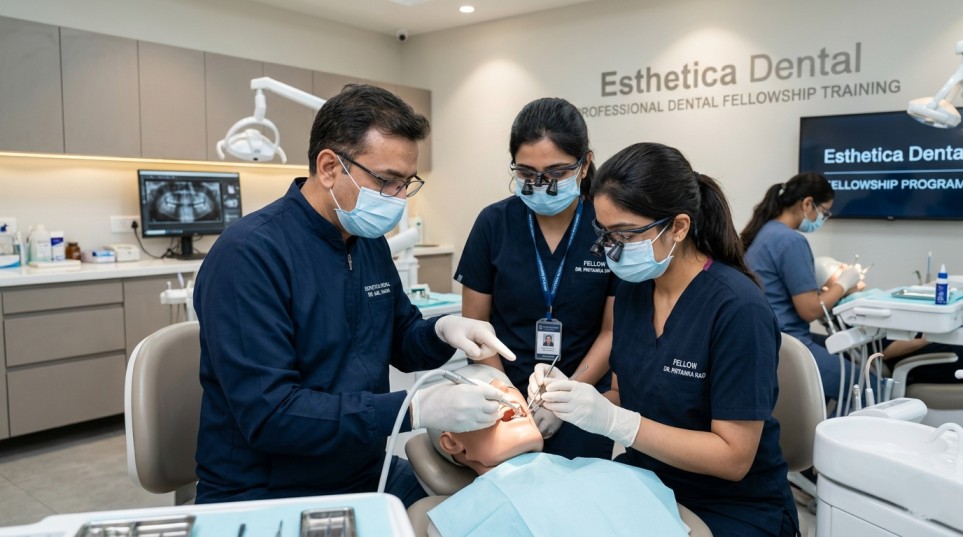
Watching a surgery on a screen is useful, but your hands only learn by doing. Hands On Dental Implant Training in India puts you at the chair, working through real clinical steps under the eye of an experienced mentor. You practise drilling sequences, implant positioning and prosthetic steps, then get feedback straight away.
Small groups matter here. When only a few participants share one trainer, you get time to ask questions, repeat difficult steps and discuss alternatives. Many dentists say this personal attention is the biggest difference between a practical course and a lecture day.
Dental Implant Training in India for International Dentists: What to Expect
Travelling for training takes some planning, but it is simpler than most people think. International participants usually arrange a visa, flights and accommodation, and a good academy will guide you on timing and local travel. Courses are normally taught in English, so Spanish dentists with working English can follow along comfortably.
It also helps to ask early about the daily schedule, the number of live cases and the support available after you return home. Clear answers to these questions tell you a lot about how organised and transparent a programme really is.
Is This Training Right for You?
Not every course suits every clinician. All-on-6 implant training in India for Spain dentists works best for people who already have some basic implant or surgical experience, although some programmes also welcome beginners. You might be a good fit if you:
- Place single implants and want to move into full-arch cases.
- Run a clinic and want to bring advanced treatment in-house instead of referring it.
- Prefer learning by doing rather than sitting through long lectures.
- Want to see a high volume of real cases in a short time.
If you are new to implants, ask whether the academy offers a foundation module first. Starting at the right level saves time and builds confidence.
How to Choose the Right Training Programme
Before you book, compare a few details instead of choosing on price alone. Look at the trainers’ clinical experience, the ratio of participants to mentors, and how much of the schedule is practical work. Ask whether CBCT planning and digital workflows are part of the teaching, because these are now standard in full-arch dentistry.
Be clear about what the certificate means, too. Short training programmes usually confirm participation and skill development, not a formal qualification. Spanish dentists should also check with the relevant professional body about continuing education recognition and about any rules on treating patients abroad.
Building Long-Term Confidence After the Course
The real learning begins when you return to your own clinic. Start with simpler cases, plan each one carefully, and use the protocols you practised during the course. Keeping notes on every case helps you spot patterns and improve faster.
It is also wise to stay in touch with your trainers. Being able to share a scan or ask a quick question about a tricky case is a real advantage in your first few full-arch treatments. A programme that offers mentorship after the course gives you much more value than one that ends on the final day.
Frequently Asked Questions
1. What is an All-on-6 dental implant?
It is a full-arch treatment in which six implants support a fixed bridge. It replaces a whole arch of missing or failing teeth with a stable, non-removable solution.
2. Why should Spanish dentists train in India?
India offers exposure to a large number of full-arch cases, small mentoring groups and a practical teaching style. Many dentists also find it a cost-effective way to gain advanced skills.
3. Is the training taught in English?
Most international programmes are delivered in English. It is still sensible to confirm this with the academy before you book.
4. Do I need prior implant experience?
It depends on the course. Many programmes prefer some surgical or implant background, but foundation modules exist for beginners.
5. How long does an All-on-6 course take?
Duration varies from a few days of intensive training to longer mentorship programmes. Ask for the exact schedule and the number of practical sessions.
6. Will I receive a certificate?
Most courses give a certificate of participation. This is not usually a degree, diploma or licence to practise, so check how it is described.
7. Can I treat patients during the training?
This depends on the academy’s format and on local regulations. Ask exactly what hands-on work is included and what supervision is provided.
Take the Next Step Toward Full-Arch Confidence
Adding full-arch implant treatment to your practice can change how you care for patients and how your clinic grows. The right training gives you a clear process, real clinical practice and the confidence to start. If you are a Spanish dentist ready to build these skills, Esthetica Advanced Dental Academy offers practical, mentor-led programmes for international participants. Contact the academy today to ask about course dates, content and support, and take the first step toward mastering All-on-6.