









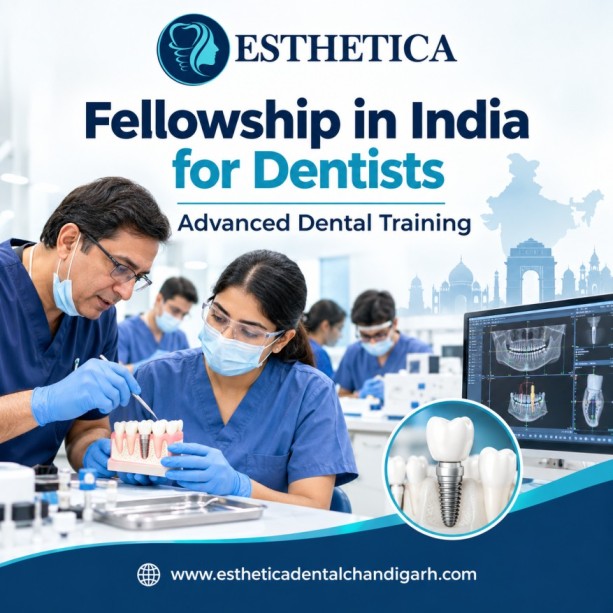
Fellowship in India for Dentists Advanced Dental Training
Choosing the right Fellowship in India for Dentists can help dental professionals build advanced clinical skills, improve treatment planning, and gain practical exposure to modern dental procedures. For dentists from India, Canada, and other countries, India has become an attractive destination for focused dental education because it offers access to experienced clinicians, diverse clinical cases, and hands-on learning opportunities. A well-structured fellowship can provide dentists with practical knowledge that complements their existing academic qualifications and professional experience.
Why Are Dentists Choosing Advanced Fellowship Training in India?
Dental education does not end after completing a dental degree. Modern dentistry continues to develop with new materials, digital technologies, treatment techniques, and patient expectations. Dentists who want to expand their clinical capabilities often look for specialized programs that provide more practical exposure than conventional classroom education.
India offers a wide range of postgraduate and continuing education opportunities for dental professionals. Dental Fellowship in India can be particularly useful for dentists who want concentrated training in areas such as implant dentistry, full-mouth rehabilitation, aesthetic dentistry, oral surgery, prosthodontics, and digital treatment planning.
For international dentists, including professionals from Canada, fellowship programs can also provide an opportunity to observe different clinical approaches and learn from dentists who manage a wide variety of cases.
What Is a Dental Fellowship Program?
A dental fellowship is an advanced professional training program designed for dentists who want to develop expertise in a particular area of dentistry. Depending on the program, training may include lectures, case discussions, treatment planning, demonstrations, clinical observation, and hands-on practice.
Unlike a basic dental course, a fellowship generally focuses on developing specialized knowledge and practical confidence. The exact structure, duration, eligibility requirements, and clinical exposure can vary between institutions and individual programs.
For dentists considering Fellowship Courses for Dentists, it is important to review the curriculum carefully. A useful program should match the dentist’s existing experience and future professional goals rather than simply offering a certificate.
What Can Dentists Learn During Advanced Training?
The learning experience depends on the specialization selected. Some programs focus on one specific discipline, while comprehensive programs combine multiple advanced techniques.
Common areas of learning may include:
- Dental implant planning and placement concepts
- Immediate implant treatment principles
- Full-mouth rehabilitation
- All-on-4 and All-on-6 treatment concepts
- Smile designing and aesthetic dentistry
- Digital dentistry and treatment planning
- Prosthetic rehabilitation
- Occlusion and functional treatment planning
- Bone and soft-tissue management concepts
- Advanced restorative techniques
- Patient communication and case presentation
Hands-on learning can make these concepts easier to understand because dentists can connect theoretical knowledge with practical clinical situations.
Why Hands-On Training Matters for Dentists
Reading about a procedure and performing it under professional guidance are two different learning experiences. Dentists often gain greater confidence when they can observe clinical workflows and understand how different treatment decisions are made.
A strong fellowship may include demonstrations followed by supervised practical sessions. This type of learning can help dentists understand instrument selection, treatment sequencing, patient assessment, complication management, and clinical decision-making.
Hands-on training can also expose dentists to situations that may not be fully covered in textbooks. Real-world cases often involve multiple factors, including bone quality, occlusion, aesthetics, medical history, patient expectations, and previous dental treatments.
Fellowship Courses for Dentists: Which Specialization Should You Choose?
The right fellowship depends on a dentist’s current skills and long-term career objectives. Someone who regularly performs restorative procedures may want to develop advanced implant or rehabilitation skills. Another dentist may be more interested in aesthetic procedures or digital workflows.
Before enrolling, dentists should consider:
1. Current Clinical Experience
Choose a program that matches your existing level of knowledge. An advanced program may be difficult to follow without sufficient foundational experience.
2. Area of Special Interest
Identify the procedures you want to learn or perform more confidently. A focused specialization can provide deeper exposure to a particular field.
3. Hands-On Opportunities
Check whether the program includes practical sessions, demonstrations, case planning, or supervised clinical training.
4. Faculty Experience
Experienced faculty can provide valuable insights into treatment planning, clinical techniques, and managing challenging cases.
5. Course Structure
Review the duration, schedule, modules, learning objectives, and assessment process before making a decision.
How Can Indian Fellowship Training Benefit Canadian Dentists?
Canada has a highly developed dental sector, and dentists practicing there may already have strong academic and clinical backgrounds. However, continuing professional education can help professionals explore additional techniques and treatment concepts.
For Canadian dentists considering training abroad, Advanced Dental Training in India can offer exposure to different clinical environments and a broad range of patient cases. India has a large and diverse population, which can create opportunities to observe various clinical presentations.
Canadian dentists should, however, distinguish between professional education and licensing requirements. Completing a fellowship outside Canada does not automatically provide authorization to practice dentistry in Canada. Dentists should independently verify the licensing, registration, credential recognition, and continuing education requirements applicable to their province.
A fellowship can therefore be viewed primarily as an educational and skill-development opportunity rather than a replacement for Canadian licensing pathways.
What Makes India an Attractive Destination for Dental Education?
India has a large network of dental colleges, clinics, hospitals, training academies, and specialist practitioners. This creates opportunities for dentists to explore multiple areas of clinical dentistry.
Another advantage is the diversity of cases available for learning. Dentists may encounter routine restorative cases alongside complex implant, prosthetic, aesthetic, and full-mouth rehabilitation cases.
The learning environment can also expose international dentists to different treatment-planning approaches. When combined with structured teaching and experienced mentorship, this can make international continuing education a valuable professional experience.
Digital Dentistry and Modern Dental Fellowship Training
Digital technology has changed how dentists diagnose, plan, and deliver treatment. Modern fellowship programs increasingly introduce dentists to digital workflows and technology-assisted treatment planning.
Depending on the program, dentists may learn about digital impressions, CAD/CAM workflows, digital smile design, three-dimensional imaging, guided implant planning, and digitally planned prosthetic rehabilitation.
These technologies can improve communication between clinicians, laboratories, and patients. They can also make complex treatment planning more organized and predictable when used appropriately.
For dentists planning their continuing education, understanding both traditional clinical principles and digital workflows can be useful for adapting to the changing dental environment.
How Does a Fellowship Improve Clinical Confidence?
Clinical confidence develops through knowledge, observation, repetition, feedback, and experience. A fellowship can bring these elements together within a structured learning environment.
During advanced training, dentists can discuss cases, evaluate treatment options, observe procedures, and receive guidance from experienced professionals. This can help them understand not only how a procedure is performed but also why a particular approach may be selected.
Case-based learning is especially useful because it encourages dentists to consider diagnosis, treatment planning, sequencing, risks, alternatives, and expected outcomes before beginning treatment.
What Should You Check Before Enrolling?
Selecting a fellowship requires more than comparing course names. Dentists should investigate the complete program before registering.
Look for information about:
- Course curriculum and learning objectives
- Faculty qualifications and clinical experience
- Duration and training schedule
- Hands-on clinical exposure
- Number and type of cases discussed
- Equipment and technology available
- Certification provided after completion
- Eligibility criteria
- Accommodation and travel considerations
- Support available for international participants
International dentists should also confirm visa requirements, travel arrangements, professional documentation, and any local restrictions related to clinical participation.
Is a Dental Fellowship Worth It for Experienced Dentists?
For experienced dentists, the value of a fellowship depends on the program and the individual’s learning objectives. Dentists who want to add a new treatment area to their clinical skill set may benefit from concentrated training at Esthetica Advanced Dental Academy.
A fellowship can also help professionals organize existing knowledge into a more structured treatment-planning approach. Instead of learning isolated procedures, dentists can explore complete clinical workflows from diagnosis through restoration.
However, a fellowship should not be viewed as a shortcut to expertise. Continued practice, professional development, appropriate case selection, and ongoing learning remain important for developing advanced clinical skills.
How Can Dentists Make the Most of Their Fellowship?
Preparation can make the training experience more productive. Before attending, dentists should identify specific procedures or concepts they want to understand better.
Keeping a list of questions can help during lectures and case discussions. Dentists can also review foundational concepts before beginning advanced training, particularly when entering an unfamiliar specialty.
During the program, active participation is important. Asking questions, discussing treatment plans, observing clinical workflows carefully, and documenting key learning points can help maximize the educational experience.
After completing the program, dentists should continue reviewing cases and applying appropriate concepts within their professional scope and local regulations.
The Future of Advanced Dental Education
Dental education is moving toward more practical, technology-supported, and specialization-focused learning. Dentists increasingly want education that connects theory with real clinical decision-making.
Future dental fellowship programs are likely to place greater emphasis on digital workflows, minimally invasive techniques, evidence-based treatment planning, multidisciplinary care, and personalized patient management.
For dentists in India and international professionals from countries such as Canada, specialized education can provide an opportunity to develop knowledge while learning in a different clinical environment.
A Message from Dr. Sharad Arya, Founder – Esthetica Dental Academy
When I started Esthetica Dental Clinic in 2012, my vision was simple — to combine clinical excellence with genuine patient care. Over the years, as our practice grew across Punjab, Himachal, and Chandigarh, I realized that the biggest gap in Indian dentistry wasn’t a lack of talent, but a lack of accessible, hands-on implant training for practicing dentists.
That’s why we built Esthetica Dental Academy — not as another certificate mill, but as a mentorship-driven program where dentists actually work on live cases, under supervision, until they’re confident enough to do it on their own. I’ve seen BDS graduates walk in unsure of their surgical skills and walk out ready to plan and execute full-arch implant cases independently.
If you’re serious about growing your implant practice, I’d encourage you to invest in training that prioritizes real clinical exposure over theory alone. That’s the philosophy behind everything we teach here.
— Prof. Dr. Sharad Arya, MDS
Every batch we train is small by design, because implant surgery demands individual attention, not a classroom of fifty watching a screen. Whether it’s digital implant planning, guided surgery, or full-arch rehabilitation, we make sure every participant leaves confident enough to apply it in their own practice.
Frequently Asked Questions
1. What is a fellowship in India for dentists?
A fellowship in India for dentists is an advanced professional education program designed to help qualified dental professionals develop specialized knowledge and practical skills in selected areas of dentistry.
2. Who can join dental fellowship courses in India?
Eligibility depends on the individual program. Many advanced dental programs are intended for qualified dentists, while some may have additional requirements based on clinical experience or specialization.
3. What are the common dental fellowship specializations?
Common areas can include implant dentistry, full-mouth rehabilitation, aesthetic dentistry, prosthodontics, digital dentistry, oral surgery, and advanced restorative procedures. Available specializations vary by institution.
4. Can Canadian dentists attend dental fellowship programs in India?
Canadian dentists may be able to attend suitable educational programs in India, subject to the institution’