








Wisdom Tooth Treatment in Mohali
Wisdom teeth are the final set of teeth to develop and usually appear between the late teenage years and early adulthood. While some people have healthy wisdom teeth that grow normally, others may experience pain, swelling, infection, or other dental problems when these teeth do not have enough space to erupt properly. Recognizing these warning signs early can help prevent more serious oral health complications.
If you are experiencing discomfort at the back of your mouth, consulting a qualified dentist can help determine whether you need wisdom tooth treatment in Mohali. At Esthetica Dental Clinic, patients can receive professional evaluation and personalized dental care based on the position and condition of their wisdom teeth.
What Is Wisdom Tooth Treatment?
Wisdom tooth treatment refers to the dental care provided when wisdom teeth cause pain, infection, decay, gum problems, or damage to surrounding teeth. Depending on the condition, treatment may involve monitoring the tooth, managing an infection, restoring a damaged tooth, or removing the wisdom tooth.
Not every wisdom tooth needs to be removed. If a wisdom tooth has erupted properly, is healthy, easy to clean, and does not cause problems, your dentist may simply recommend regular monitoring.
However, impacted, partially erupted, infected, or severely damaged wisdom teeth may require treatment. A dental examination and X-ray can help the dentist understand the tooth’s position and recommend the appropriate approach.
7 Warning Signs You May Need Wisdom Tooth Treatment
1. Persistent Pain at the Back of Your Mouth
Pain around the back of your jaw is one of the most common signs of a wisdom tooth problem. You may experience occasional discomfort at first, but persistent or increasing pain should not be ignored.
Pain can occur when a wisdom tooth is impacted, has insufficient space to erupt, or is pressing against a nearby tooth. If the discomfort continues or interferes with eating and daily activities, consider visiting a dentist for an examination.
2. Swollen or Red Gums
Swelling, redness, or tenderness around a wisdom tooth can indicate irritation or infection. This is particularly common when a wisdom tooth has only partially erupted.
Food particles and bacteria can become trapped underneath the gum tissue surrounding the tooth, creating an environment where infection can develop. If you notice persistent gum swelling around your wisdom tooth, professional dental assessment is recommended.
3. Difficulty Opening Your Mouth
A problematic wisdom tooth can sometimes cause discomfort or stiffness around the jaw. You may notice that opening your mouth fully becomes difficult or painful.
This symptom can occur alongside swelling or infection and should be evaluated, especially if it is getting worse. Early treatment can help prevent the problem from progressing.
4. Bad Breath or an Unpleasant Taste
Persistent bad breath or a bad taste in your mouth may sometimes be associated with infection around a wisdom tooth.
Partially erupted wisdom teeth can create small spaces where food debris and bacteria accumulate. Regular brushing may not always be enough to clean these areas effectively.
If unpleasant breath or taste continues despite maintaining good oral hygiene, a dental check-up can help identify the underlying cause.
5. Repeated Gum Infections
If the gum surrounding your wisdom tooth repeatedly becomes painful, swollen, or infected, it may indicate that the tooth is not erupting properly.
Repeated infections can affect your comfort and overall oral health. In such situations, your dentist may assess whether continued monitoring is appropriate or whether wisdom tooth removal would provide a more effective long-term solution.
Seeking wisdom tooth treatment in Mohali at the first signs of recurring infection can help you understand your treatment options.
6. Pressure or Damage to Nearby Teeth
An impacted wisdom tooth may grow at an unusual angle and put pressure on the neighboring molar. In some cases, this can contribute to crowding, difficulty cleaning between teeth, decay, or damage to the adjacent tooth.
Because wisdom teeth are located far back in the mouth, problems may not always be easy to identify without dental imaging. An X-ray can help your dentist assess the position of the tooth and determine whether it could affect nearby structures.
7. An Impacted or Partially Erupted Wisdom Tooth
A wisdom tooth is considered impacted when it cannot fully emerge through the gums because of insufficient space or its position within the jaw.
Some impacted wisdom teeth may remain symptom-free for a period of time, while others can cause infection, pain, gum problems, or damage to neighboring teeth.
A partially erupted tooth can also be difficult to clean properly. If your dentist identifies an impacted wisdom tooth, they can explain whether monitoring or treatment is more appropriate for your situation.
When Should You See a Dentist for Wisdom Tooth Problems?
You should consider scheduling a dental appointment if you experience persistent wisdom tooth pain, swelling, repeated infections, difficulty opening your mouth, bad breath, or discomfort while chewing.
You should not wait for severe pain before seeking professional advice. Some wisdom tooth problems may develop without obvious symptoms and can be identified during a routine dental examination.
At Esthetica Dental Clinic, a dentist can evaluate your symptoms, examine the surrounding gums and teeth, and recommend appropriate treatment based on your individual dental condition.
How Is Wisdom Tooth Treatment Diagnosed?
Diagnosis generally begins with a discussion about your symptoms and dental history. The dentist will examine your mouth and look for signs of swelling, infection, decay, gum inflammation, or abnormal tooth eruption.
Dental X-rays may also be recommended to determine:
- The position and angle of the wisdom tooth
- Whether the tooth is impacted
- The amount of available space
- Its relationship with neighboring teeth
- Possible changes around the tooth or surrounding bone
Based on the examination and imaging, the dentist can determine whether the tooth should be monitored, treated, or removed.
Wisdom Tooth Removal in Mohali: What to Expect
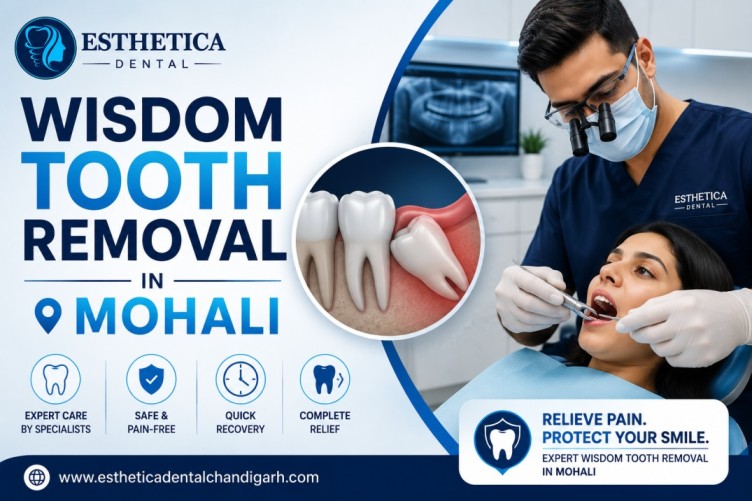
When a wisdom tooth is causing ongoing problems, removal may be recommended. Wisdom tooth removal in Mohali is generally performed after a detailed examination to determine the safest treatment approach.
Before the procedure, your dentist will explain the process and discuss factors such as the tooth’s position, the complexity of the extraction, and the expected recovery period.
After removal, following your dentist’s instructions is important for proper healing. Maintaining oral hygiene, avoiding unnecessary pressure around the treatment area, and following dietary recommendations can support recovery.
The exact procedure and recovery experience can vary depending on whether the tooth is fully erupted, partially erupted, or impacted.
Why Choose Esthetica Dental Clinic for Wisdom Tooth Treatment in Mohali?
Choosing the right dental clinic is important when you are dealing with wisdom tooth pain or an impacted tooth. Esthetica Dental Clinic focuses on evaluating the underlying dental problem before recommending treatment.
A professional assessment can help determine whether you actually require extraction or whether the tooth can be safely monitored. The clinic’s approach can also help patients understand their condition, available treatment options, and what to expect during the procedure.
If you are looking for wisdom tooth treatment in Mohali, consulting Esthetica Dental Clinic can be an important step toward addressing persistent wisdom tooth problems and maintaining your oral health.
Frequently Asked Questions
1. Do all wisdom teeth need to be removed?
No. Healthy wisdom teeth that have erupted correctly, can be cleaned properly, and are not causing dental problems may not require removal. Your dentist can determine whether monitoring or treatment is appropriate.
2. What are the most common signs of a problematic wisdom tooth?
Common signs include persistent pain, swollen or irritated gums, bad breath, unpleasant taste, repeated infections, difficulty opening the mouth, and discomfort around nearby teeth.
3. Can an impacted wisdom tooth cause problems even without pain?
Yes. Some impacted wisdom teeth may not cause noticeable symptoms initially. Dental examinations and X-rays can help identify potential problems before significant symptoms develop.