






Smile Designing and Cosmetic Dentistry Training
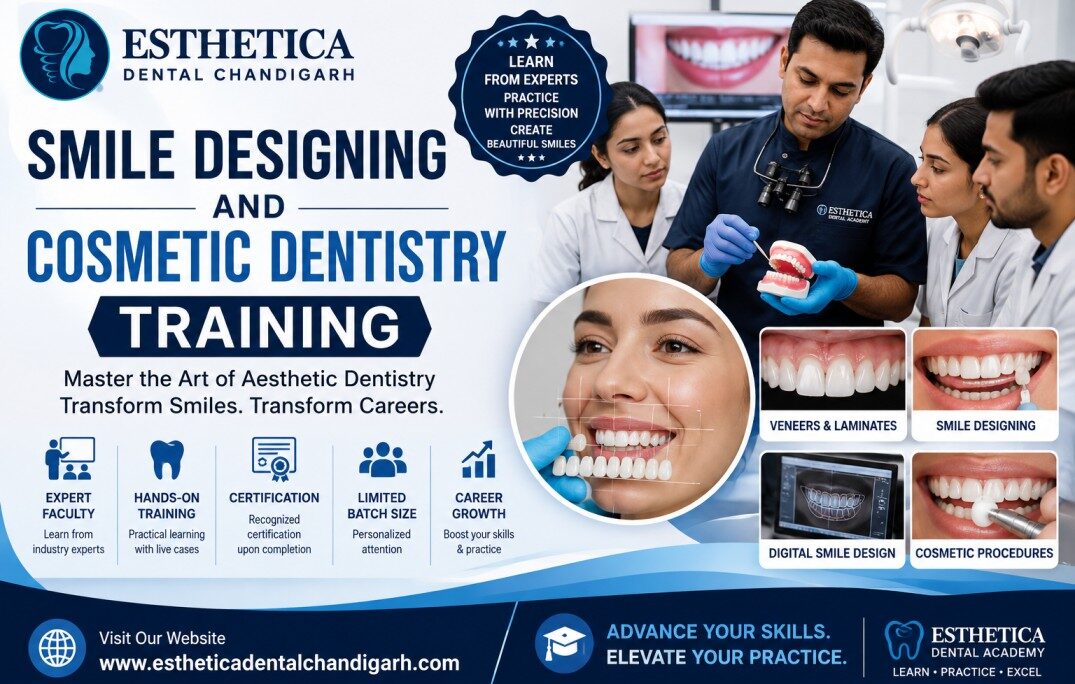
A confident smile is a beautiful smile, and cosmetic dentistry has become an important part of modern dental practice. Smile Designing and Cosmetic Dentistry Training helps dentists develop practical knowledge and clinical confidence in smile analysis, digital smile design, veneers, laminates, dental photography, and treatment planning. Modern smile designing is no longer limited to making teeth appear whiter or longer. It involves understanding the relationship between the face, lips, gums, and teeth to create a balanced and natural-looking result.
A comprehensive smile designing course gives dentists a structured approach to evaluating patients before recommending cosmetic treatment. It combines aesthetic principles, digital technology, photography, and treatment planning while considering patient expectations throughout treatment.
Why Smile Designing Training Is Essential for Dentists
Cosmetic dentistry requires careful examination because every patient has different facial characteristics, dental conditions, preferences, and expectations. Training helps dentists understand the elements that should be evaluated before treatment.
A strong training program develops fundamental aesthetic and clinical skills while teaching dentists how to communicate realistic outcomes. It can also improve communication with dental laboratories and introduce digital planning techniques that support case presentation. Reviewing different cases and receiving professional feedback can help dentists identify treatment challenges and make more informed decisions.
The objective is to help dentists develop confidence while understanding which cases suit their experience and when specialist assistance may be appropriate.
Smile Analysis: Understanding Facial Proportions
Smile analysis is the first step in designing an attractive and harmonious smile. Dentists need to examine the relationship between teeth, gums, lips, and surrounding facial structures before selecting a treatment approach. Important factors include tooth proportions, dental midline, smile arc, gingival display, incisal edge position, symmetry, and tooth exposure.
The purpose of smile analysis is not to create identical smiles. Dentists should understand how individual facial characteristics influence appearance and guide treatment decisions.
Through structured smile analysis, dentists can identify options such as bonding, veneers, laminates, orthodontics, periodontal procedures, whitening, or restorative treatment. Assessment can also establish realistic expectations.
Digital Smile Design: Visualizing the Patient’s Dream Smile
Digital Smile Design has transformed the way cosmetic cases can be planned and presented. Digital photographs, measurements, facial analysis, and computer-based design tools can help dentists visualize possible aesthetic changes before definitive treatment begins.
Training introduces dentists to the principles of using digital information for treatment communication. Digital design can help patients understand proposed changes in tooth shape, proportion, length, and smile appearance. It can also improve laboratory communication.
However, digital design should support clinical judgment rather than replace diagnosis. Dentists still need to evaluate tooth structure, periodontal health, occlusion, facial anatomy, and patient expectations. The proposed design should be clinically realistic and achievable.
Veneers: Delivering Conservative Aesthetic Dentistry
Veneers can be considered for teeth with concerns involving colour, contour, shape, or size. Training helps dentists understand veneer indications, preparation principles, shade selection, aesthetic planning, provisionalization, and laboratory communication.
Before recommending veneers, dentists should evaluate periodontal condition, occlusion, tooth position, existing restorations, available tooth structure, and patient expectations. The objective should be to achieve an aesthetic improvement while preserving sound tooth structure whenever clinically possible.
Training helps dentists understand how morphology, facial proportions, shade, and material selection influence results while encouraging clear communication about limitations and maintenance.
Laminates: Combining Dental Expertise With Artistic Precision
Dental laminates are designed to enhance the appearance of teeth while maintaining a natural and harmonious smile. Their success depends on several factors, including tooth morphology, shade, proportion, preparation, aesthetics, and laboratory communication.
Training can cover laminate case assessment, preparation considerations, shade selection, treatment planning, and aesthetic evaluation. Dentists learn to consider how the proposed restoration will relate to the patient’s facial appearance rather than focusing only on individual teeth.
Patients should understand realistic outcomes, limitations, maintenance, alternatives, and relevant clinical considerations before treatment. Careful planning can support natural-looking results.
Dental Photography: Enhancing Diagnosis and Communication
Dental photography is an essential skill in cosmetic dentistry because photographs provide detailed information about teeth, gums, lips, and facial appearance. They can support diagnosis, treatment planning, laboratory communication, documentation, and patient education.
Training can introduce the principles of capturing standardized intraoral and facial photographs. Dentists can learn about positioning, framing, retractors, lighting, camera settings, and consistent documentation. Standardized photographs make it easier to compare changes before, during, and after treatment.
High-quality images may reveal details that are difficult to appreciate clinically. Photographs can also explain aesthetic concerns and treatment options clearly.
Treatment Planning: Turning Smile Design Into Clinical Action
Treatment planning connects smile analysis and digital design with practical clinical treatment. After evaluating the patient, dentists need to decide which procedures are appropriate and how they should be sequenced. Planning should consider tooth structure, periodontal health, occlusion, facial aesthetics, patient expectations, and long-term maintenance. Some patients may require combined cosmetic and restorative procedures, while others may benefit from orthodontic or periodontal treatment before restorative work.
Patients should understand treatment, alternatives, expected results, limitations, maintenance, and potential risks. Clear communication supports informed decisions and realistic expectations.
Gaining Confidence Through Practical Experience
Practical experience can strengthen a dentist’s ability to apply cosmetic dentistry principles. Hands-on learning allows participants to analyze smiles, review photographs, discuss cases, practice digital planning concepts, and receive feedback.
The objective is not simply to perform more procedures. Dentists should select appropriate cases, recognize limitations, and know when referral is required. Confidence should come from knowledge, preparation, practice, and judgment.
Choosing the Right Smile Designing Course
Dentists should select a training program that combines theoretical understanding with practical exposure. Important areas include smile analysis, digital smile design, veneers, laminates, dental photography, treatment planning, case selection, occlusion, periodontal considerations, complications, and appropriate referrals.
Case discussions and feedback help dentists understand treatment selection and how aesthetic, biological, and functional factors influence planning.
Conclusion: Elevate Your Smile Design Skills
Dentists should choose a smile designing course that balances theoretical knowledge with hands-on clinical exposure. A well-structured program should cover smile analysis, digital smile design, veneers, laminates, dental photography, treatment planning, case selection, occlusion, periodontal considerations, complications, and appropriate referrals. Esthetica Dental Clinic can be considered by dentists looking for practical exposure and a structured approach to aesthetic dentistry. Case discussions, clinical demonstrations, and expert feedback can help dentists better understand treatment selection while considering aesthetic, biological, and functional factors for predictable outcomes.
Frequently Asked Questions
1. What is smile designing training?
It teaches dentists smile analysis, digital design, veneers, laminates, photography, and treatment planning.
2. Does the training cover digital smile design?
Yes, it introduces digital photography, measurements, design concepts, and visual treatment planning.
3. Can dentists learn veneer planning?
Yes, training covers case selection, preparation principles, aesthetics, shade selection, and laboratory communication.
4. Why is dental photography important?
It supports diagnosis, documentation, treatment planning, laboratory communication, and patient education.
5. Is laminate training included?
Yes, the course covers laminate assessment, preparation considerations, aesthetics, and treatment planning.
6. How does smile analysis benefit dentists?
It helps dentists evaluate proportions, symmetry, facial harmony, tooth position, and soft-tissue relationships.
7. Can training improve cosmetic dentistry confidence?
Yes, practical learning can strengthen clinical skills, case selection, planning, and confidence.