









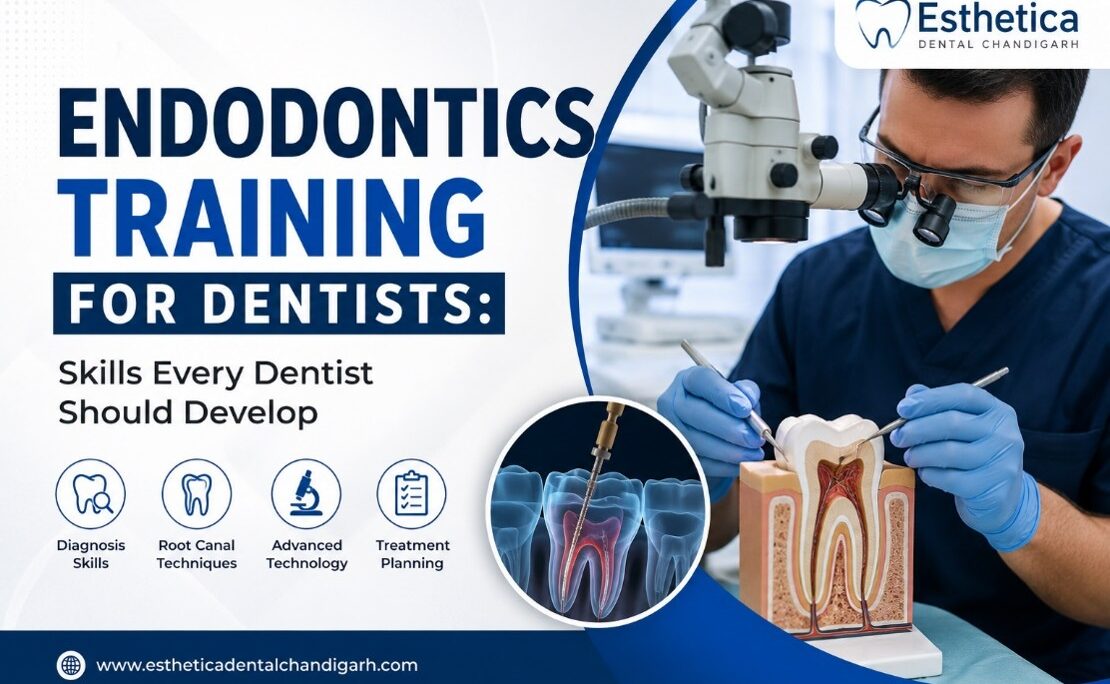
Endodontics Training for Dentists: Skills Every Dentist Should Develop
Root canal treatment is an important part of modern restorative dentistry, but predictable endodontic care involves much more than following a fixed sequence. endodontics training for dentists helps clinicians develop skills in diagnosis, access cavity preparation, canal negotiation, cleaning and shaping, irrigation, obturation, and treatment planning with greater clinical confidence.
Why Endodontic Expertise Matters for Modern Dentists
Patients want comfortable treatment, clear answers, and dependable results.
Endodontics involves several aspects, including diagnosis, instrumentation, disinfection, imaging, and treatment planning. Understanding the rationale behind various procedures can allow dentists to perform them with increased precision and avoid treating them as unrelated interventions.
7 Essential Endodontic Skills Every Dentist Should Develop
A strong foundation makes routine treatment more organized and complex cases easier to assess.
A comprehensive endodontics course for dentists should focus on practical competencies that dentists can use in everyday practice. The following skills form an important foundation for effective root canal treatment.
1. Accurate Endodontic Diagnosis
Every successful treatment begins with understanding the problem.
Dentists should combine patient history, clinical examination, pulp testing, percussion, palpation, periodontal assessment, and appropriate radiographic evaluation. This information helps identify pulpal and periapical conditions and determine whether endodontic treatment is appropriate.
2. Access Cavity Preparation
Good access creates visibility while protecting healthy tooth structure.
Access preparation should provide adequate exposure of canal orifices without unnecessary removal of sound tissue. Dentists need to understand anatomical landmarks and recognize challenges caused by restorations, calcification, fractures, or unusual anatomy.
Advanced endodontics training can improve understanding of access design and help clinicians develop a more systematic approach to canal location and negotiation.
3. Canal Location and Working Length
Understanding root anatomy improves control throughout treatment.
Canal orifices are not always easy to locate. Dentists should develop a systematic method for identifying and negotiating canals while maintaining tooth structure. Working length determination is equally important because cleaning, shaping, and filling depend on accurate canal control.
Training may introduce appropriate use of apex locators, radiographs, hand files, and tactile feedback.
4. Rotary and Modern Instrumentation
Technology works best when clinicians understand its strengths and limitations.
Rotary endodontics training can introduce dentists to file systems, sequence, speed, torque, glide path preparation, and safe instrumentation principles. Clinicians should also understand why files may separate and how case selection, anatomy, pressure, and instrument fatigue can influence risk.
5. Irrigation and Disinfection
Mechanical preparation alone cannot reach every part of the root canal system.
Irrigation supports removal of tissue remnants, debris, and microorganisms from areas that instruments may not fully contact. Dentists should understand commonly used irrigation solutions, indications, limitations, delivery methods, safety precautions, and basic activation principles.
Effective irrigation requires controlled technique and awareness of root anatomy. Proper training helps clinicians understand how chemical cleaning supports mechanical preparation.
6. Obturation and Canal Sealing
A well-prepared canal needs a carefully considered final seal.
A root canal treatment course should explain canal drying, master cone selection, sealer considerations, filling techniques, and evaluation of the completed obturation. Dentists should understand how inadequate preparation, inaccurate working length, voids, or inappropriate materials can affect the result.
7. Endodontic Complication and Case Management
Clinical confidence includes knowing what to do when treatment does not follow the expected path.
Endodontic procedures may involve ledges, blocks, transportation, perforations, separated instruments, missed canals, or irrigation-related complications. Dentists should understand common causes, prevention strategies, and basic management principles.
Good endodontic case management also means recognizing personal limitations. Knowing when to reassess a case, seek advice, or refer a patient is an essential professional skill.
Endodontic Hands-On Training for Clinicians
Practice helps turn theoretical knowledge into dependable clinical habits.
Endodontic hands-on training can include access preparation, canal negotiation, working length determination, hand and rotary instrumentation, irrigation, obturation, and evaluation of completed treatment.
Mentor feedback can be particularly valuable because small procedural errors may influence treatment quality. Case discussions can also show how patient factors and anatomy affect clinical decisions. A structured learning environment encourages dentists to ask questions and refine their technique.
Modern Endodontics and Digital Technology
Smart use of technology can support better diagnosis and treatment planning.
Digital radiography, magnification, apex locators, rotary systems, and selected CBCT applications have become useful tools in contemporary endodontics. A modern endodontics course should explain not only how these technologies work but also their indications and limitations.
Who Can Benefit From Endodontic Training?
Continuous education can benefit dentists at different stages of their careers.
BDS graduates, general practice dentists, and qualified clinicians can consider root canal training for dentists when they want to strengthen their endodontic knowledge. New graduates may focus on fundamentals, while experienced dentists may seek additional guidance for difficult anatomy, retreatment, or procedural complications.
How to Choose the Right Endodontics Course
Look beyond the course title and examine what the program actually teaches.
When selecting a clinical endodontics training program, review the curriculum carefully. Diagnosis, access preparation, working length, cleaning and shaping, rotary instrumentation, irrigation, obturation, and complication management should form important parts of the learning experience.
Dentists should also consider eligibility, duration, practical exposure, faculty experience, equipment, learning methods, and post-course guidance.
7 FAQs About Endodontics Training for Dentists
1. Who can join an endodontics training program?
BDS graduates and qualified dentists who want to strengthen their root canal knowledge and clinical skills can consider suitable training.
2. What will I learn in an endodontics course?
The curriculum commonly covers diagnosis, access preparation, canal negotiation, working length, cleaning and shaping, rotary instrumentation, irrigation, obturation, and complication management.
3. Is rotary endodontics difficult to learn?
The fundamentals can be developed through structured education, demonstrations, supervised practice, and regular feedback.
4. Why is practical endodontic training important?
Hands-on learning helps dentists understand instruments, anatomy, treatment sequencing, and common clinical challenges more effectively.
5. Can BDS dentists improve their root canal treatment skills?
Yes. Appropriate education and supervised practical learning can strengthen the knowledge and skills needed for suitable endodontic cases.
6. Can endodontic training help dentists treat Canadian patients?
Yes. Strong clinical knowledge, organized treatment planning, documentation, and communication can support dentists managing suitable international patients, including patients from Canada.
7. How can endodontic training benefit private practice?
It can strengthen diagnosis, treatment planning, procedural efficiency, complication awareness, and communication with patients.
Strengthen Your Endodontic Skills With Esthetica Dental Academy
From diagnosis and access preparation to cleaning, shaping, irrigation, obturation, restoration, and follow-up, every stage contributes to treatment quality. Continuous education can help clinicians refine their technique, understand new developments, and approach appropriate cases with greater confidence.
At Esthetica Dental Academy, qualified clinicians can develop practical endodontic knowledge through focused learning and clinical guidance. The goal of continuing education should not simply be learning more procedures. It should be developing the ability to make informed decisions, recognize limitations, manage suitable cases systematically, communicate effectively with patients, and understand when specialist support is appropriate.