







Dental Veneers vs Crowns Which Option Is Right for You
Both dental veneers and crowns can improve the appearance of a smile, but they are not the same solution. Veneers are mainly designed to improve the visible front surface of suitable teeth, while crowns provide more extensive coverage and protection. The right choice depends on your tooth condition, oral health, cosmetic goals, and long-term needs.
At Esthetica Dental Clinic, every smile is assessed individually before a treatment is recommended. Understanding the difference can help you make a confident decision.
What Are Dental Veneers?
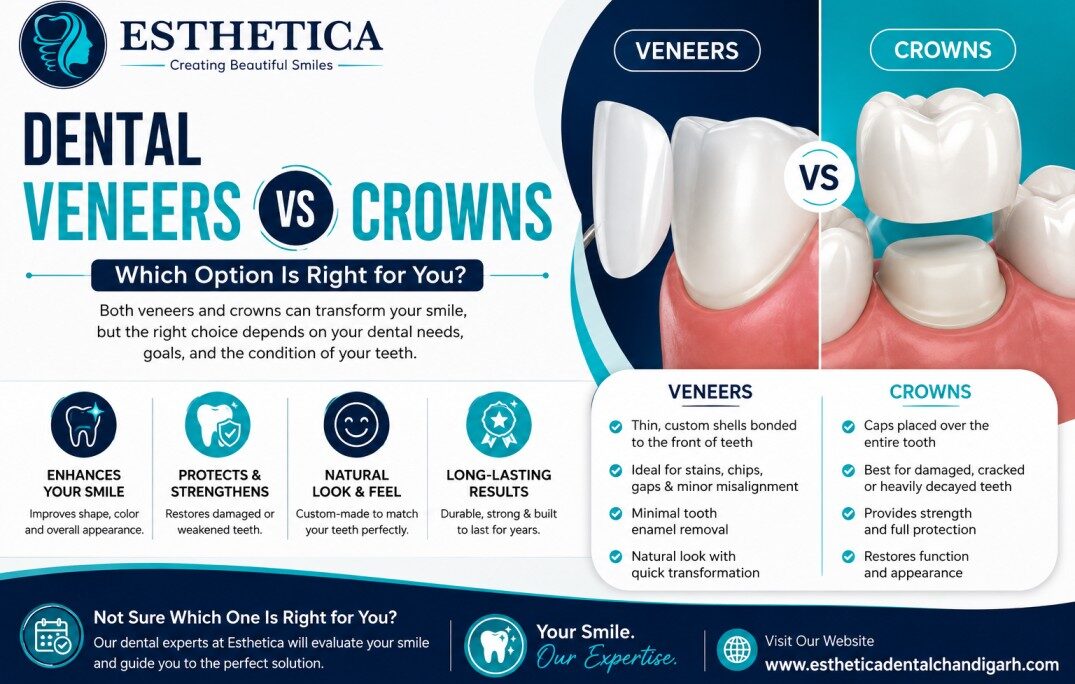
Dental veneers are thin, customized restorations placed over the front surface of teeth. They are commonly considered for cosmetic concerns such as discoloration, small chips, uneven edges, minor gaps, or changes in tooth shape.
Because veneers primarily improve the visible part of the tooth, they may be suitable when the underlying tooth is relatively healthy and strong. The shade, shape, size, and proportions can be customized to complement the surrounding teeth and overall smile.
A well-planned result should look balanced and natural.
What Are Dental Crowns?
A dental crown is a restoration that covers a tooth more extensively. Crowns are often used when a tooth has been weakened by significant decay, a large filling, fracture, severe wear, or previous dental treatment.
A crown can restore the tooth’s shape, strength, function, and appearance. Since it provides broader coverage than a veneer, it may be more appropriate when the tooth requires structural protection as well as cosmetic improvement.
Crowns can also be customized to match neighboring teeth.
The most important difference is the amount of tooth structure each restoration covers. A veneer generally covers the visible front surface, while a crown covers most or all of the tooth.
Veneers are often considered when appearance is the primary concern and sufficient healthy tooth structure remains. Crowns are more commonly considered when a tooth needs greater support or protection.
The best treatment depends on your tooth, bite, oral health, and goals.
Veneers may be considered for people who are mainly concerned about the appearance of otherwise suitable teeth. They can help address certain stains, small chips, uneven edges, minor spaces, and shape irregularities.
For someone who wants a refined smile without extensively restoring the tooth, veneers may be an option. However, they are not appropriate for every situation. Tooth grinding, inadequate enamel, untreated gum problems, poor oral hygiene, or certain bite issues may affect candidacy.
A professional examination is therefore important before making a decision.
When Might Crowns Be More Suitable?
Crowns may be a better choice when a tooth is significantly damaged or weakened. If a tooth has lost a substantial amount of structure, a cosmetic covering alone may not provide the protection it needs.
Crowns can help protect compromised teeth while restoring chewing function and appearance. They may also be recommended after certain root canal treatments when the remaining tooth structure needs additional support.
At Esthetica Dental Clinic, the condition of the tooth is considered alongside the patient’s aesthetic expectations before a restoration is selected.
Which Option Looks More Natural?
Both veneers and crowns can look natural when they are carefully designed and properly matched to the surrounding teeth. Natural-looking dentistry is about more than choosing a shade of white.
The shape of the restoration, tooth proportions, translucency, alignment, gum appearance, and relationship with neighboring teeth all influence the final result.
At Esthetica Dental Clinic, attention to these details can help create restorations that complement the patient’s existing smile instead of making the teeth look noticeably artificial.
Which Treatment Is More Durable?
The longevity of veneers and crowns depends on several factors, including the material used, tooth condition, bite, oral hygiene, lifestyle habits, and professional maintenance.
Both restorations require maintenance. Brushing twice daily, cleaning between the teeth, attending dental checkups, and avoiding habits such as biting hard objects can help protect your dental work.
If you grind or clench your teeth, tell your dentist because additional protection may sometimes be recommended.
What Happens During the Consultation?
The decision between veneers and crowns should begin with an examination rather than a treatment preference. Your dentist will assess the tooth, gums, bite, existing restorations, and overall oral health.
You can explain what you dislike and what you hope to change. Your dentist may discuss different options, expected results, treatment stages, maintenance, limitations, and costs.
At Esthetica Dental Clinic, patients can ask questions and understand their choices before deciding on a treatment plan.
Why Oral Health Comes First
Cosmetic dentistry works best when the foundation is healthy. Cavities, gum disease, infections, or other dental problems may need to be treated before veneers or crowns are considered.
Choosing a cosmetic restoration without addressing an underlying problem can create unnecessary complications. A healthy mouth gives the restoration a better environment and supports long-term dental care.
A personalized assessment is more valuable than choosing a treatment based only on photographs.
Veneers or Crowns: How Do You Decide?
The decision should be based on the condition of your teeth and your individual goals. If the tooth is healthy but has cosmetic imperfections, veneers may be considered. If the tooth is weakened or extensively damaged, a crown may provide the protection it needs.
Sometimes neither option is the best solution. Bonding, whitening, orthodontic treatment, implants, or another restoration may be more appropriate.
At Esthetica Dental Clinic, treatment planning can focus on achieving a natural-looking result while respecting the health and function of your teeth.
How Can You Protect Your New Smile?
Whichever restoration you choose, daily care remains important. Brush with fluoride toothpaste, clean between your teeth, and attend regular dental examinations. Follow any specific instructions given by your dentist.
Avoid chewing extremely hard objects or using your teeth to open packaging. If you grind or clench your teeth, discuss it with your dentist because a protective nightguard may sometimes be recommended.
Good habits can help your natural teeth and restorations stay healthier for longer.
Frequently Asked Questions
1. Are veneers better than crowns?
Neither is universally better because the appropriate option depends on tooth condition, oral health, and individual cosmetic goals.
2. Are crowns stronger than veneers?
Crowns generally provide more extensive structural coverage, making them suitable for teeth that need greater protection.
3. Do veneers look natural?
Yes, properly designed veneers can closely match surrounding teeth and create a natural-looking smile.
4. Can veneers fix damaged teeth?
Veneers may improve minor imperfections, but significantly damaged teeth may require crowns or other restorative treatment.
5. How long do veneers and crowns last?
Their longevity varies according to materials, oral hygiene, bite, habits, tooth condition, and professional maintenance.
6. Can I get veneers on all my teeth?
Treatment depends on your oral health, smile goals, tooth condition, and whether veneers are clinically appropriate.
7. How do I choose between veneers and crowns?
A professional dental examination is the best way to determine which restoration suits your tooth and treatment goals.
Final Thoughts
Dental veneers and crowns can both transform a smile, but they are designed for different situations. Veneers may be suitable when the main concern is cosmetic improvement, while crowns can be more appropriate when a tooth needs broader coverage, strength, or protection.
The best decision should never be based only on price, trends, or photographs. Your tooth condition, oral health, bite, expectations, and long-term maintenance all deserve consideration.
At Esthetica Dental Clinic, patients can discuss their concerns and explore personalized options before committing to treatment. A careful consultation can help create a smile that feels comfortable, natural, and truly yours.