








Dental Treatments You Can Complete in One Trip to India
Choosing the right place for dental treatment is a personal decision. For individuals comparing India and Canada, the cost, duration of treatment, dental procedures, travel time, and post-treatment care are relevant. India attracts more foreign patients due to its modern private clinics and qualified dentists.
India vs Canada: What factors to consider?
Deciding between India and Canada requires looking at treatment options, the dentist’s qualifications and experience, the clinic’s quality, equipment and materials, schedule, post-treatment recovery, travel time, and aftercare. Canada can be more convenient for local residents who wish to have follow-up treatment. India can be a good option for dental tourists who want to have several procedures during a single trip. Before booking an appointment, ask for a detailed treatment plan and clarify all related questions. It is critical to understand the procedure, duration, expected outcomes, risks, and aftercare.
Dental Treatment Cost: India vs Canada
The most apparent difference between Canada and India is the cost of treatment. Private treatment abroad is a significant criterion for many individuals. However, treatment in private clinics in India can be more expensive than in Canada. The most popular procedures among foreign patients are dental implants, crowns, bridges, veneers, root canal treatment, dentures, and reconstruction. It is essential to calculate all expenses related to travel, accommodation, local transportation, visa, travel insurance, consultations, tests, medications, and post treatment follow-ups. Check with the clinic about the treatment package and additional costs for laboratory tests, temporary procedures, scans, or other services.
Treatment time: can India save you time?
The duration of treatment depends on the chosen dental procedure. For example, cleaning, filling, or simple restoration can take only one appointment. Crowns, bridges, and root canal treatment may require several visits. Implants need considerable time and planning.
What treatments can be done during a one-time trip to India?
Dental cleaning and prevention
A qualified dentist can do professional cleaning and polishing, examine the mouth and set up a prevention schedule.
Dental filling
Dentists remove decay, process the tooth, and fill it with a suitable material during one appointment.
Root canal treatment
Usually, root canal treatment involves several stages and more than one appointment, depending on the tooth’s condition and infection. However, some stages can be completed during one session.
Crowns and Bridges
It is possible to complete most stages of crowns and bridges during one trip if the dentist has enough time for preparation, impressions, placement, and adjustment. The required time depends on the complexity of the case and the laboratory’s workload.
Veneers and Smile Correction
A cosmetic dentist can develop a smile plan and place veneers during one trip.
Single-Tooth Implants
The implantation of one tooth can be done during one visit. However, it is critical to clarify whether the entire procedure, including abutment and crown, will be completed during the visit.
Dentures and Some Restorative Procedures
Some treatments of removable prostheses or restorative procedures can be planned and completed during one trip.
How to plan a one-time trip to India for dental treatment?
It is vital to contact the clinic before booking a flight to schedule an initial examination. Attach all scans, X-rays, photos, treatment records, and other relevant information to the application so that the dentist can review the case and estimate the required time. Ask for information about the number of visits and the expected length of the trip. Remember that the final treatment plan may change depending on the dentist’s findings during the personal examination.
Is India a good option for dental treatment?
India can be a good choice for international patients who want to have many procedures done and afford them. Dental tourism is not suitable for everyone, especially those with complex cases or conditions that require extended treatment and follow-up care. A specialist will advise whether it is possible to complete the treatment during a short trip and which procedures to do first.
Safety should be the priority
While costs and convenience are essential, patient safety should be the priority when choosing a clinic abroad. Only qualified dentists can ensure high-quality and transparent treatment. Patients should ask questions about sterilization, diagnostics, materials, anesthetics, and aftercare. A foreign dentist can explain the benefits and limitations of the selected procedure. A competent professional will give practical recommendations and inform the patient about all details and possible risks. It is critical to clarify whether there are any restrictions or special care after dental interventions, especially if the trip includes surgery. It is also essential to keep in touch with the clinic and follow the proposed schedule for examinations, procedures, and aftercare. It is advisable to leave enough time for treatment, possible complications, and recovery. Always keep copies of the records and receipts for future reference.
Dental Treatments During One Trip to India
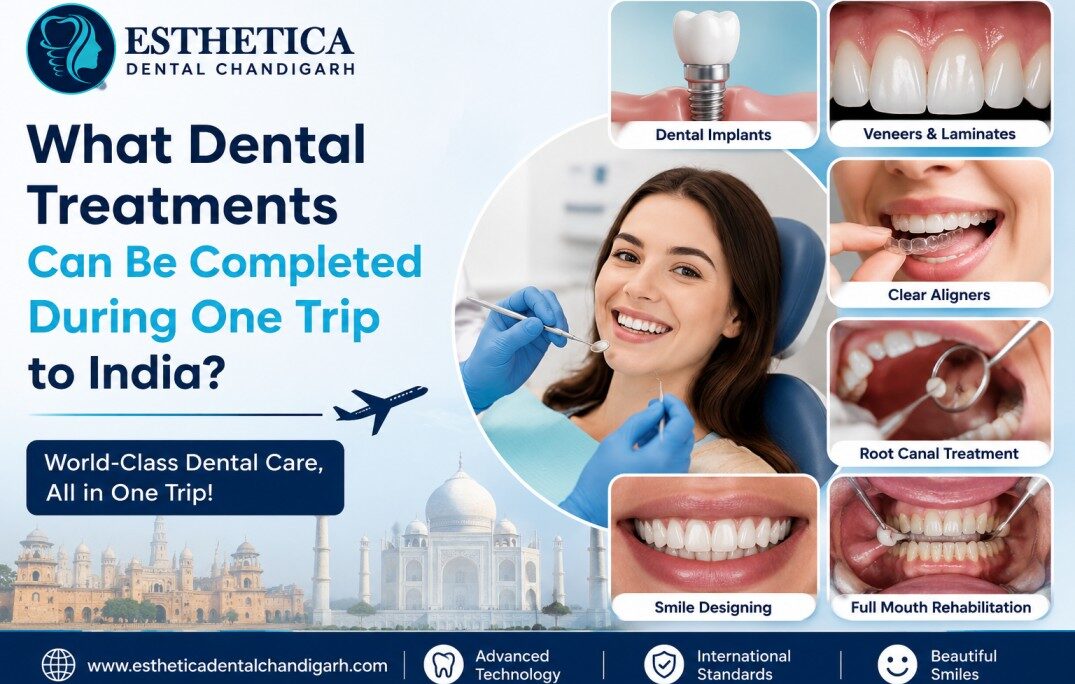
Planning dental treatment in India can be convenient for patients who want to complete multiple procedures during a single visit. Depending on the treatment plan, procedures such as dental implants, crowns, bridges, root canal treatment, teeth whitening, and cosmetic dentistry may be completed or started within one trip. Esthetica Dental Clinic provides personalized treatment planning based on each patient’s oral health, treatment needs, and available travel time. A consultation and diagnostic evaluation help determine which procedures can be safely combined and how many appointments may be required.
Frequently Asked Questions
1. Is dental treatment in India cheaper than in Canada?
Dental treatment in India can be more affordable, depending on the procedure, dentist, materials, and complexity of the case. However, it is vital to compare all expenses related to treatment, travel, accommodation, and other expenses.
2. Can I complete all my dental treatment in one trip?
It depends on the case, so it is essential to clarify whether all planned procedures can be completed in one trip or require several visits. Some treatments can be completed in a short time, while more complex cases need more appointments.
3. What procedures can be completed during one trip to India?
All procedures can be completed during one trip, depending on the case, time, and the dentist’s workload. Dental cleaning, fillings, root canal treatment, crowns, bridges, veneers, dentures, and some restorative treatments can be completed during one trip. However, implants require additional healing time.
4. How long should I stay in India?
The length of the trip depends on the treatment plan. Some procedures can be completed in a few days, while several dental interventions and multiple visits need more time. It is vital to clarify the schedule with the dentist in advance and leave free time in the itinerary in case of unplanned circumstances.
5. Are dental implants completed in one appointment?
An implant procedure can be completed during one appointment if only one implant is placed. However, it is essential to clarify with the dentist whether abutment, crown, and other procedures will be included in the scope of services.
6. Should I choose a dental clinic only based on prices?
No, it is vital to consider various factors, including the dentist’s qualifications, years of experience, equipment, materials, services, personal patient care, and reviews. A personal consultation and a detailed treatment plan are also vital.
7. How should international patients prepare for dental treatment in India?
International patients should make sure to bring all records, discuss the treatment plan, clarify costs, ask for the estimated number of appointments, get information about accommodation options, and other essential matters. It is also critical to leave extra time in the itinerary in case of any unplanned circumstances.