








Dental Tourism Training for Dentists Complete Career Guide
Dental tourism training for dentists is an emerging career opportunity for dental practitioners who want to serve international patients. Treating overseas patients requires more than clinical expertise. Dentists also need skills in communication, treatment planning, documentation, scheduling, cost discussion, travel coordination, and follow-up. Proper training can help professionals understand the complete patient journey and create a smoother experience from the first enquiry to post-treatment care.
Why Are International Patients Choosing Dental Tourism?
Patients increasingly compare treatment quality, waiting periods, available procedures, technology, and overall costs before selecting a dental destination. India has become an attractive option for international patients because dental professionals offer diverse treatment options and advanced clinical services. Patients from Canada and other countries may consider overseas treatment when they want shorter waiting periods, comprehensive care, and a planned treatment experience.
Understand What International Patients Really Need
International patients often have questions before they travel. They may want to know how long treatment will take, what procedures are required, what the estimated cost is, and how recovery will affect their plans. A trained dental team can answer these questions clearly and honestly, helping patients make informed decisions without creating unrealistic expectations.
What Does a Dental Tourism Course Teach?
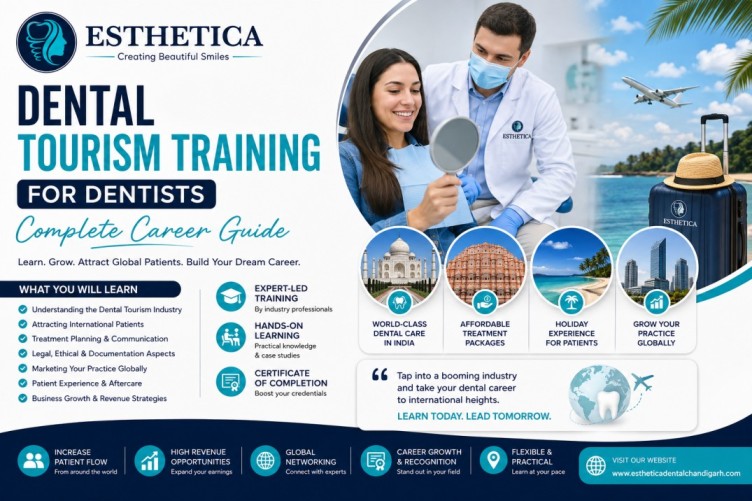
A strong dental tourism course should provide knowledge beyond clinical procedures. It should introduce dentists to international patient management, consultation, case assessment, treatment planning, appointment scheduling, cost communication, consent, documentation, travel coordination, and post-treatment follow-up. Learning these areas can help dentists handle overseas enquiries more confidently and build an organized patient workflow.
Make Overseas Patient Consultation More Effective
The first consultation may happen through email, video consultation, or an online enquiry form. Patients may share photographs, previous reports, radiographs, or other records. Dentists should learn how to review the available information, identify what is missing, explain possible treatment options, and establish realistic expectations before the patient travels. Clear communication at this stage can prevent confusion later.
Create a Realistic Treatment Plan
International patients may have limited time during their visit. Therefore, treatment planning should consider what can safely be completed during the available stay and what may require additional visits. Appointment sequencing, laboratory work, healing periods, temporary restorations, and follow-up should be considered.
Develop Clinical Expertise for Overseas Patients
Dental tourism requires precision, predictability, and careful case selection. International patients may seek implants, prosthodontics, cosmetic dentistry, endodontics, periodontal treatment, or full-mouth rehabilitation. Dentists should maintain strong clinical skills and recognize when complex cases require multidisciplinary planning.
Gain Experience in Complex Case Management
Overseas patients may travel for multiple implants, full-mouth rehabilitation, smile makeovers, crowns, bridges, or combined procedures. Dentists should be comfortable evaluating complex cases using photographs, radiographs, scans, impressions, and complete medical and dental histories. Detailed assessment helps the dentist create a safer and more practical treatment pathway.
Communicate With Confidence Across Cultures
Communication plays a major role in international patient management. Patients may have different cultural expectations, communication styles, and ideas about dental care. Dentists should explain treatment in simple language, listen carefully to concerns, and provide written information where appropriate. Compassionate communication can help patients feel respected and more comfortable throughout their dental journey.
Deliver Patient-Centered Dental Care
A successful dental tourism experience is not limited to the treatment itself. Patients also remember how efficiently the clinic responded, how clearly information was provided, and how smoothly appointments were organized. A patient-centered approach considers clinical needs, expectations, budget, communication preferences, and practical concerns while keeping professional standards at the center.
Coordinate Treatment and Travel Schedules
Dental tourism naturally connects healthcare with travel. The dental team may help patients understand practical considerations such as appointment timing, laboratory schedules, recovery periods, and the approximate length of their clinical stay. Travel decisions should remain with patients, while the dental team provides accurate treatment-related information that can help them plan responsibly.
Why Should Dentists Consider Dental Tourism as a Career?
A dental tourism career can help dentists develop a specialized professional profile. Professionals who understand international patient management can offer a more organized experience to overseas patients while strengthening their practice systems. Their focus should remain on quality care, transparent communication, ethical marketing, predictable planning, and responsible patient support rather than competing only on price.
How to Choose the Right Dental Tourism Training Program
Dentists should select a program that combines theoretical knowledge with practical insights. A useful program should explain how international patient workflows operate in real situations. Case discussions, consultation examples, documentation guidance, communication exercises, and treatment-planning scenarios can make learning more practical and easier to apply.
Review the Curriculum Before Enrolling
A comprehensive curriculum may include international patient acquisition, consultation, case screening, treatment planning, cost communication, consent, documentation, travel coordination, follow-up, patient experience, and ethical marketing.
What Are the Career Prospects After Training?
Dental tourism training can help dentists create a systematic workflow for international patients, from online enquiry and virtual consultation through treatment planning, clinical care, and follow-up. A structured process helps teams understand responsibilities and keeps patients informed.
What Is the Future of Dental Tourism in India?
The future of dental tourism in India is increasingly connected with digital communication and online research. International patients can compare clinics, treatment information, reviews, services, and educational content before making decisions. Dentists therefore need an informative website, useful content, responsive communication, and ethical digital marketing. A strong online presence can help international patients understand a clinic before contacting the team.
Frequently Asked Questions
1. What is dental tourism training for dentists?
It prepares dental professionals to manage international patients, treatment planning, communication, documentation, coordination, and follow-up.
2. Is dental tourism a good career option for dentists?
Yes, it can provide a specialized career direction for dentists interested in serving international patients.
3. What should a dental tourism course include?
It should include international patient management, consultation, treatment planning, documentation, communication, follow-up, and ethical marketing.
4. Can dentists in India treat patients from Canada?
Yes, subject to applicable professional, clinical, consent, documentation, and regulatory requirements.
5. What treatments are common in dental tourism?
Dental implants, crowns, bridges, veneers, cosmetic dentistry, and full-mouth rehabilitation are common options.
6. How can dentists attract international dental patients?
A professional website, helpful content, quick responses, transparent information, and ethical digital marketing can support patient outreach.
7. Is practical experience important in dental tourism training?
Yes, practical learning can help dentists apply international patient management concepts more effectively.
Expand Your Practice With Dental Tourism
Dental tourism combines clinical knowledge with communication, administration, planning, and patient experience. Dentists who develop these skills can manage international patients more effectively and create a structured approach to overseas care. The goal is to provide professional, transparent, patient-centered services at every stage. Esthetica Dental Tourism Academy helps connect these skills with international patient workflows for dental practices.
Esthetica Dental Tourism Academy
Esthetica Dental Tourism Academy provides a focused learning direction for professionals who want to understand international patient management and dental tourism practice. Its approach can help dentists explore treatment coordination, communication, patient experience, and the broader workflow involved in serving overseas patients.
Conclusion
Dental tourism is creating new opportunities for dentists who want to expand their professional skills and work with international patients. The right dental tourism training can help professionals understand patient expectations, organize treatment journeys, communicate clearly, and develop responsible workflows. With focused knowledge and patient-centered thinking, dentists can prepare themselves for the changing needs of global dental care. Esthetica Dental Tourism Academy can support this learning journey by helping professionals develop relevant knowledge for international patient care.