








Having a tooth extracted can feel like a setback for your oral health and your confidence. However, missing teeth do not have to disrupt your life or your smile for long. Modern restorative dentistry offers a reliable, lifelong solution: dental implants after tooth extraction. Rebuilding your smile with an implant restores your ability to chew, speak, and smile naturally while protecting your underlying jawbone from long-term deterioration.
At Esthetica Dental, we specialize in advanced tooth replacement techniques tailored to your unique anatomical needs and lifestyle goals. Whether you need a single tooth replaced or are planning for full-arch restoration, understanding the timeline, procedure options, and recovery process will help you make an informed decision about your oral health.
Why Replace a Missing Tooth Immediately?
When a natural tooth is extracted—whether due to severe decay, advanced periodontal disease, trauma, or a failed root canal—the changes to your mouth begin almost immediately. Beyond the obvious gap in your smile, the missing root triggers a hidden structural process known as bone resorption.
Without a tooth root to stimulate the surrounding jawbone during chewing, the body begins reabsorbing the minerals in that area. Within the first year following an extraction, a significant portion of the jawbone density in that spot can be lost. Over time, this bone loss can cause adjacent teeth to shift out of alignment, alter your bite mechanics, and even change your facial shape, leading to a prematurely aged appearance.
Opting for dental implants after tooth extraction addresses both the visible gap and the unseen loss beneath the gumline. By replacing the root structure directly within the jaw, an implant acts just like a natural tooth, preserving your jaw integrity and halting bone loss.
Treatment Options: Timing Your Dental Implant Procedure
Not every dental implant timeline looks the same. Depending on the health of your jawbone, the condition of your gums, and the reason for your tooth extraction, your specialist at Esthetica Dental will recommend one of three primary clinical approaches:
                  +-----------------------------------+
                  |      Extraction Performed         |
                  +-----------------------------------+
                                    |
        +---------------------------+---------------------------+
        |                           |                           |
        v                           v                           v
+------------------+     +--------------------+     +-------------------+
| Immediate Placement|   | Early Placement    |     | Delayed Placement |
| (Same Day)       |     | (4 to 8 Weeks)     |     | (3 to 6 Months)   |
+------------------+     +--------------------+     +-------------------+
| • Healthy bone   |     | • Soft tissue healed|     | • Severe bone loss|
| • No infection   |     | • Infection cleared|     | • Grafting needed |
+------------------+     +--------------------+     +-------------------+
1. Immediate Implant Placement (Same-Day Implants)
In ideal conditions, a dental implant can be placed directly into the socket during the exact same appointment as the extraction.
Best suited for: Patients with abundant healthy bone tissue surrounding the extracted tooth and no active, acute infection.
Advantage: Preserves the natural tissue shape, reduces the overall number of surgical visits, and drastically shortens total treatment time.
2. Early (Delayed Immediate) Placement
This approach places the implant roughly 4 to 8 weeks after extraction.
Best suited for: Patients clearing up a localized root infection or requiring minor soft-tissue healing before placing the post.
Advantage: Gives the gum tissue time to heal over the socket site while keeping total treatment time concise and preventing significant bone resorption.
3. Conventional (Late) Placement
When a tooth is removed due to extensive bone loss or severe long-standing disease, immediate placement may not be safe. The site is left to heal for 3 to 6 months before the implant is inserted.
Best suited for: Cases requiring dedicated bone grafting (guided bone regeneration) or socket preservation procedures prior to implant placement.
Advantage: Ensures a solid, dense foundation of bone is established so the implant integrates with maximum stability.
The Dental Implant Process Step-by-Step
Understanding what happens during treatment removes anxiety and prepares you for a smooth outcome. Here is how the restorative journey unfolds at Esthetica Dental:
Step 1: Comprehensive Consultation and Digital Planning
Your journey begins with precise diagnostics. Using advanced 3D CBCT (Cone Beam Computed Tomography) imaging and intraoral digital scans, your dental team evaluates your bone height, width, proximity to nerves, and sinus locations to map out an accurate placement strategy.
Step 2: Extraction and Site Preparation
If your tooth has not yet been extracted, it is removed using gentle, atraumatic extraction protocols designed to preserve as much surrounding bone socket wall as possible. If bone grafting is needed, biocompatible grafting materials are placed into the socket at this stage to build up density.
Step 3: Implant Post Placement
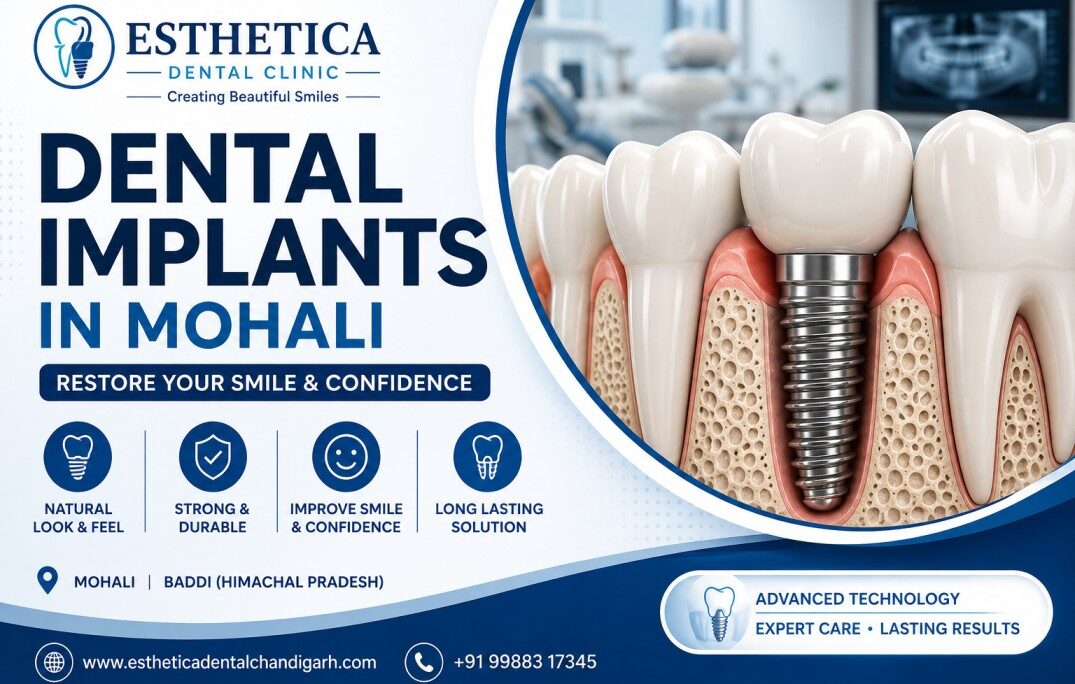
Under local anesthesia or comfortable conscious sedation, the implant post—a small, biocompatible screw typically made of medical-grade titanium or zirconia—is positioned precisely into the jawbone.
Step 4: Osseointegration (The Healing Phase)
Over the next 3 to 6 months, a remarkable natural biological process called osseointegration occurs. Your natural jawbone cells grow around and fuse directly into the surface of the titanium post. This creates an immovable anchor capable of withstanding full chewing forces.
Step 5: Abutment and Final Crown Placement
Once osseointegration is confirmed, a small connector piece called an abutment is attached to the implant post. Finally, a custom-crafted, shade-matched porcelain or zirconia crown is designed to snap or screw securely onto the abutment, restoring 100% of your functional aesthetics.
Recovery and Healing Timeline
| Stage | Timeframe | What to Expect | Key Care Instructions |
| Initial Surgical Recovery | Days 1 – 3 | Mild swelling, light bleeding, minor soreness. | Apply ice packs, rest, take prescribed pain relievers. |
| Soft Tissue Healing | Weeks 1 – 2 | Gums close over or settle around the site; stitches removed. | Eat soft foods, rinse gently with warm salt water. |
| Osseointegration | Months 3 – 6 | Bone fuses to titanium; site is internally maturing. | Maintain good oral hygiene, avoid heavy pressure on site. |
| Final Restoration | Post-Month 6 | Crown attached; full bite force restored. | Resume regular brushing, flossing, and dental checkups. |
Key Benefits of Dental Implants Over Other Options
While traditional dental bridges and removable partial dentures remain common choices, dental implants after tooth extraction offer distinct long-term advantages:
Jawbone Preservation: Implants are the only tooth replacement option that stimulates bone growth and prevents facial collapse.
Protection of Adjacent Teeth: Unlike dental bridges, which require grinding down healthy neighboring teeth for support crowns, implants stand independently.
Uncompromised Bite Force: Once fused, an implant provides chewing strength comparable to natural healthy teeth, allowing you to enjoy your favorite foods without worry.
Exceptional Longevity: With proper brushing, flossing, and routine dental visits, a dental implant can last a lifetime, making it the most cost-effective long-term solution.
Frequently Asked Questions
Can I get a dental implant years after a tooth extraction?
Yes, you can get a dental implant even years after an extraction. However, because bone loss occurs over time without a root present, you may require a bone graft or sinus lift prior to implant placement to rebuild sufficient bone density.
Is getting a dental implant after tooth extraction painful?
The procedure is performed under local anesthesia, so you will not feel pain during the surgery. Post-operative discomfort is typically mild to moderate and easily managed with prescribed or over-the-counter pain medications for a few days.
How do I care for my dental implant once it is fully healed?
Care for a dental implant just like natural teeth: brush twice daily, floss around the restoration using implant-safe floss or an interdental brush, and maintain regular professional cleanings and checkups at Esthetica Dental.
Reclaim Your Smile with Confidence
Losing a tooth can feel overwhelming, but modern restorative dentistry makes recovery seamless, durable, and natural-looking. Choosing dental implants after tooth extraction is an investment in your long-term health, facial structure, and daily quality of life.
If you are facing an upcoming tooth extraction or looking to replace a tooth you lost in the past, contact the expert team at Esthetica Dental today to schedule your personalized implant consultation.