





Transitioning from theoretical knowledge to practical, life-changing application is the most critical phase in any dental professional’s career. While university training provides the fundamental scientific base, a clinical hands-on dental program is designed to bridge the gap between classroom theory and the fast-paced reality of the dental operatory. Whether you are aiming to master complex full-mouth rehabilitation, advanced implant surgery, or modern restorative techniques, the structure of these programs is purposefully designed to push your limits.
If you are currently evaluating programs to advance your career, understanding exactly what to expect is the first step toward choosing the right path.
1. The Paradigm Shift: From Theory to Application
In a traditional academic setting, you learn the “why” of dentistry—the physiology, the pathology, and the pharmacology. In a hands-on clinical program, the focus shifts aggressively to the “how.” You should expect this transition to be mentally and physically demanding.
Advanced Treatment Planning: You will move beyond basic diagnostic models. Programs will challenge you to analyze complex patient records, CBCT scans, and digital intraoral scans to construct comprehensive treatment plans that account for long-term functional success.
Mastery of Technology: Modern dentistry is digital. You will spend significant time learning how to integrate digital workflows, including using intraoral scanners for precision impressions, mastering CAD/CAM design software for chairside restorations, and utilizing 3D printing for surgical guides.
Ergonomic Professionalism: Longevity is the hidden challenge of dentistry. Hands-on programs force you to master patient positioning, dental light management, and proper instrument handling to ensure you can perform high-level dentistry for decades without physical strain.
2. Simulation Labs: The “Safe-Fail” Environment
Before you ever touch a live patient, you will spend extensive hours in simulation labs. This is not just “practice”—it is the foundation of your clinical reflex.
Precision Preparation: You will practice tooth preparations, veneer margins, and implant osteotomies on typodonts that simulate real tooth density. This repetition is designed to build “muscle memory”.
Complication Management: Simulation labs allow instructors to simulate “worst-case scenarios”—such as a perforated sinus during an implant procedure or an unexpected endodontic complication—allowing you to learn how to resolve these issues in a controlled, low-risk environment.
Instrument Mastery: You will learn the subtle differences in “feel” between various burs, handpieces, and ultrasonic scalers, ensuring that when you are working on a patient, you are using the right tool with the right amount of pressure every single time.
3. Clinical Rotations and the Mentorship Dynamic
The hallmark of a high-quality clinical hands-on dental program is the level of mentorship provided during clinical rotations.
The Power of Observation: You will observe expert clinicians as they manage difficult cases. Often, the most valuable lessons come from watching how a mentor communicates with a nervous patient or how they pivot when a treatment plan requires an mid-procedure adjustment.
Guided Clinical Execution: When you begin performing procedures, you are never “left alone.” Mentors provide real-time, constructive feedback. They will observe your posture, your technique, and your decision-making, correcting errors before they become bad habits.
Collaborative Case Discussion: Most programs utilize “round table” discussions. You will present your cases to your peers and mentors, analyzing what went right and where improvements could be made. This collaborative culture mimics the peer-review process found in high-level specialty practices.
4. Patient Interaction: The Art of the “Soft Skills”
Clinical success is not only about manual dexterity; it is about patient confidence.
Informed Consent: Hands-on programs teach you how to translate complex technical jargon into clear, reassuring language that helps a patient understand why a treatment is necessary and what the expected outcomes will be.
Expectation Management: One of the most difficult skills for a new clinician to master is managing the recovery journey. You will learn how to prepare patients for the post-operative period, ensuring they are fully compliant with instructions and prepared for the recovery timeline.
Frequently Asked Questions (FAQ)
Q: How much prior experience is required for these programs? A: Most intensive clinical programs are designed for dental graduates or professionals looking to transition into a new specialty. While foundational knowledge is required, the program’s goal is to elevate your existing skills to an expert level.
Q: Will I be working on live patients during the training? A: Many programs transition from simulation to live patient care. Safety, supervision, and ethical compliance are the absolute priority. You will never perform a task that you have not first proven you can execute safely in the simulation phase.
Q: What is the biggest hurdle for participants in these programs? A: Most professionals find that the “dexterity gap”—the difference between seeing a procedure in a book and executing it inside the tight, limited space of a patient’s mouth—is the most challenging adjustment. The constant guidance of your mentor is designed to help you overcome this quickly.
Q: How do I know if I have chosen the right program? A: A great program should have a high instructor-to-student ratio. You should not just be “watching”—you should be “doing” with constant, corrective feedback. Look for programs that emphasize modern technology access and evidence-based techniques.
Q: How do these programs impact my long-term career? A: By moving beyond basic techniques, you differentiate your practice. Patients recognize the difference between a “routine” procedure and a “clinically excellent” one, leading to higher patient satisfaction and practice growth.
Why Your Choice of Program Matters
Your clinical training sets the ceiling for your career. If you choose a program that is purely theoretical, you will remain a “technician.” If you choose a robust clinical hands-on dental program, you become an “expert clinician.” The difference lies in the number of hours spent at the chair, the quality of the feedback you receive, and the complexity of the cases you are forced to solve under pressure.
At the end of your program, you should walk away not just with a certificate, but with a refined clinical philosophy. You should have developed the ability to think critically about patient biology, the chemical properties of your restorative materials, and the long-term mechanical impact of your treatment plans simultaneously.
Are you ready to elevate your clinical skills? Choosing the right hands-on environment is the single most important decision you can make for your practice. Seek programs that challenge your precision, force you to expand your technical repertoire, and offer the mentorship necessary to turn your current skills into true mastery. Your patients—and your practice—will notice the difference.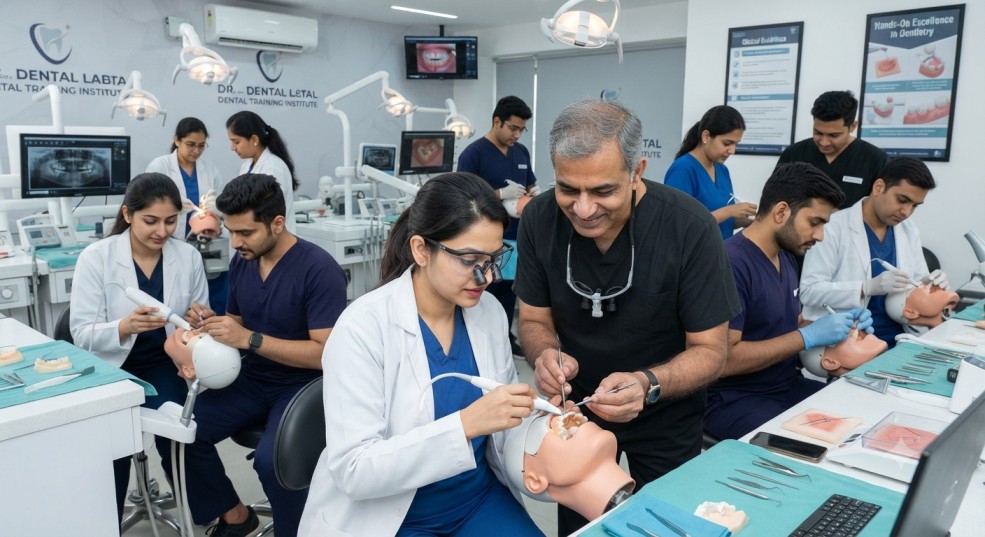
Disclaimer: This information is intended for educational purposes for dental professionals and aspiring students. Always ensure that any clinical program you choose complies with local regulations and ethical standards.