








In the rapidly evolving landscape of modern dentistry, the transition from being a skilled general practitioner to a specialist requires more than just academic knowledge—it requires rigorous, practical application. A fellowship is often the most critical investment a dentist will make in their career, serving as the bridge between theoretical understanding and high-level clinical confidence.
However, not all programs are created equal. As the demand for specialized services like implantology, aesthetic dentistry, and full-mouth rehabilitation rises, so does the number of training providers. Before you commit your time, resources, and reputation to a program, you must evaluate it with a critical lens.
This guide outlines exactly what you should look for when choosing the right dental fellowship to ensure it delivers a genuine return on investment.
1. The Critical Role of Mentor-Led Instruction
The hallmark of an elite fellowship is not just the curriculum, but the quality of its instructors. When researching programs, look beyond the marketing brochure and investigate the faculty.
Clinical Experience Over Theory: Seek programs led by active practitioners who face the same day-to-day challenges as you. They are better equipped to teach you how to manage real-world complications.
Availability of Mentors: A program that relies purely on pre-recorded lectures or passive observation is rarely sufficient. You need access to mentors who can provide immediate, constructive feedback on your treatment planning and surgical decisions.
The “Why” Factor: Great mentors don’t just tell you how to perform a procedure; they explain the biological and mechanical “why” behind every step, ensuring you understand the fundamentals of occlusal assessment and material selection.
2. Prioritizing Hands-On Clinical Exposure
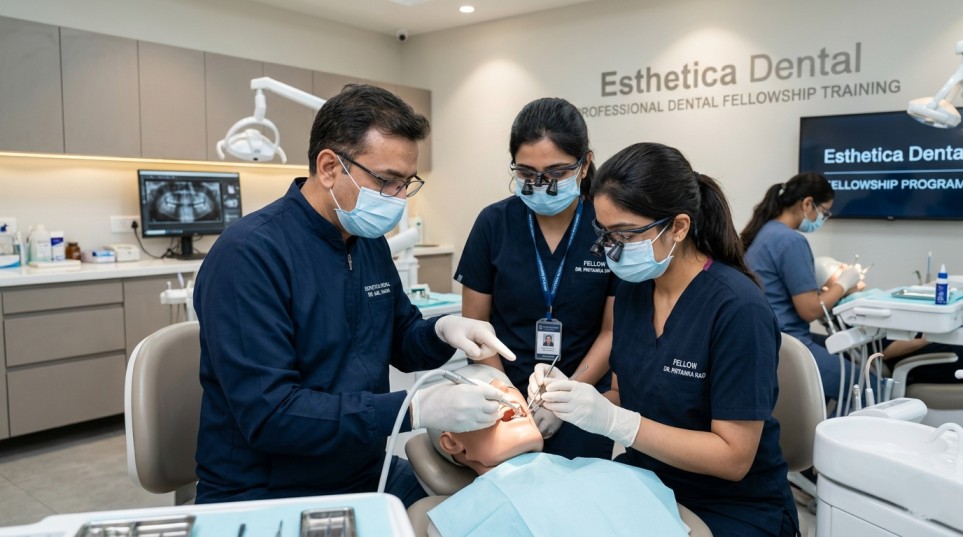
Dentistry is a motor-skill-based profession. You cannot master advanced procedures solely through textbooks. “Confident technical consistency” is the goal of any high-tier fellowship, and it is only achieved through repetition.
When evaluating a program, ask specifically about the ratio of theory to hands-on practice.
Live Patient Interaction: There is no substitute for live patient exposure. Whether it is through supervised clinical sessions or simulation labs, ensure the program allows you to perform procedures repeatedly under the watchful eye of an expert.
Live Surgery Sessions: For fellowships in implantology or complex surgery, prioritize programs that offer live surgery observation or assisted procedures. This gives you a clear view of how to manage tissue, handle bleeding, and troubleshoot unexpected anatomical variations.
3. Transparency in Curriculum and Technology
A credible institution will have nothing to hide. A transparent curriculum is the clearest indicator of a program’s professionalism.
Modern Digital Workflows: The industry is shifting toward digital dentistry. Ensure the fellowship covers the latest advancements, including intraoral scanning, digital smile design, and CAD/CAM workflows.
Holistic Training: Beyond clinical procedures, a top-tier fellowship should cover the “business” of dentistry—infection control protocols, legal documentation, and patient communication strategies are vital for long-term practice sustainability.
4. The Value of Accreditation and Recognition
Your certification should be a badge of honor that resonates with both your peers and your patients.
Institutional Credibility: Ensure the fellowship is affiliated with recognized dental bodies or accredited educational institutions.
Continuing Education (CE) Credits: Always check if the program provides recognized CE credits. These are not just bureaucratic requirements; they signify that the program adheres to industry-standard educational rigor.
5. Aligning Training with Market Demand
Finally, when choosing the right dental fellowship, your decision should be data-driven. Look at the local market demand. Are patients in your area specifically asking for cosmetic smile makeovers, dental implants, or laser treatments?
By choosing a fellowship that aligns with high-demand services, you allow yourself to retain complex cases that you might currently be referring out. This not only increases the revenue potential of your clinic but also significantly boosts your professional confidence and patient trust.
Summary Checklist for Prospective Fellows
To make your decision easier, use this quick checklist when comparing different training providers:
[ ] Faculty Expertise: Does the faculty include experienced, active practitioners?
[ ] Clinical Ratio: Is there a significant focus on hands-on practice versus theory?
[ ] Technological Integration: Does the program feature modern digital dental tools?
[ ] Transparency: Is the syllabus clearly defined, including learning outcomes?
[ ] Community Support: Does the program foster a network of peers for ongoing clinical discussion?
Final Thoughts
Choosing the right dental fellowship is Investing in a fellowship is an investment in your legacy as a dentist. It is about moving from “knowing” to “doing” with precision and predictability. At Esthetica Dental, we believe that education is the foundation of excellence. As you embark on your search for the right program, prioritize those that offer mentorship, hands-on mastery, and clinical transparency.
Your path to becoming a specialist starts with the quality of the training you choose today. For more insights into specialized dental training and clinical updates, stay connected with our professional community at www.estheticadentalchandigarh.com.
Disclaimer: This guide is intended to assist dental professionals in navigating continuing education options. Always verify the credentials of any training institute before enrollment.