




Best Treatment for Crooked Teeth-Straighten Your Smile
Crooked teeth have an impact that goes beyond the look of your smile; they can also make brushing and flossing difficult, lead to uneven wear of the teeth, and in some cases influence your bite. Luckily, modern dentistry provides a number of effective ways to improve the alignment of your teeth. The Best treatment for crooked teeth will vary according to the degree of misalignment, your oral health, your age, and your personal preferences.
What causes teeth to be crooked?
Crooked teeth may have a number of causes, and the specific cause generally affects the kind of treatment that is recommended. In some cases people inherit small jaws or crowded teeth from their family, and in others the alignment issues appear during childhood.
Common causes include:
- In terms of genetics, the size of the jaw and the position of the teeth can lead to overcrowding or gaps.
- Childhood habits: Keeping one’s thumb in the mouth or using a pacifier for a long time could have an effect on the way the teeth align.
- If a child loses their baby teeth too early, this can affect the space available for the permanent teeth.
- Jaw development: Differences in the way the upper and lower jaws grow can cause bite problems.
- Teeth that are impacted may cause the other teeth to be misaligned.
- Wisdom teeth: Their eruption may occur at the same time as crowding, even though they are not seen as the only cause of most crooked teeth.
By identifying the underlying cause, a dentist is able to recommend an appropriate treatment instead of concentrating merely on the appearance of the teeth.
What is the best treatment for crooked teeth? Which option should be chosen?
There is no single best treatment for crooked teeth since what works for one person may not work for another. In the case of mild crowding, clear aligners or some limited orthodontic treatment can be used, while more complicated problems relating to tooth alignment and bite usually need comprehensive braces treatment. The following are some of the options that are commonly recommended.
1. Traditional Metal Braces
Traditional braces consist of metal brackets which are bonded to the teeth and linked together by a wire; the orthodontist then gradually adjusts the wire to guide the teeth into their desired positions.
Benefits of metal braces:
– It can be used to deal with many mild, moderate, and complex alignment issues.
– It is able to correct a number of different types of bite irregularities.
– Do not rely on the patient remembering to wear the removable trays.
Metal braces can be seen and need to have regular adjustments. It is also necessary for patients to clean carefully around the brackets and wires in order to avoid the build-up of plaque. The length of treatment depends on the complexity of the case.
2. Clear Aligners for a Subtle Smile
Clear aligners are transparent, removable appliances which are intended to gradually move the teeth and are particularly popular with adults and teenagers who prefer a less obvious option than traditional braces.
Key advantages include:
- It is almost invisible when carrying out ordinary activities.
- It can be removed when eating, brushing, and flossing.
- There are neither fixed brackets nor wires.
- Oral hygiene can be conveniently achieved when used as directed.
At the Esthetica Dental Clinic patients can decide whether clear aligners or some other form of orthodontic treatment is suitable for their alignment requirements.
3. Ceramic braces to achieve a natural look
Ceramic braces function in the same way as metal braces but have brackets that are tooth-coloured or translucent. They are less conspicuous at the same time as offering fixed orthodontic treatment.
For patients who would like the control offered by fixed braces but do not want the visible metal brackets, these [braces] may be an appropriate option. The fact, though, is that ceramic brackets can be more fragile and that the elastic parts will become stained if oral hygiene is inadequate.
Your orthodontist will be able to tell you whether ceramic braces provide the right balance between appearance, effectiveness, and the amount of maintenance required in your case.
4. Braces that allow for concealed orthodontic treatment
Lingual braces are fixed on the inner sides of the teeth, which makes them hard to see from the front. They provide a choice for those who want fixed braces but do not wish for the brackets to be visible.
Braces made of language may take some getting used to and can at first influence one’s speech or cause irritation of the tongue. They might also demand specialised expertise and be more expensive than ordinary braces.
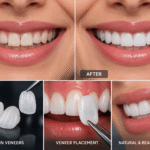
5. The use of dental veneers for cosmetic improvements
Dental veneers are thin layers which are put onto the front parts of the teeth in order to improve their appearance and, in some cases, can make slight irregularities in the alignment less obvious particularly when the main issue is cosmetic.
Veneers don’t actually straighten the teeth or cure the original bite problem, and in some cases tooth preparation is needed with irreversible removal of enamel involved.
In cases involving serious overcrowding or bite issues, orthodontic treatment is usually the better option. It is important that a dentist looks at your teeth before suggesting veneers as a cosmetic remedy.
How to Choose the Best Treatment for Crooked Teeth
The process of deciding on the best treatment for crooked teeth goes beyond simply comparing prices or picking the one that is least obvious. Before drawing up a treatment plan, your dentist or orthodontist will take into account a number of factors.
The severity of misalignment can in some instances be corrected using clear aligners, but in more complicated cases braces or a combination of treatments will be required.
With regard to oral health, any problems such as cavities, gum disease, or other dental issues should be given attention before orthodontic treatment starts.
Regarding lifestyle and comfort, removable aligners provide flexibility, whereas fixed braces work continuously since they do not need to be inserted each day.
Treatment duration: The length of time needed will vary according to the amount of tooth movement, the complexity of the case, and how you respond to the treatment.
The cost will depend on the type of treatment, the clinical needs, and how long the treatment lasts. You should request a full estimate that includes the consultations, the adjustments, the retainers and the follow-up appointments.
At the Esthetica Dental Clinic you can have a personal consultation which will help you to understand your options and allow you to make an informed decision taking into account your dental needs.
What takes place during treatment of crooked teeth?
If you understand how the treatment process works, you’ll feel more prepared when you begin orthodontic care.
Step 1: Dental consultation
The dentist looks at your teeth, gums, the way your teeth fit together, and the alignment of your jaw. Photographs, X-rays, digital scans, or impressions will be suggested if they are needed for clinical reasons.
Step 2: Personalised treatment planning
Your dentist goes over the options, what results you can expect, the limits, how long it will take, and how much it will cost.
Step 3: Beginning treatment
Based on the type of treatment you have, you may be given braces or be offered custom aligners, and you’ll get some guidance regarding how to clean them, how to wear them, and how to deal with the initial discomfort.
Step 4: Regular monitoring
Your dentist can evaluate your progress and make any necessary adjustments during follow-up visits.
Step 5: Retention
Retainers are useful for keeping the teeth in their new positions after treatment and it is important to wear them as your dentist tells you to do since the teeth can slowly move over time.
Frequently Asked Questions
1. What is the most effective treatment for crooked teeth?
The most appropriate treatment will vary according to how severe the misalignment is and your current oral health condition. Common treatments include metal braces, ceramic braces, and clear aligners. An appointment with a dentist can assist in deciding which method is best.
2. Is it possible to correct crooked teeth without using braces?
Certainly, clear aligners can be used to correct a great many alignment issues without the need for traditional braces. Yet they are not appropriate in all cases. Veneers can improve the look of slight irregularities but do not actually straighten the teeth.
3. How long does it take to correct crooked teeth?
The duration of treatment will vary from several months to a few years, the length depending on the complexity of the case and the type of appliance employed. Once your orthodontist has examined your teeth they will be able to give you an estimated time frame.
4. Do clear aligners perform better than metal braces?
One option isn’t better than the other. Clear aligners are subtle and can be taken out, whereas metal braces might be more appropriate in some cases of complicated tooth movement. The decision you should make depends on your clinical requirements and your level of commitment to the treatment.
5. Does orthodontic treatment cause pain?
It is possible for you to feel some temporary pressure, tenderness, or slight discomfort following brace adjustments or when you begin using a new aligner tray. This sort of discomfort generally gets better as your mouth gets used to the change.
6. Is it possible for adults to have their teeth straightened?
Yes, adults can have orthodontic treatment provided that their teeth and gums are in a satisfactory condition. Being an adult does not in itself prevent someone from having treatment, but the state of the gums, the bone supporting the teeth, and the individual’s particular dental situation must be taken into account.
7. Can teeth become crooked once treatment has been received?
After orthodontic treatment, teeth can move again, especially if the retainer is not used properly. Following the retention instructions given by your dentist and going for regular check-ups will help you keep your results.
Conclusion
Crooked teeth may have an effect on self-confidence, on your oral hygiene, and on how your teeth fit together. There are fortunately a number of treatments available, including traditional braces and ceramic braces as well as clear aligners and certain cosmetic procedures. Best treatment for crooked teeth will vary according to your particular alignment issues, your oral health, your lifestyle, and your treatment objectives.
Ready to Straighten Your Smile?
Get expert guidance on the best treatment for crooked teeth at Esthetica Dental Clinic. Our dental team can help you explore suitable treatment options for a healthier, more confident smile.
Call us today at 9817230279 to book your consultation and take the first step towards straighter teeth!
Best Treatment for Crooked Teeth-Straighten Your Smile
Get Your Dream Smile
Available 24/7 for International Patients
Free Consultation | 70% Discount