


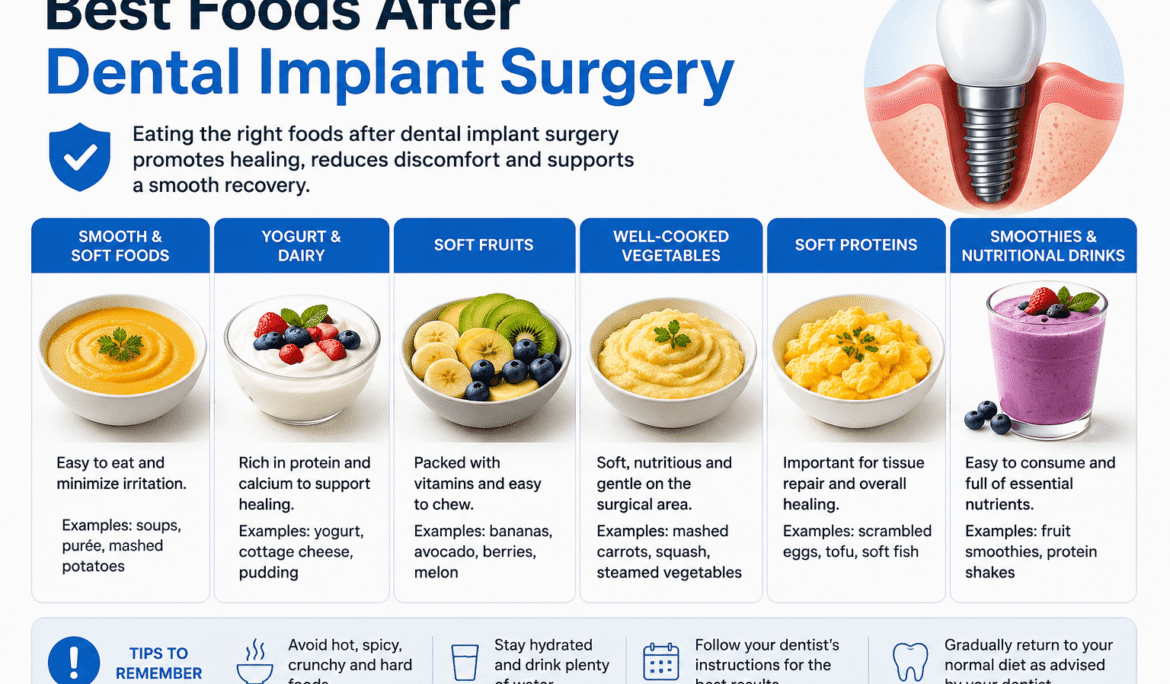
Best Foods After Dental Implant Surgery-
A Complete Recovery Diet Guide
Dental implant surgery is one of the most reliable ways to replace missing teeth, but your recovery doesn’t depend only on the procedure itself. What you eat during the healing period plays a major role in reducing discomfort, protecting the implant, and supporting faster recovery. Many patients search for “What can I eat after dental implant surgery?”, “Which foods should I avoid?”, or “How long should I eat soft foods?” because they want clear, practical advice. This guide answers those questions with dentist-recommended food choices, a recovery timeline, and tips to help you heal comfortably while protecting your new dental implant.
Why Your Diet Matters After Dental Implant Surgery
After a dental implant is placed, your jawbone and surrounding gum tissue begin a natural healing process known as osseointegration, where the implant gradually bonds with the bone. During this period, eating the wrong foods can put unnecessary pressure on the surgical site, increase irritation, or delay healing.
A balanced diet rich in protein, vitamins, minerals, and fluids helps your body repair tissues, reduces inflammation, and supports a successful implant outcome. Following your dentist’s dietary instructions is just as important as taking prescribed medications and maintaining oral hygiene.
Foods to Eat During the First 24 Hours
The first day after surgery is when the surgical site is most sensitive. Focus on cool or room-temperature foods that require little or no chewing.
Good choices include:
Plain yogurt
Smoothies (without using a straw)
Applesauce
Mashed banana
Ice cream in moderation
Cottage cheese
Chilled soup (not hot)
Protein shakes consumed with a spoon or cup
Drink plenty of water throughout the day. Avoid very hot drinks because heat may increase bleeding or discomfort immediately after surgery.
Soft Foods to Eat During the First Week
As healing progresses, you can gradually introduce more nutritious soft foods while still avoiding excessive chewing.
Some excellent options include:
Mashed potatoes
Scrambled eggs
Oatmeal
Soft pasta
Well-cooked rice
Steamed vegetables
Soft fish such as salmon
Shredded chicken
Tofu
Avocado
Hummus
Lentil soup
Khichdi
Dalia (broken wheat porridge)
These foods provide essential nutrients while minimizing pressure on the implant site.
Protein-Rich Foods That Support Healing
Protein is one of the most important nutrients for tissue repair after oral surgery.
Include foods such as:
Eggs
Greek yogurt
Soft paneer
Cottage cheese
Soft fish
Chicken
Turkey
Tofu
Beans and lentils
Protein-rich smoothies
Aim to include a source of protein with each meal to support faster recovery.
Vitamins and Minerals That Help Recovery
Your body needs several nutrients for proper healing after dental implant surgery.
Vitamin C
Vitamin C supports collagen production and healthy gums.
Good sources include:
Kiwi
Oranges
Strawberries
Bell peppers
Broccoli
Vitamin D and Calcium
These nutrients help maintain strong bones around the implant.
Include:
Milk
Yogurt
Cheese
Fortified dairy products
Eggs
Zinc
Zinc supports wound healing and immune function.
Foods rich in zinc include:
Beans
Chickpeas
Pumpkin seeds (after healing progresses)
Lean meats
Foods to Avoid After Dental Implant Surgery
Certain foods can interfere with healing or damage the surgical site.
Avoid:
Hard candies
Nuts
Popcorn
Chips
Crusty bread
Raw vegetables
Tough meat
Sticky sweets
Chewing gum
Spicy foods during the first few days
Extremely hot beverages
Alcohol
Carbonated drinks if advised by your dentist
These foods may irritate the gums, become trapped around the implant, or place excessive pressure on the healing area.
Can You Drink Coffee After Dental Implant Surgery?
Many patients ask when they can enjoy their morning coffee again.
It is generally recommended to avoid hot coffee for at least the first 24 to 48 hours because heat may increase bleeding and discomfort. Once healing begins and your dentist approves, you can gradually return to your normal routine.
If you do drink coffee later, ensure it is warm rather than very hot during the early recovery period.
Hydration Is Just as Important
Staying hydrated helps your body recover more efficiently.
Drink:
Water
Coconut water
Milk
Oral rehydration fluids if needed
Fresh fruit smoothies
Avoid drinking through a straw because the suction can disturb the healing blood clot and may delay recovery.
Sample Meal Plan After Dental Implant Surgery
Breakfast
Greek yogurt with mashed banana or oatmeal.
Mid-Morning Snack
Applesauce or a protein smoothie.
Lunch
Soft khichdi with steamed vegetables or mashed potatoes with soft fish.
Evening Snack
Cottage cheese or avocado.
Dinner
Scrambled eggs with soft rice or lentil soup with soft bread soaked until tender.
This simple meal plan provides balanced nutrition while protecting the implant area.
Recovery Tips Along with Your Diet
Healthy eating works best when combined with good post-operative care.
Remember to:
Follow your dentist’s medication schedule.
Brush carefully around the surgical site.
Rinse only when instructed.
Avoid smoking or tobacco products.
Get enough sleep.
Attend all follow-up appointments.
Contact your dentist if you experience excessive swelling, severe pain, or prolonged bleeding.
When Can You Return to a Normal Diet?
Most patients can slowly reintroduce firmer foods after one to two weeks, depending on the complexity of the procedure and individual healing. However, complete healing and implant integration usually take several months.
Always follow your dentist’s recommendations rather than rushing back to hard or crunchy foods.
Final Thoughts
Eating the right foods after dental implant surgery is one of the simplest ways to support successful healing and protect your investment in your smile. Soft, nutritious meals rich in protein, vitamins, and minerals help your body recover while reducing the risk of complications. Equally important is avoiding hard, sticky, spicy, and excessively hot foods until your dentist confirms it is safe.
If you’ve recently had dental implant surgery or are planning one, speak with your dentist about a personalized recovery plan. Every patient heals differently, and professional guidance ensures the best possible outcome for your new smile.