



Best Dental Courses After BDS for Career Growth in 2026
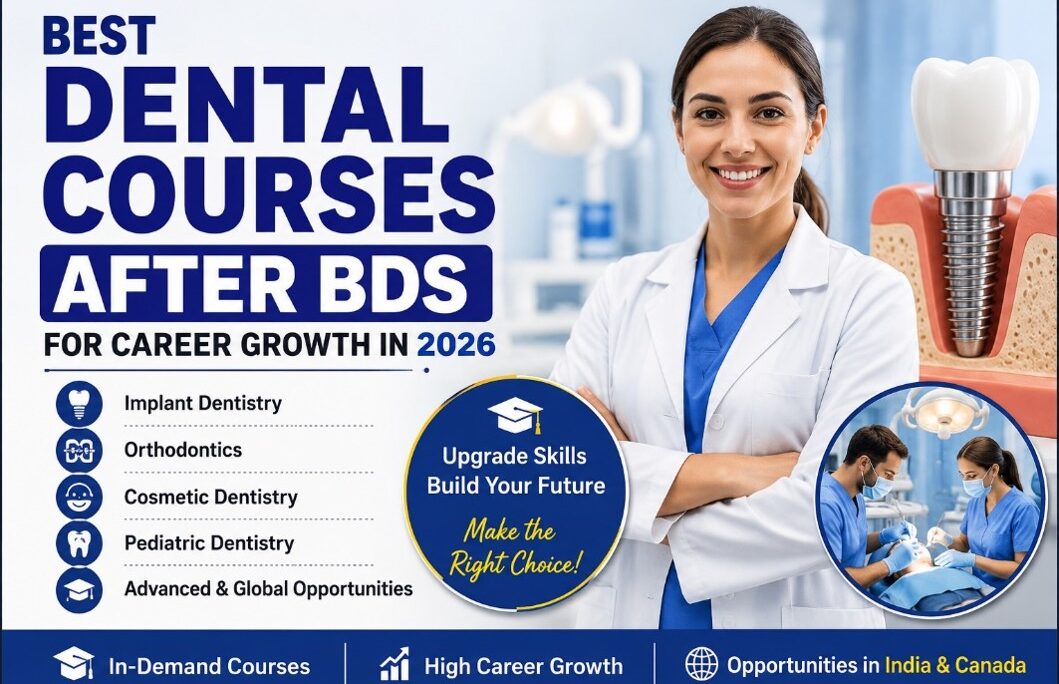
Completing BDS is a major achievement, but graduation is only the beginning of a dentist’s professional journey. Patients increasingly expect modern treatments, digital workflows, aesthetic results, and confident clinical care. Choosing the Best Dental Courses After BDS can help dentists strengthen practical skills and move toward a focused career path.
Every dentist has different interests and goals. The right course should connect knowledge with confidence.
Why Should Dentists Consider Additional Training?
Upgrade Your Skills
Dentistry continues to change as new materials, digital tools, techniques, and treatment approaches become available. Additional education helps dentists stay updated while improving clinical decision-making and confidence.
Training can provide practical exposure, mentorship, and opportunities to expand treatment services. Focused learning can make the transition from theory to practice smoother.
Dental Implant Courses
Learn Surgical and Restorative Skills
A dental implant course can be valuable for dentists who want surgical and restorative knowledge. Training may introduce patient assessment, diagnosis, treatment planning, implant components, surgical fundamentals, prosthetic principles, and maintenance.
Beginners should choose programs combining demonstrations with hands-on learning. Basic skills should come first, with complex cases approached gradually under suitable supervision.
Cosmetic Dentistry Courses
Turn Smile Design Into a Clinical Skill
Cosmetic dentistry combines clinical knowledge with facial aesthetics, tooth shape, proportion, shade, and patient expectations. A cosmetic dentistry course can introduce smile analysis, veneers, laminates, tooth preparation, photography, treatment planning, and digital smile design.
Cosmetic procedures should remain based on diagnosis, conservative principles, function, oral health, and realistic expectations.
Endodontic Training
Strengthen Root Canal Skills
Endodontics is another useful direction for focused education. An endodontic course may cover access preparation, working length determination, nickel-titanium rotary instrumentation, irrigation, obturation, and difficult cases.
Training can help dentists develop a systematic approach and recognize situations requiring additional expertise.
Prosthodontic Courses
Restore Function and Aesthetics
Prosthodontics remains essential because patients often need treatment that restores function and appearance. Advanced dental courses in prosthodontics may cover crowns, bridges, veneers, impressions, occlusion, temporization, and cementation.
These skills strengthen general dentistry because restorative procedures are common. Understanding occlusion is particularly valuable for complex rehabilitation.
Full Mouth Rehabilitation for Multidisciplinary Learning
See the Patient as a Whole
Full mouth rehabilitation combines diagnosis, treatment planning, occlusion, treatment sequencing, periodontal considerations, restorative procedures, and implant-supported options. It is useful for patients with multiple dental problems because a systematic approach helps dentists organize priorities around function, aesthetics, and oral health.
Oral Surgery Courses
Develop Practical Skills
Clinical dental courses in oral surgery can introduce surgical extraction, flap design, suturing, local anesthesia, and basic complication management. These skills can help dentists become more comfortable with routine surgical procedures.
Hands-on learning is important because patient safety depends on proper assessment, technique, and decision-making. Choose training with experienced mentors and suitable cases.
Digital Dentistry and CAD/CAM Training
Prepare for a Technology-Driven Practice
Digital dentistry is increasingly important. Training can introduce intraoral scanning, digital impressions, treatment planning, CAD/CAM principles, and laboratory communication.
These skills connect diagnosis, planning, restoration, and laboratory workflows while improving efficiency.
How to Choose the Right Course After BDS
Match Education With Your Goals
When comparing dental certification courses for dentists, look beyond course titles and certificates. Consider the curriculum, faculty experience, practical exposure, mentorship, duration, and relevance to your goals.
Ask what you want to achieve. Are you interested in implants, aesthetics, endodontics, oral surgery, restorative dentistry, or digital technology? A matching course keeps learning focused.
Why Practical Experience Matters
Confidence Grows Through Practice and Mentorship
Theoretical knowledge is important, but dentistry cannot be mastered through reading alone. Demonstrations, hands-on sessions, case discussions, and mentorship help clinicians apply knowledge to real situations.
Practical experience also teaches dentists to recognize limitations and seek guidance. A strong course should provide learning opportunities with experienced clinicians.
Dental Courses for Dentists Planning to Work Abroad
Build Skills While Understanding Local Requirements
Dentists planning to work abroad, including in Canada, should understand that completing a course in India does not automatically provide permission to practice in another country. Each country has its own licensing, registration, examination, and professional requirements.
Additional education can strengthen knowledge and skills, but dentists should research the regulations of their intended destination before making professional decisions.
What to Look for in Dental Courses in India
Look Beyond the Certificate
Esthetica Dental Academy focuses on education that combines practical exposure, mentorship, and structured learning for dentists seeking career development. When evaluating dental courses in India, consider whether a program offers relevant clinical content, experienced faculty, practical sessions, and case discussions.
A good course should have clear objectives and show how theory translates into clinical decisions. Mentorship is especially useful for dentists beginning their careers.
How to Get the Most From Additional Training
Choose One Direction and Build Skills Gradually
The Best Dental Courses After BDS cover many areas, from implantology and aesthetics to endodontics and digital dentistry. Trying to learn everything simultaneously can become expensive, time-consuming, and unfocused.
Instead, identify one area that matches your interests and career plans. Build a foundation before moving toward advanced modules. For example, Esthetica Dental Academy can help a dentist interested in implantology develop foundational knowledge before exploring more complex skills.
Consistent learning and clinical experience are more valuable than collecting unused certificates.
Frequently Asked Questions
1. Which course is best after BDS?
It depends on your interests, experience, strengths, and career objectives.
2. Is an implant course useful after BDS?
Yes. Implant education can introduce treatment planning, surgical fundamentals, prosthetic principles, and maintenance.
3. Are cosmetic dentistry courses useful for general dentists?
Yes. They can broaden knowledge of smile analysis, aesthetic planning, veneers, and restorative procedures.
4. Can BDS graduates take advanced dental courses?
Yes. Many programs are designed for recent graduates and practicing dentists, although eligibility can vary.
5. Which dental courses after BDS support career growth?
Implantology, cosmetic dentistry, endodontics, prosthodontics, oral surgery, and digital dentistry are useful areas.
6. Can Canadian dentists take dental courses in India?
They can explore relevant programs, but should research licensing and regulatory requirements before enrolling or treating patients.
7. How should I choose a dental course after BDS?
Compare the curriculum, faculty, practical experience, mentorship, duration, and career relevance.
Take the Next Step Toward a Stronger Dental Career
Choosing the Best Dental Courses After BDS in 2026 should focus on practical skills rather than collecting certificates. Whether your interest is implants, aesthetics, endodontics, prosthodontics, oral surgery, rehabilitation, or digital dentistry, focused education can improve confidence and clinical readiness.
Esthetica Dental Academy encourages dentists to approach continuing education as a long-term journey. With practical exposure, mentorship, focused learning, and consistent development, dentists can build stronger capabilities and create a career path that fits their goals today. Esthetica Dental Academy supports this focused approach.