








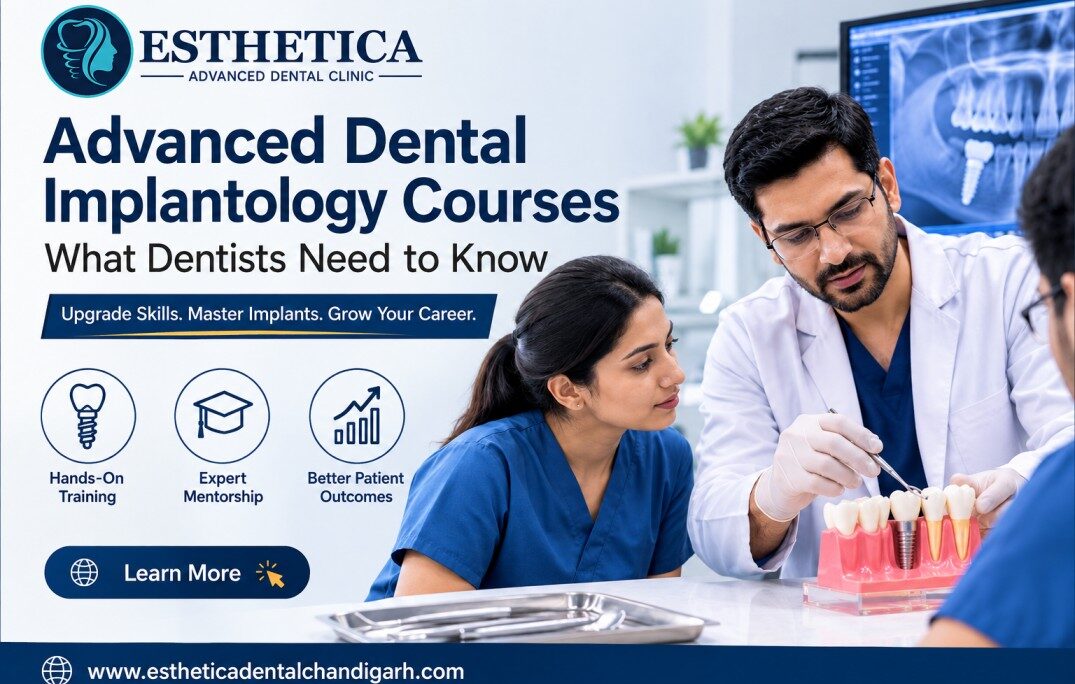
Advanced Dental Implantology Courses What Dentists Need to Know
Use up and dowChoosing the right training can make a meaningful difference in how confidently a dentist approaches implant dentistry. Advanced Dental Implantology Courses help dentists build on their existing knowledge while developing a more integrated understanding of diagnosis, treatment planning, surgical protocols, digital technology, prosthetic considerations, and long-term maintenance. Contemporary implantology is not simply about placing an implant. It requires careful clinical decision-making and an understanding of how different stages of treatment work together.Advanced Dental Implantology Courses What Dentists Need to Know
Why Advanced Implantology Training Matters
Dental education provides dentists with a strong foundation, but applying theoretical knowledge to complex clinical situations can be challenging. Implant dentistry may involve bone limitations, anatomical considerations, medical history, occlusion, periodontal conditions, and patient expectations. Each factor can influence treatment planning and clinical outcomes.
A structured implant training course can help dentists understand these factors before treatment begins. Instead of concentrating only on individual procedures, advanced training encourages dentists to look at the complete patient journey, from diagnosis and imaging through surgery, restoration, maintenance, and follow-up.
This broader approach can help dentists recognise potential risks, improve treatment planning, and understand when a case may require specialist advice or collaboration.
What Should a Good Dental Implant Training Course Include?
A valuable dental implant training course should combine theoretical education with practical learning. Dentists should look for programs that cover patient assessment, diagnosis, imaging, implant positioning, surgical principles, prosthetic planning, complications, maintenance, and case selection.
Faculty experience is also important. Learning from clinicians who understand the everyday challenges of implant dentistry can provide valuable insight into real clinical decision-making. Clinical demonstrations, case discussions, guided practical sessions, and digital planning can make the learning experience more relevant.
A strong course should not simply explain how a procedure is performed. It should also explain why a particular approach is selected and when alternative options may be more appropriate.
The Value of Hands-On Implant Training
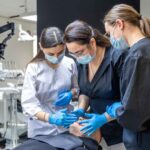
Reading about implant techniques is useful, but practical experience can help dentists connect theoretical knowledge with clinical techniques. Hands-on implant training may provide opportunities to understand flap design, instrumentation, drilling sequences, implant placement, suturing, and postoperative considerations.
Supervised clinical exposure can add another important dimension. Dentists can observe how an experienced implant clinician assesses a patient, reviews diagnostic information, discusses treatment options, and develops a treatment plan.
The objective should be to understand the clinical rationale behind each decision rather than simply memorising a sequence of procedures. This can encourage dentists to approach future cases with greater awareness and confidence.
Skills Dentists Can Develop Through Advanced Training
A comprehensive implantology program should allow dentists to develop skills progressively. Initial learning may focus on patient assessment, diagnosis, imaging, and case evaluation. More advanced modules can introduce implant positioning, surgical planning, soft-tissue management, bone grafting principles, immediate implants, and restorative considerations.
Digital technology has also become increasingly relevant to implant dentistry. Cone beam computed tomography, virtual implant planning, digital impressions, guided surgery, and computer-aided manufacturing can contribute to a more integrated treatment workflow.
Understanding these technologies can help dentists communicate more effectively with other members of the dental team and provide patients with clearer information about their proposed treatment.
Case Selection Is the Foundation of Successful Planning
One of the most important areas of implant education is case selection. Dentists need to understand which cases are appropriate for their level of experience and when referral to a specialist is advisable.
Several factors should be assessed before implant treatment, including bone volume and quality, periodontal health, occlusal requirements, medical history, esthetic expectations, and available restorative space.
Treatment planning should also be prosthetically driven. This means considering the final restoration during surgical planning rather than viewing implant placement as an isolated procedure. The position of the implant can influence function, esthetics, hygiene, and the emergence profile of the final restoration.
Understanding and Preventing Implant Complications
Complication management is another essential component of advanced implant education. Complications may relate to surgery, biology, prosthetics, or long-term maintenance.
Dentists should learn not only how complications are managed but also why they occur. Case discussions can be particularly useful because they allow clinicians to examine challenging situations and identify factors that may have contributed to an unfavourable outcome.
This type of learning can encourage preventive thinking. Rather than focusing only on solving a problem after it develops, dentists can learn to identify potential risks during diagnosis and treatment planning.
How Digital Implant Dentistry Is Changing Treatment Planning
Digital dentistry has introduced new possibilities for implant treatment planning. Three-dimensional virtual planning allows dentists to evaluate the proposed implant position in relation to anatomical structures and restorative requirements.
Guided surgery can help transfer a virtual treatment plan to the surgical site. Digital impressions and computer-aided manufacturing can also contribute to communication between surgical and restorative teams.
However, technology should support clinical knowledge rather than replace it. Dentists still need a strong understanding of anatomy, biology, occlusion, surgical principles, prosthodontics, and the limitations of digital systems.
Learning Through Real Clinical Cases
Case-based learning can make implant education more practical and meaningful. A single implant case can demonstrate the connection between diagnosis, imaging, treatment planning, surgery, restoration, and maintenance.
Complex cases can also encourage dentists to consider multiple treatment options. Not every patient has ideal anatomy or follows the conditions described in a standard treatment protocol. Discussing alternative approaches can therefore help dentists develop stronger clinical decision-making skills.
This is particularly valuable for dentists who want to move beyond following fixed protocols and develop the ability to individualise treatment according to each patient’s needs.
Why Choose Esthetica Dental Academy?
At Esthetica Dental Academy, the focus is on developing an enhanced understanding of contemporary implant dentistry. The training approach emphasises the complete treatment workflow rather than isolated procedures.
Delegates can explore the relationship between diagnosis, planning, surgery, prosthetic requirements, digital technology, and patient management. Faculty support also gives dentists an opportunity to discuss questions and strengthen their clinical knowledge.
For international delegates, learning in a different clinical environment can provide additional exposure to approaches in patient management and treatment planning. Continuing education is particularly important in implant dentistry because the field continues to evolve.
What Should Dentists Check Before Enrolling?
Before selecting an implant course, dentists should consider the faculty, syllabus, course duration, practical exposure, equipment, assessment methods, and post-course support.
It is also useful to understand the expected learning outcomes. A well-structured program should help dentists develop knowledge of diagnosis, imaging, treatment planning, implant placement, restoration, maintenance, risk assessment, and case selection.
Dentists should also consider whether the course matches their current experience and professional goals. The most useful training is training that can be applied thoughtfully within clinical practice.
Frequently Asked Questions
1. Who should consider advanced dental implantology courses?
Dentists who want to expand their implant knowledge and develop stronger skills in diagnosis, planning, surgery, prosthetic considerations, and case management can benefit from advanced training.
2. Is hands-on training important in implantology?
Yes. Practical learning can help dentists connect theoretical knowledge with clinical techniques, instruments, surgical principles, and treatment planning.
3. What topics are covered in implant training?
Programs may cover diagnosis, imaging, case selection, implant positioning, surgical planning, soft-tissue management, restorative considerations, complications, and digital implantology.
4. Why is case selection important?
Appropriate case selection helps dentists consider bone, periodontal health, medical history, occlusion, esthetic expectations, and restorative requirements before treatment.
5. How does digital technology support implant dentistry?
CBCT, virtual planning, digital impressions, guided surgery, and computer-aided manufacturing can support communication, planning, and treatment workflows.
6. Can implant training improve clinical confidence?
Structured education, case discussions, and practical exposure can help dentists strengthen their knowledge and become more confident in clinical decision-making.
7. What should I check before choosing an implant course?
Review the faculty, syllabus, duration, clinical exposure, equipment, learning outcomes, assessment, and support offered by the training organisation.
A Message from Dr. Sharad Arya, Founder – Esthetica Dental Academy
When I started Esthetica Dental Clinic in 2012, my vision was simple — to combine clinical excellence with genuine patient care. Over the years, as our practice grew across Punjab, Himachal, and Chandigarh, I realized that the biggest gap in Indian dentistry wasn’t a lack of talent, but a lack of accessible, hands-on implant training for practicing dentists.
That’s why we built Esthetica Dental Academy — not as another certificate mill, but as a mentorship-driven program where dentists actually work on live cases, under supervision, until they’re confident enough to do it on their own. I’ve seen BDS graduates walk in unsure of their surgical skills and walk out ready to plan and execute full-arch implant cases independently.
If you’re serious about growing your implant practice, I’d encourage you to invest in training that prioritizes real clinical exposure over theory alone. That’s the philosophy behind everything we teach here.
— Prof. Dr. Sharad Arya, MDS
Every batch we train is small by design, because implant surgery demands individual attention, not a classroom of fifty watching a screen. Whether it’s digital implant planning, guided surgery, or full-arch rehabilitation, we make sure every participant leaves confident enough to apply it in their own practice.
Build Your Skills for Long-Term Growth
Advanced Dental Implantology Courses should be viewed as an opportunity to develop clinical knowledge and professional confidence rather than simply learn individual procedures. Contemporary implant dentistry brings together diagnosis, surgery, prosthodontics, biology, digital planning, risk assessment, and long-term maintenance.
The right training can help dentists understand how these areas connect and how treatment decisions should be adapted to individual patients. Continuous learning also encourages dentists to recognise their own limitations, seek specialist collaboration when required, and maintain a patient-centred approach.
For dentists committed to developing their implantology skills, choosing a supportive, practical, and clinically focused learning environment can provide a strong foundation for continued professional development.