








All-on-6 Implant Training in India for Dentists from Qatar
Are you a dentist in Doha, Al Wakrah, or Al Khor who wants to offer full-arch rehabilitation but is not sure where to learn it properly? All-on-6 implant training in India has become a popular choice for Gulf clinicians who want real surgical exposure, patient-based learning, and a course investment that stays practical. This guide explains what the training covers, who it suits, what Qatar-based dentists should check before travelling, and how to pick a program that builds genuine confidence at the chair.
Why Are Qatar Dentists Looking Towards India for Implant Education?
Patients in Qatar increasingly ask for fixed teeth in a single treatment plan instead of removable dentures. That demand pushes general dentists and young specialists to upgrade their skills quickly. India offers a large, steady flow of full-arch cases, so learners see more variety in bone quality, anatomy, and prosthetic planning than a small local workshop usually allows.
Cost and access matter too. Courses in India are often more affordable than comparable programs in Europe or North America, and the flight from Doha is short. Many dentists also like that teaching is in English and that mentors are used to guiding visiting clinicians from the Gulf, so communication feels natural from day one.
What Is All-on-6 and Why Does It Matter for Your Practice?
The All-on-6 concept uses six implants to support a fixed arch of teeth, spreading chewing load across a wider base than shorter protocols. For a patient with failing teeth or a loose denture, the result is a stable bite and a natural-looking smile. For you as a clinician, it opens a premium treatment category that can change both patient outcomes and practice growth.
It is not a shortcut, though. Success depends on careful diagnosis, correct implant positioning, soft tissue handling, and a well-made prosthesis. That is why structured dental implant training in India with live case discussion beats watching videos alone. You learn the reasoning behind each step, not just the technique.
What Will You Learn in an All-on-6 Dental Implant Course for Qatar Dentists?
A good All-on-6 dental implant course for Qatar dentists should walk you through the full journey of a case, from the first consultation to the final bridge. Expect lessons on patient selection, medical risk screening, CBCT reading, treatment planning, and how to explain the plan so patients say yes with confidence.
On the clinical side, strong programs cover:
- Implant placement angles, spacing, and depth for full arches
- Bone assessment, and when grafting or tilted implants make sense
- Immediate loading protocols and temporary prosthesis design
- Digital planning and guided workflows
- Soft tissue management and healing care
- Final prosthetic steps and long-term maintenance
You can see how the programs are structured when you browse the available implant courses before deciding what fits your level.
Is Dental Implant Training in India Right for Your Experience Level?
This is the question most dentists ask quietly, and the honest answer depends on where you stand today. If you have placed a few single implants and want to move into full arches, structured dental implant training in India can bridge that gap. If you are brand new to implants, a foundation course should come first so you are not overwhelmed.
Small batches make a big difference. When only a handful of participants share one mentor, you get time to ask questions, review your own planning, and watch the procedure up close. Ask any provider how many learners are in each group, because that one number tells you a lot about the attention you will receive.
How Does Full Mouth Implant Training for Dentists Work Day to Day?
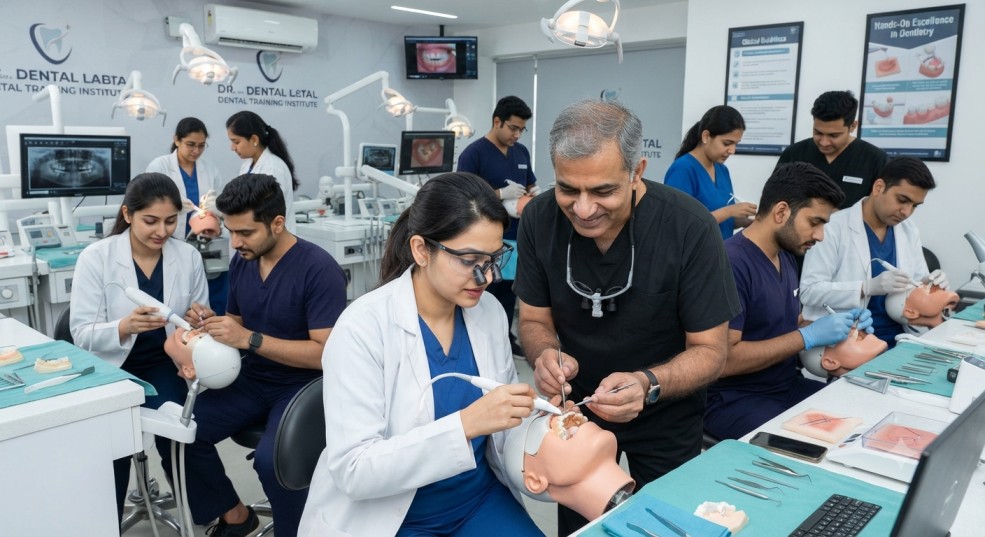
Most programs mix classroom sessions with clinical exposure. Mornings may focus on theory such as case selection, anatomy, and complication management, while the rest of the day is spent watching or assisting live procedures. Full mouth implant training for dentists works best when theory and practice sit side by side, so every concept is tied to a real patient.
You will also see how the clinical team handles scanning, planning, surgery, and temporary teeth in a coordinated flow. This teamwork is often overlooked, yet it is what makes full-arch cases run smoothly in a real clinic. To understand the treatment from the patient’s side, read about full-mouth dental implants and how a typical case unfolds.
Learning From Live Cases: Why It Changes Everything
A textbook tells you what should happen. A live case shows you what actually happens when the bone is softer than expected or the bite does not match the plan. Those moments teach judgment, and judgment is what separates a confident implantologist from a hesitant one.
Look for programs run by clinicians who treat patients daily rather than only teaching. A mentor who handles complex cases regularly can show you mistakes to avoid and how to recover when something changes mid-procedure. You can read about the lead clinician, Prof. Dr. Sharad Arya, to understand the experience behind the teaching.
What Should Qatar Dentists Check Before Booking?
Training is only half of the decision. Before you pay, confirm a few practical points so there are no surprises later.
Start with licensing. A short course adds to your skills, but it does not change your registration or scope of practice. Qatar-based dentists should verify what the Qatar Council for Healthcare Practitioners (QCHP) and their employer allow regarding implant procedures. Also read the fine print on the certificate. Reputable academies state clearly that a participation certificate is for professional development, not a degree or statutory qualification.
Next, check the basics:
- Course dates, duration, and daily schedule
- Whether you will assist, observe, or perform under supervision
- Group size and mentor availability
- Fee structure and refund terms
- Follow-up support after you return to Qatar
An international dentist training program that explains these points openly is usually a good sign.
Planning Your Trip: Travel, Stay, and Time Away From Clinic
Travelling for training is easier when you plan early. Choose dates that avoid your busiest clinic weeks, and keep a buffer day on each side of the course for flights and rest. Most dentists book a hotel close to the training location, so mornings are calm and evenings are free for reviewing notes.
It also helps to understand the wider experience of travelling to India for dental care, since the same city hosts both learners and international patients. Check visa requirements for your passport well ahead of time, carry your registration documents, and ask the academy whether it can send an invitation letter if your visa process needs one.
Bringing the Skills Back to Qatar
The real test begins when you return home. Start with simpler arch cases, use a planning checklist for every patient, and keep detailed records of each step. Many clinicians build a small referral network of a lab technician, a radiology center, and a periodontist so each case has proper support.
Stay connected with your mentors as well. Sharing your first few cases for feedback speeds up your learning and protects your patients. You can also see how cross-border cases are managed by reading the international patients journey and noticing how planning and communication are handled.
Frequently Asked Questions
1. Is All-on-6 implant training in India suitable for Qatar dentists?
Yes, many dentists from Qatar and the wider Gulf region attend courses in India. It suits clinicians who already have basic implant knowledge and want to learn full-arch planning, surgery, and prosthetic steps. Beginners should consider a foundation program first.
2. How long does an All-on-6 dental implant course usually take?
Duration varies by provider, from a few intensive days to a longer mentorship model. Always check the current schedule, the number of clinical sessions, and whether follow-up guidance is included before you decide.
3. Will I get hands-on experience or only observe?
This depends on the program and your experience level. Some courses focus on live demonstrations, while others allow supervised participation. Ask exactly what you will do, so your expectations match the format.
4. Does the certificate allow me to practise implants in Qatar?
No. A course certificate shows participation and learning, not a license. Your right to perform implant procedures depends on your registration and the rules of the relevant Qatar authority and your workplace, so confirm these in advance.
5. What is the difference between All-on-4 and All-on-6?
All-on-4 uses four implants per arch, while All-on-6 uses six. The extra implants can improve load distribution and give more support in suitable cases. The right choice depends on bone, bite, and the patient’s overall situation.
6. What should I carry when travelling for implant training?
Carry your passport, visa, professional registration documents, course confirmation, and any case files you want to discuss. A laptop for reviewing CBCT planning is also useful.
7. How do I choose the best dental implant training in India?
Look at mentor experience, group size, live case exposure, clear fee terms, and post-course support. Ask past participants for feedback and put your questions to the provider directly before you commit.
Final Thoughts: Your Next Step Towards Confident Full-Arch Dentistry
Choosing where to learn is a career decision, so compare options carefully. These three points can guide you.
Define Your Goal First
Decide whether you want to place full-arch cases yourself, restore them, or coordinate with a surgeon. Your goal shapes which course format will serve you best.
Ask for Clarity, Not Promises
A trustworthy provider answers questions about schedule, hands-on scope, and certificate status without hesitation. Avoid anyone who guarantees results or qualifications they cannot document.
Start With a Conversation
A short call can save weeks of confusion. Share your experience level and expectations, and ask what the best starting point would be for you.
Ready to take the next step? Book your consultation today and explore a learning path that fits your clinic goals. For more clinical reading, visit our clinical blog.
If you are a dentist from Qatar looking for structured, mentor-led implant education in India, Esthetica Dental Academy offers courses designed for practical, real-world learning.
Book Your Training for Upcoming Months
We provide both online and offline training to help you enhance your skills. Book your training session for the upcoming months today!
2-Day
Implantology
An intensive introduction for dentists who want to understand the complete implant workflow.
- ✓2 Days intensive training
- ✓Basic implantology concepts
- ✓Surgical kit demonstration
- ✓Hands-on training
- ✓Live implant surgery exposure
- ✓Certificate
Basic to Advanced
Comprehensive clinical training covering implant placement, bone grafting, sinus lift and prosthetic workflows.
- ✓5–7 Days training
- ✓Live patient surgeries
- ✓Implant placement
- ✓Bone grafting
- ✓Sinus lift
- ✓CBCT planning
- ✓Prosthetic workflow
Implant Diploma
Advanced structured training for dentists seeking deeper implant surgery and prosthetic exposure.
- ✓7 Days intensive program
- ✓15 implant procedures
- ✓Advanced surgery
- ✓Bone management
- ✓Sinus lift
- ✓Prosthetic rehabilitation
- ✓Extended mentorship
Customize Your
Course
Need a program designed around your specific clinical requirements? Build a customized implantology training plan with our team.
- ✓Choose your training duration
- ✓Select specific clinical procedures
- ✓Personalized learning objectives
- ✓Hands-on clinical exposure
- ✓Advanced implantology topics
- ✓Individual mentorship options