








Smile Designing Course Mumbai for Dentists and Dental Professionals
Every clinic has that one patient who points at a magazine cover and says, “Doctor, I want a smile like this.” If you have ever felt unsure about how to turn that wish into a safe, natural-looking result, a smile designing course Mumbai dentists trust could be the missing piece in your skill set. Smile design is no longer a luxury add-on. It is now a core part of modern practice, and patients are asking for it by name. This guide explains what such a course covers, who benefits, and how to pick the right one without wasting money or time.
If you are exploring a smile designing course for dentists, you probably have a few questions already. How long does it take? Will I get to treat real cases? Does it actually grow my practice? Read on, because each of these is answered below in plain language.
Why Smile Design Has Become a Must-Have Skill in Modern Dentistry
Patients Are Smarter and More Demanding Than Ever
Social media has changed what people expect from a dental visit. Patients now arrive with saved photos, filters and clear opinions about tooth shape and shade. They are not satisfied with a filling that merely works. They want a result that looks natural, suits their face and holds up in photographs.
Dentists who can plan a smile before touching a single tooth earn trust faster. That planning skill is exactly what a structured smile designing course teaches, and it separates a routine clinic from a destination clinic.
Mumbai Is a Competitive, Aesthetic-Driven Market
Mumbai has one of the most image-conscious patient bases in the country. Film professionals, corporate executives and brides-to-be all look for dentists who understand facial harmony. With so many clinics offering whitening and veneers, formal training gives you a clear edge.
Learning in the city also helps you build a network. You meet lab technicians, ceramists and fellow practitioners who become part of your referral circle long after the course ends.
What Exactly Is a Smile Designing Course for Dentists?
Think of it as a bridge between clinical dentistry and artistry. A good programme teaches you to read a face, plan tooth proportions, choose materials and communicate the final look to the patient before treatment begins. It blends theory, digital planning and supervised hands-on work.
Most courses cover the following areas:
- Facial analysis and smile line assessment
- Tooth proportion, symmetry and golden-ratio principles
- Shade selection and basic colour theory
- Mock-ups, wax-ups and diagnostic planning
- Veneer and laminate preparation basics
- Gum contouring and soft-tissue harmony
- Patient communication and case presentation
A course that skips the patient-communication part leaves a real gap, because explaining a plan clearly is often what turns a consultation into a booked treatment.
Cosmetic Dentistry Course Mumbai: What You Should Expect to Learn
If you are comparing options, a cosmetic dentistry course Mumbai programme should go beyond slides and lectures. Here are the modules worth looking for, and why each one matters.
Digital Smile Design and Treatment Planning
Digital planning lets you show a patient a preview of their future smile in minutes. You learn to take standardised photographs, overlay design guides and discuss options on screen. Patients feel involved, anxiety drops, and fewer surprises appear at the final stage. To go deeper into this workflow, explore our digital smile design training.
Veneers, Laminates and Minimal-Prep Techniques
This is where artistry meets precision. You study when veneers are the right answer, how much enamel to preserve and how to manage translucency so that teeth do not look flat or artificial. Practising on models first builds confidence before you move to live patients. You can also read about our veneers and laminates hands-on training for a closer look at this module.
Gingival Aesthetics and Gum Contouring
A beautiful tooth with an uneven gum line still looks wrong. Good programmes teach you to assess gum levels, plan crown lengthening and handle soft tissue gently. This single skill often makes the biggest visual difference in a finished case.
Dental Photography and Case Documentation
Photography is the quiet hero of smile design. Clear before-and-after images help with planning, lab communication and your own portfolio. Our related read on dental photography for beginners will help you get started.
Advanced Smile Design Training: Hands-On Practice vs Theory Alone
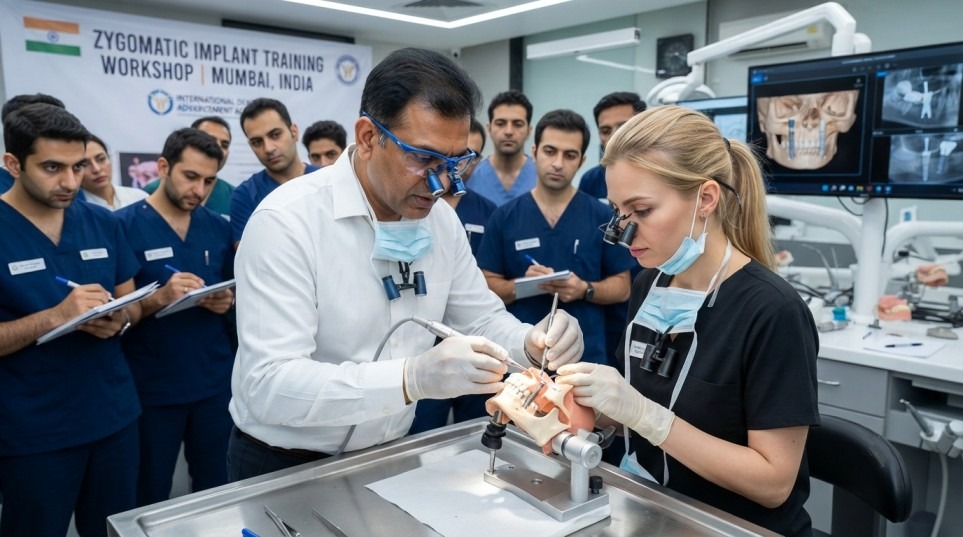
Here is a hard truth. You cannot learn to design smiles from videos alone. Advanced smile design training works best when the learning is split roughly evenly between concepts and supervised practice. Watching an expert is useful, but holding the handpiece under guidance is where real skill forms.
When you review a programme, ask how many hours are spent on live or model-based work. Ask about the participant-to-mentor ratio too. Small batches mean more personal feedback, and feedback is what speeds up your learning curve. Anyone who plans to place implants alongside aesthetic work may also want to look at our implant dentistry programme, since the two disciplines often overlap.
Who Should Join a Smile Designing Course?
The course suits a wide range of professionals, not only senior clinicians.
- Fresh BDS graduates who want a practical edge before opening a clinic
- General dentists looking to add high-value aesthetic treatments
- Prosthodontists and orthodontists who want better aesthetic planning
- Clinic owners who want to train their team and raise the standard of care
You do not need years of experience. You need curiosity, a steady hand and the willingness to practise. Many participants say the biggest benefit is simply feeling confident when a patient asks for a complete smile makeover.
How to Choose the Right Course Without Regret
Not every programme delivers what it promises. Use the checklist below before you pay a single rupee.
Check the Faculty’s Real Clinical Experience
Look for mentors who treat patients every week, not only teach. Clinical practitioners share shortcuts, failures and practical fixes that textbooks never mention.
Look at the Hands-On Component
A course that is mostly lectures will not change how you work on Monday morning. Confirm what you will actually do with your own hands, and on what.
Review the Batch Size and Mentor Support
Smaller groups mean more attention. Ask whether you can contact mentors after the course for case discussions.
Confirm Certification and Post-Course Guidance
A certificate adds credibility for your clinic and your profile. Support after the course, such as case review help, is an even bigger sign of a serious academy.
How a Smile Designing Course Can Grow Your Practice
Training pays off in ways that go beyond one new procedure. You consult with more confidence, your treatment plans look more polished, and patients feel safer saying yes. Aesthetic cases also tend to bring referrals, because happy patients show off their smiles.
You will likely see a shift in the kind of cases you attract. Instead of one-off fillings, you begin to plan complete smile rehabilitations. If you want practical business pointers to go with your new skills, read our post on starting a cosmetic dentistry practice.
Frequently Asked Questions
1. What is a smile designing course for dentists?
It is a professional training programme that teaches dentists how to plan and create aesthetically pleasing smiles. It covers facial analysis, tooth proportions, shade selection, veneers, gum contouring and digital planning, usually with a mix of lectures and practical sessions.
2. How long is a smile designing course in Mumbai?
Duration varies by programme. Some are intensive weekend workshops, while others run across several weeks or months with modules spread out. Choose the format that fits your clinic schedule and your current skill level.
3. Who is eligible to join a cosmetic dentistry course?
Generally, anyone with a BDS or MDS degree can enrol. Some academies also welcome final-year students. Always confirm eligibility with the institute before registering.
4. Will I get hands-on practice during advanced smile design training?
A good programme includes hands-on work on models and, where permitted, supervised patient cases. Always ask how many hours are practical, since that is the part that builds real confidence.
5. Is smile design only about veneers?
No. Veneers are one tool among many. Smile design also involves whitening, bonding, orthodontic planning, gum contouring and crowns. The goal is a balanced smile that suits the patient’s face, not just a set of white teeth.
6. Can smile design skills increase my clinic’s income?
Many dentists find that aesthetic cases carry higher value and encourage referrals. Results depend on your location, patient base and how well you present your plans, but trained dentists typically feel more confident offering premium treatments.
7. How do I choose between different smile design courses?
Compare the faculty’s clinical background, hands-on hours, batch size, certification and post-course support. Read genuine participant feedback if available, and avoid programmes that promise guaranteed results.
Ready to Take the Next Step in Your Aesthetic Journey?
If you are serious about building a confident aesthetic practice, talk to our team today and ask about upcoming batches. Your next patient may already be searching for a dentist who can design their dream smile.
Learn Smile Design With Esthetica Dental Academy
For dentists who want structured, practical and mentor-led learning, Esthetica Dental Academy is built to help you move from theory to confident clinical practice.
Book Your Training for Upcoming Months
We provide both online and offline training to help you enhance your skills. Book your training session for the upcoming months today!