









All on 6 Implant Training in India for Italy Dentists: Is It the Right Move for Your Practice?
If you are a dentist in Milan, Rome, Turin or anywhere else in Italy, you already know how many patients walk in with failing teeth and a wish for a fixed smile. All on 6 implant training in India for Italy dentists is becoming a smart answer to that demand, because it combines live surgical exposure, structured protocols and a learning pace that busy clinicians can actually follow. This guide explains what the training involves, what you can expect to gain, and how to decide if it fits your career goals. Along the way we also cover the All on 6 dental implant course in India for foreign dentists, dental implant training in India for Italian dentists and full arch implant training in India for international dentists, so you can compare your options in one place.
Why Italian Dentists Are Looking Beyond Europe for Implant Training
Many implant courses in Europe are excellent, but seats are limited and prices climb fast. Some programs also lean on lectures and models, so you leave with notes rather than surgical hours. Dentists from Italy are now exploring India because the clinical volume is high and the mentoring is close. You can watch a case, assist on the next one, and then place implants yourself under guidance. That rhythm builds real skill far quicker than slides ever could.
There is also a practical side. Edentulous and nearly edentulous patients are common in every country, and a clinician who can offer a predictable fixed solution stands apart from colleagues who refer these cases away. Travelling for a focused block of training lets you return home with a new service line ready to introduce.
What Is the All-on-6 Technique and Why Does It Matter?
The All-on-6 concept uses six implants to support a full fixed arch of teeth. Compared with fewer implants, the extra fixtures spread chewing forces more evenly, give the prosthesis a wider base, and offer a safety margin if one implant ever needs attention. For many cases it also reduces the need for long cantilevers, which helps the prosthetic stay stable over time.
For the patient, the benefit is simple: a set of teeth that feels like their own, often delivered with immediate loading when the clinical conditions allow. For you as the dentist, the benefit is a clear, repeatable protocol. Once you understand case selection, implant positioning and prosthetic workflow, each new patient becomes easier to plan and explain.
What You Learn in an All on 6 Dental Implant Course in India for Foreign Dentists
A good full-arch program should walk you through the entire pathway, not only the surgery. Expect to cover diagnosis and case selection, radiographic and CBCT planning, biomechanics, bone assessment, and the logic behind implant distribution. You then move into surgical steps, immediate loading concepts, temporary prosthesis delivery and long-term follow-up. If the course follows the All-on-6 implant course structure, you also learn how to build a structured protocol you can repeat in your own clinic.
Other topics that matter in daily practice include managing complications, handling soft tissue, communicating costs and options to patients, and knowing when a case is better referred. Italian dentists who already place single implants often find this the missing bridge between routine work and complex rehabilitation.
Hands-On Learning vs Watching Videos: Why Live Patients Change Everything
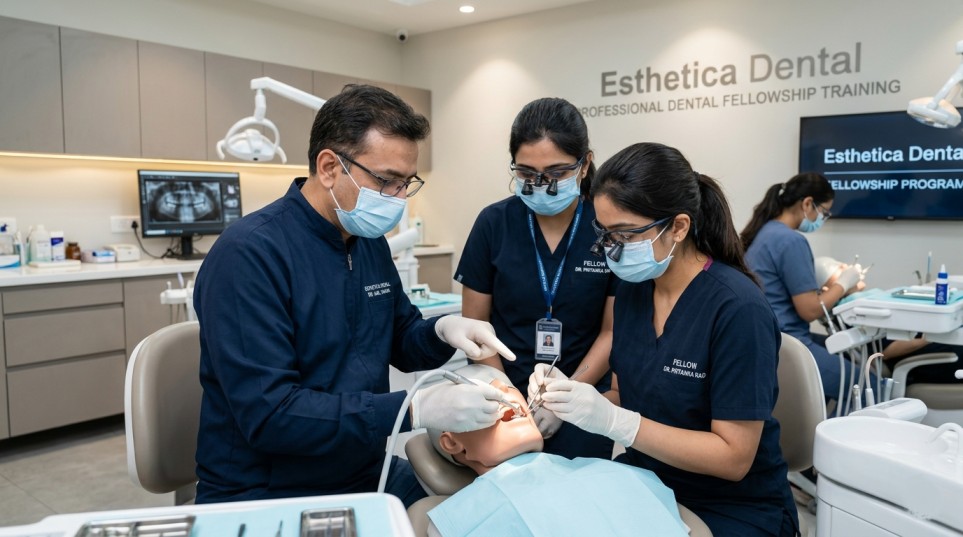
Videos and webinars teach concepts, but they cannot teach tactile judgement. Bone density, torque, angulation and primary stability are things you learn by doing, with a mentor beside you. Programs that include live patient surgery let you see how decisions are made in real time, including the small adjustments that never appear in a textbook.
This is why the number of supervised surgeries matters when you compare programs. A one-day foundation course gives you orientation, while a higher-volume pathway such as the implant fellowship program gives you repeated exposure, which is what turns cautious knowledge into practical confidence. Ask every provider how many cases you will personally treat, not only observe.
Dental Implant Training in India for Italian Dentists: Cost, Value and Time
Fees for dental academies vary by program length and the number of surgeries included, so always request a written breakdown before you book. Many academies also state that registration or course fees are non-refundable, so read the terms carefully. Beyond tuition, count flights, accommodation, local transport and the days you will be away from your own clinic.
The value comes from how quickly you can recover that investment. A single successful full-arch case can represent a significant treatment fee, so a dentist who returns able to treat even a few such patients per year can see the course pay back over time. That said, results depend on your patient base, your local market and your own consistency, so treat income projections as possibilities rather than promises.
Beyond All-on-6: Full Arch Implant Training in India for International Dentists
No two mouths are identical, so the best clinicians learn more than one approach. Alongside All-on-6, a strong curriculum introduces All-on-4, tilted implants, overdenture solutions and, for severely atrophic jaws, zygomatic implants. Learning these side by side helps you choose the safest, most economical plan for each patient instead of forcing every case into a single protocol.
If you want to go deeper, a full arch mastership program pulls the threads together, from planning to prosthetic delivery. This is especially useful for international dentists who plan to build a referral-based implant practice back home.
How to Plan Your Trip From Italy
Start by choosing your program level and confirming the dates with the academy. Next, check the current Indian visa rules for Italian passport holders, since many European travellers can apply online, and confirm the details on the official government portal before booking flights. Chandigarh is the nearest major airport for Mohali, and Delhi is a common alternative with onward travel by road, train or a short domestic flight.
Pack your professional documents, such as your dental registration and identification, and carry copies of your CBCT or case files if you want feedback on your own patients. Many clinicians also keep a day or two spare for rest and local sightseeing, which makes the trip far more enjoyable. If you want a program designed with overseas clinicians in mind, the international dentist training program in India is a good place to begin.
Who Should Join, and Who Should Wait
This training suits dentists who already have basic surgical comfort, a steady flow of patients who need tooth replacement, and a wish to add predictable implant dentistry to their practice. It also suits recent graduates who want mentored exposure before they begin placing implants alone. If you are brand new to implants, starting with a foundation or basic hands-on course is wiser than jumping straight into full-arch surgery.
One point deserves clear attention. Short clinical training programs are continuing education, and they are generally not a statutory degree or licence. Before enrolling, check with the relevant Italian authority, such as your professional dental association, about how any certificate is viewed and what you are allowed to do in practice at home. Responsible academies state this clearly in their disclaimers, so ask them to explain it in plain language.
Frequently Asked Questions
1. Is All on 6 implant training in India suitable for Italian dentists?
Yes, as long as you have a registered dental qualification and basic clinical experience. Programs are usually open to foreign dentists, and many are built around live cases that match the situations you meet at home.
2. How long does an All on 6 dental implant course in India for foreign dentists take?
Duration depends on the program. Short courses can run for a few days, while fellowship, diploma or residency pathways include more surgeries and take longer. Ask the academy for the exact schedule before you plan your travel.
3. Will I operate on real patients during the training?
Most hands-on programs include live patient surgery, but the number of cases you personally treat differs by level. Confirm how many surgeries you will perform yourself and how many you will only watch.
4. What is the difference between All-on-4 and All-on-6?
All-on-4 uses four implants and often relies on tilted posterior fixtures, while All-on-6 uses six implants for broader support. The better option depends on bone quality, jaw anatomy and prosthetic design, so a good course teaches both.
5. Is full arch implant training in India for international dentists recognised in Italy?
Training certificates are usually proof of attendance and skill development, not a legal licence. Check your local regulations and speak to your professional body to understand how such training is treated in Italy.
6. Do I need to bring my own instruments or implants?
Most academies provide the equipment, materials and clinic facilities for training sessions. Always confirm in writing what is included so you pack only what you need.
7. Can I ask for guidance on my own patient cases after the course?
Many mentors are happy to review cases and offer advice, but support varies by program. Ask whether post-course mentoring is part of the package and how you can reach the team.
Take the Next Step Toward Confident Full-Arch Dentistry
Choosing the right training is less about the biggest promise and more about the best fit. Compare the number of surgeries, the mentoring style, the clarity of the fees and the honesty of the certification. When these line up, travelling for a short, focused block can change the direction of your clinical career.
Build Skills Step by Step
Start with the basics
Make sure your diagnosis, planning and surgical fundamentals are solid before you attempt complex cases.
Add live surgical experience
Seek programs that let you place implants under supervision rather than only watching.
Grow into full-arch work
Move into All-on-6, All-on-4 and related protocols once you feel steady with single and multiple implants.
Keep Learning After the Course
Use free resources
Browse free dental learning resources to refresh concepts before and after your trip.
Read more on the blog
Explore related articles on the dental blog for practical tips on implants, aesthetics and patient communication.
Ready to begin? Call 9817230279 or send an enquiry today to ask about dates, fees and the best program for your experience level.
If you are an Italian dentist ready to turn full-arch implant dentistry into a confident, repeatable part of your practice, Esthetica Dental Academy welcomes you to train with hands-on mentorship in Mohali, India.
All on 6 Implant Training in India for Dentists from Italy
2-Day
Implantology
An intensive introduction for dentists who want to understand the complete implant workflow.
- ✓2 Days intensive training
- ✓Basic implantology concepts
- ✓Surgical kit demonstration
- ✓Hands-on training
- ✓Live implant surgery exposure
- ✓Certificate
Basic to Advanced
Comprehensive clinical training covering implant placement, bone grafting, sinus lift and prosthetic workflows.
- ✓5–7 Days training
- ✓Live patient surgeries
- ✓Implant placement
- ✓Bone grafting
- ✓Sinus lift
- ✓CBCT planning
- ✓Prosthetic workflow
Implant Diploma
Advanced structured training for dentists seeking deeper implant surgery and prosthetic exposure.
- ✓7 Days intensive program
- ✓15 implant procedures
- ✓Advanced surgery
- ✓Bone management
- ✓Sinus lift
- ✓Prosthetic rehabilitation
- ✓Extended mentorship
Customize Your
Course
Need a program designed around your specific clinical requirements? Build a customized implantology training plan with our team.
- ✓Choose your training duration
- ✓Select specific clinical procedures
- ✓Personalized learning objectives
- ✓Hands-on clinical exposure
- ✓Advanced implantology topics
- ✓Individual mentorship options