









Dental Course India Cost for Foreign Dentists and Fees Guide
If you are a dentist from outside India, you have probably asked one question again and again: what is the dental course India cost for foreign dentists, and is it really worth it? Every year, clinicians from Africa, the Middle East, Europe, Southeast Asia and beyond travel here to sharpen their skills. They look for dental courses in India for foreign dentists because the training is practical, the patient exposure is high, and the budget is far friendlier than in many Western countries. This guide explains dental training fees in India for international dentists, what shapes the final price, and how to plan your trip with confidence.
Why Are So Many Foreign Dentists Choosing India for Clinical Training?
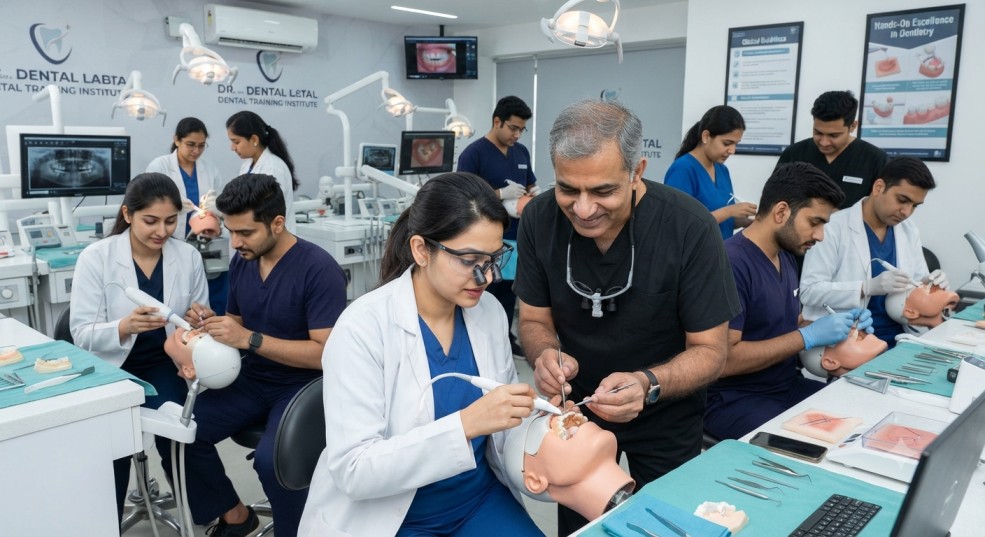
India treats more dental patients than most countries, and that means more real cases for you to learn from. Instead of watching slides for days, you can see diagnosis, planning and treatment unfold in a working clinic. Courses are usually taught by practising clinicians, so the advice you get comes from daily chair-side experience.
Cost is the second big reason. Treatment and training both run at a fraction of the price charged in the UK, USA, Canada or Australia. That lets a dentist invest in advanced skills such as implants or smile design without putting the practice under financial strain.
Finally, India has a long tradition of welcoming international learners. English is widely used in clinics and classrooms, which keeps communication simple. Many academies also help with letters for visa applications and local travel guidance.
What Is the Real Dental Course India Cost for Foreign Dentists?
There is no single fixed price, because the dental course India cost for foreign dentists depends on what you choose to learn and how you want to learn it. A short observational workshop will always cost less than a long programme with live patient work and one-to-one mentoring. Think of the fee as a package built from several parts.
The main factors that move the price are:
- Type of course: implantology, endodontics, cosmetic dentistry and full-arch rehabilitation each have different material and training needs.
- Duration: a few days, two weeks or several months of mentorship.
- Hands-on component: watching a live case is cheaper than performing treatment under supervision.
- Group size: small batches give more personal attention, which often reflects in the fee.
- Materials and equipment: implants, CBCT scans and digital planning tools add to the cost.
Because these details change, always ask the academy for a written fee breakdown before you pay anything.
Popular Dental Courses in India for International Dentists
Most foreign participants choose a programme that adds a new, in-demand skill to their practice. Here are the areas that attract the most interest.
Dental implant training. This is the most requested subject. Good programmes cover case selection, CBCT reading, surgical steps, immediate loading and prosthetic planning. Advanced learners often look for full-arch concepts such as All-on-6.
Smile design and veneers. Cosmetic dentistry is growing fast worldwide. These courses teach facial analysis, digital smile planning, tooth preparation and finishing.
Endodontics and laser-assisted root canals. Dentists who want fewer failures and faster appointments find this useful, especially when learning rotary systems and laser disinfection.
Orthodontics and clear aligners. Aligner dentistry is easy to add to a general practice, and training helps you choose cases wisely.
Minor oral surgery. Extractions, impacted teeth and soft tissue procedures are taught with plenty of supervised practice.
If you want to see what is currently offered, you can browse the all dental academy courses page for programme details.
Dental Training Fees in India for International Dentists: What Should Be Included?
Before you compare prices, make sure you know what the fee actually covers. Two academies may quote very different amounts simply because one includes more. A transparent fee should answer these questions clearly:
- Does the price include the training itself and a participation certificate?
- Are study materials, handouts and recorded sessions provided?
- Will you work on live patients, or only observe?
- Are consumables, implants or instruments included in practical sessions?
- Is there post-course support if you have questions back home?
One more point matters: registration or course fees may be non-refundable at some institutes. Read the payment and refund terms carefully, and keep a copy of everything you agree to.
If you prefer a structured path built for overseas clinicians, check the international dentist training program in India to see how a programme for global participants is organised.
Dental Course Fees in India for International Students: The Budget Beyond Tuition
Smart planning means looking at the full trip, not just the course invoice. When you add up dental course fees in India for international students, include these everyday costs too.
Travel and visa. Flights and visa charges depend on your home country. Apply early so there are no last-minute delays.
Accommodation. Options range from simple guest houses to comfortable hotels and serviced apartments. Staying close to the training centre saves daily travel time and money.
Food and local transport. Meals and taxis are inexpensive compared with most countries, which is another reason India works well for longer stays.
Medical insurance. Carry basic travel cover, even for a short visit.
Extra learning. Some dentists add a sightseeing day or a second short workshop. Plan a small buffer for this.
Dentists who are also thinking about travelling with family or exploring care for themselves can read about dental tourism in India to understand how the process works for international visitors.
How Does India Compare With Other Countries on Price?
In many Western countries, a comparable hands-on implant or cosmetic course can cost several times more, and live patient work is hard to find. In India, the combination of lower living costs and large patient numbers makes advanced training more reachable.
That said, a lower price should never be your only filter. A cheap course with no practical work will not change how you treat patients. A slightly higher fee that includes supervised cases and mentoring usually gives you better value and more confidence when you return to your own clinic.
A Simple Checklist for Choosing the Right Academy
Before you pay, run through this short list.
- Check the trainers. Look for clinicians with real, current practice, publications or conference experience.
- Ask about hands-on time. Find out exactly how many hours you will spend treating or assisting.
- Look at group size. Smaller batches mean more feedback.
- Confirm the technology. Modern training should include digital planning and CBCT.
- Request the fee in writing. Get a clear list of what is and is not included.
- Read reviews and gallery cases. Genuine before-and-after work and learner feedback tell you a lot.
If you want to learn about the clinician behind a training programme, you can read the profile of Dr. Sharad Arya before deciding.
Certificate vs Degree: What You Should Know
This is an important point that many foreign dentists overlook. Short clinical training programmes are meant for professional development. A participation certificate shows that you attended and trained, but it is generally not a degree, diploma or licence, and it does not change your registration status. Always check the rules of your own dental council at home so you know how the training can be used in your practice.
Being clear about this from the start protects you from disappointment and helps you choose a course for the right reasons: better skills, more confidence and better results for your patients.
Frequently Asked Questions
1. How much does a dental course in India cost for foreign dentists?
The price varies by subject, length and how much live patient training is included. Short workshops cost less, while long mentorship programmes cost more. Ask for a written breakdown so you can compare academies fairly.
2. Are dental training fees in India for international dentists lower than in other countries?
In most cases, yes. Lower operating and living costs keep fees reasonable, and you often get more patient exposure than you would at home. Compare what is included, not only the headline number.
3. Do I need a visa to attend a dental course in India?
Most foreign nationals do. The visa type depends on your nationality and the length of your stay. Contact the academy early, since they can usually share a participation letter, and also check with the Indian embassy in your country.
4. Will I get to work on real patients?
That depends on the programme. Some courses focus on observation, others include supervised treatment. Always confirm this before registering, because it is one of the biggest factors in the fee.
5. How long are dental courses in India for international dentists?
Durations range from a few days to several weeks, and some mentorship models run over a longer period. Choose a length that fits your clinic schedule and budget.
6. Is the certificate valid as a degree in my country?
No. A clinical training certificate is proof of participation and learning, not a degree or licence. Check your local dental council for how it may be recognised.
7. What are the dental course fees in India for international students besides tuition?
Plan for flights, visa, accommodation, food, local travel and insurance. Adding a small buffer for extra learning or sightseeing keeps your budget realistic.
Ready to Plan Your Training? Here Is Where to Begin
You now know what shapes the cost and what to look for. The next step is turning that information into a clear plan for your own career.
Decide Your Goal First
Pick one skill you want to master, such as implants, smile design or root canals, and choose a course that matches it.
Set a Realistic Budget
Add tuition, travel, stay and a small safety margin, so there are no surprises.
Ask Questions Before You Pay
Request the syllabus, trainer details and the refund policy in writing.
Talk to the Team
A short conversation often clears up doubts faster than hours of research. You can book an appointment to discuss your options directly.
Want to explore more? Read our latest dental guides on the Esthetica blog.
Choosing the right place to train can shape your clinical confidence for years. If you want practical, patient-focused learning with experienced mentors, Esthetica Dental Academy offers guidance for dentists from India and abroad who want to build advanced skills step by step.
Dental Course India Cost for Foreign Dentists and Fees Guide
2-Day
Implantology
An intensive introduction for dentists who want to understand the complete implant workflow.
- ✓2 Days intensive training
- ✓Basic implantology concepts
- ✓Surgical kit demonstration
- ✓Hands-on training
- ✓Live implant surgery exposure
- ✓Certificate
Basic to Advanced
Comprehensive clinical training covering implant placement, bone grafting, sinus lift and prosthetic workflows.
- ✓5–7 Days training
- ✓Live patient surgeries
- ✓Implant placement
- ✓Bone grafting
- ✓Sinus lift
- ✓CBCT planning
- ✓Prosthetic workflow
Implant Diploma
Advanced structured training for dentists seeking deeper implant surgery and prosthetic exposure.
- ✓7 Days intensive program
- ✓15 implant procedures
- ✓Advanced surgery
- ✓Bone management
- ✓Sinus lift
- ✓Prosthetic rehabilitation
- ✓Extended mentorship
Customize Your
Course
Need a program designed around your specific clinical requirements? Build a customized implantology training plan with our team.
- ✓Choose your training duration
- ✓Select specific clinical procedures
- ✓Personalized learning objectives
- ✓Hands-on clinical exposure
- ✓Advanced implantology topics
- ✓Individual mentorship options