








Hands-On Dental Courses in India for Foreign Dentists: The Complete 2026 Guide
Want real patient experience, not just slides? Here is how to pick the right course before you book a flight.
If you are a dentist outside India, you have probably noticed how many clinicians now travel here to upgrade their skills. The reason is simple: hands-on dental courses in India for foreign dentists offer something that is hard to find at home, which is a steady flow of real cases, close mentor supervision and training costs that are often far lower than in the US, UK, Canada or Australia. This guide explains what to look for, which course types matter most, and what to check before you pay.
Why Are So Many International Dentists Training in India?
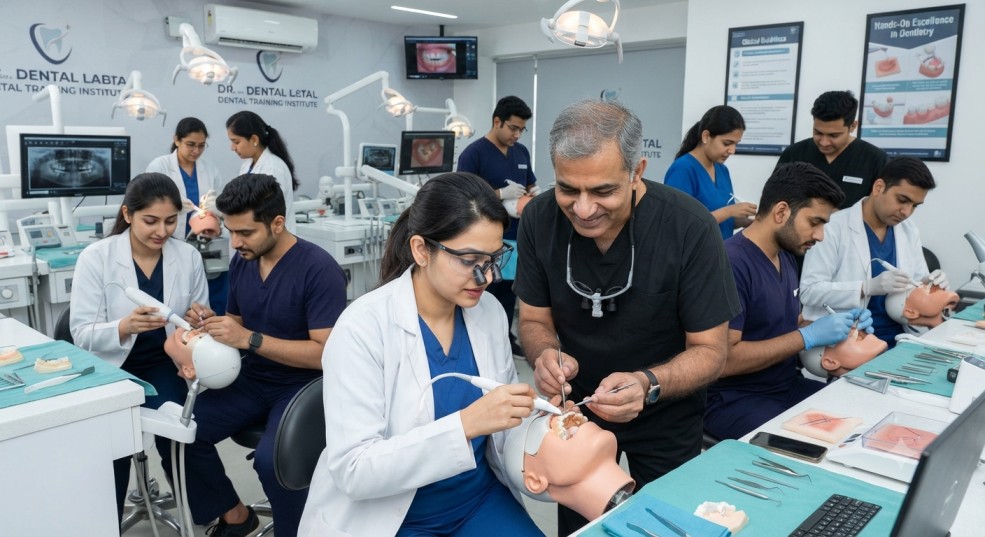
India treats a very large patient population, so training centres see a wide mix of cases in a short time. A dentist can observe, assist and then perform procedures that might take months to see in a quieter market. Many programmes also run in small batches, which means you stand next to the clinician rather than watching from the back of a lecture hall.
Cost is the second draw. Course fees, accommodation and daily expenses are usually lower than comparable programmes in Western countries. For overseas graduates preparing for licensing exams such as ADC (Australia) or NDBE (Canada), extra clinical confidence can also make revision easier and case planning sharper.
What Does “Hands-On” Actually Mean? Ask These Questions First
The phrase is used loosely. Some programmes give you a typodont or a model jaw. Others let you watch a live surgery on a screen. A smaller number let you work on patients under supervision. Before enrolling, get clear answers to the questions below.
Questions worth asking the academy
Will I work on live patients or only on models?
Ask for the exact number of procedures you will perform yourself, not the number you will watch.
Who supervises me during surgery?
A named, experienced clinician should be present during every case, with a clear mentor-to-participant ratio.
What is the batch size?
Smaller groups mean more chair time per person. Ask how many participants share each patient case.
What happens if a case is cancelled?
Live patients can reschedule. A good academy has a plan for this so your learning days are not wasted.
Dental Implant Courses in India for Foreign Dentists
Implantology is the number one reason overseas clinicians come here. Dental implant courses in India for foreign dentists are usually built as a ladder, so you can start at your comfort level and move up as your confidence grows.
The typical implant learning ladder
Beginner foundation
A one-day or short programme covering case selection, treatment planning, implant systems and basic surgical steps. It is ideal if you have never placed an implant.
Live surgery observation with first placement
You watch a live case, understand the workflow from consultation to loading, and, in some programmes, place your first implant under guidance.
Multi-surgery fellowship or diploma-style programmes
These include 5, 10, 15 or more supervised surgeries over several sessions. The more cases you perform, the more predictable your results become.
Full arch and complex cases
Advanced modules cover All-on-4, All-on-6, tilted implants and zygomatic implants for severely resorbed jaws. These suit dentists who already place implants routinely.
If you are comparing options, look at the number of surgeries you personally perform, the follow-up support after you return home, and whether prosthetic planning is taught alongside the surgical steps. A structured example is the implantology fellowship pathway, which links surgical volume to skill level.
Clinical Dental Training in India for International Dentists
Clinical dental training in India for international dentists is not limited to surgery. Many dentists, especially recent graduates, choose general dentistry programmes to rebuild their foundation in endodontics, crown and bridge, extractions and patient communication.
Areas worth considering
Endodontics and microscopic dentistry
Re-treatment, difficult canals and magnification-assisted work are in steady demand. Advanced modules such as advanced endodontics help you handle cases you may currently refer out.
Prosthodontics and full mouth rehabilitation
Crowns, bridges, dentures and implant-supported prosthetics bring surgery and restoration together. Understanding both sides gives you better treatment plans.
Minor oral surgery
Surgical extractions, impactions and soft tissue procedures build the hand skills that support every other discipline. Programmes in advanced oral surgery are built around these fundamentals.
General dentistry fellowship
For a complete, multi-discipline experience, a general dentistry fellowship covers diagnosis, restorative work and patient management in one pathway.
Practical Dental Courses in India for Overseas Dentists
Looking for skills you can use in your own clinic the week you return?
Practical dental courses in India for overseas dentists are best chosen by asking one question: what will I be able to do on Monday morning that I could not do before? Cosmetic dentistry is a popular answer, because it is visible, patient-friendly and easy to market.
Popular practical options
Smile designing
Courses on facial analysis, digital smile planning, veneers and laminates teach you to deliver predictable aesthetic results. You can explore a smile designing course to see how foundation and advanced levels are separated.
Immediate loading and fixed teeth protocols
Learning how to deliver teeth quickly in edentulous patients can change the way you present treatment options.
Overdenture solutions
Implant-supported overdentures offer a more affordable option for patients who cannot opt for a full fixed arch, widening your patient base.
Treatment planning and case presentation
Good training also covers how to explain options, set expectations and move a patient from enquiry to treatment.
Important: Check Registration and Legal Rules Before You Book
Rules about treating patients in India as a foreign-qualified dentist are not the same as rules for observing or attending a course. Before you pay, confirm with the academy and with the relevant Indian dental authority what you are permitted to do, whether you may work on patients, and whether you need any permission or visa category beyond a tourist visa.
Also read the fine print on certificates. Many continuing education programmes, including those in India, state that their certificate is proof of participation and not a degree, diploma or statutory qualification. That is perfectly normal for CPD-style training, but it means you should not expect it to replace registration in your home country. Check your own regulator’s rules on whether training abroad counts towards your CPD hours.
How to Choose the Right Course: A Simple Checklist
Seven points to compare
1. Faculty experience
Look for clinicians who treat patients daily, not only teach. Check their years of practice and specialities.
2. Number of procedures you perform
Ask for written numbers, not general promises.
3. Batch size and mentoring ratio
Small groups give you more personal supervision.
4. Course structure
A clear path from beginner to advanced shows the academy has thought about your progress.
5. Transparency on fees and inclusions
Find out what is covered: materials, implants, accommodation help and certificates. Check refund and cancellation terms.
6. Post-course support
Can you message the mentor when you face your first case at home?
7. Honest legal information
A trustworthy academy tells you what is and is not permitted for foreign dentists.
Planning Your Trip: A Practical Timeline
Start by deciding your goal: implants, cosmetic work, endodontics or a broad foundation. Shortlist two or three academies, request course details, and speak to past participants if possible. Many academies share a free learning library that lets you test the teaching style before committing.
Once you have chosen, sort out your visa and travel dates, review the theory beforehand, and bring your registration documents and professional indemnity details. If you want to combine learning with a longer stay, a dedicated international dentist training programme can help you plan the logistics. Finally, keep a few days free for case-related delays so your schedule has room to breathe.
Frequently Asked Questions
1. What are the best hands-on dental courses in India for foreign dentists?
The best course is the one that matches your experience level and gives you written clarity on how many procedures you personally perform. For most overseas dentists, implantology, smile designing, endodontics and general dentistry fellowships are the most popular options.
2. Can foreign dentists perform procedures on patients during training in India?
This depends on current regulations, your registration status and the academy’s policy. Always ask the academy for a clear written answer and check with the relevant Indian authority before you travel.
3. How long do dental implant courses for foreign dentists last?
Duration ranges widely. Beginner programmes can be completed in one or two days, while fellowship and mini-residency style programmes with multiple surgeries are spread over longer periods or several visits.
4. Do I need a special visa to attend a dental course in India?
Visa requirements depend on your nationality, course length and activities. Confirm the correct category with the Indian embassy or consulate in your country and ask the academy for an invitation or enrolment letter.
5. Is the certificate from an Indian dental course valid in my country?
In most cases, course certificates are proof of attendance and CPD learning rather than a licence. Check with your home regulator on how such training is treated.
6. Are dental courses in India cheaper than in the US, UK or Canada?
Often, yes. Course fees and living costs are generally lower, though the total depends on course length, travel and accommodation. Ask for a full breakdown before you decide.
7. Can these courses help me prepare for ADC or NDBE?
Clinical exposure, treatment planning practice and case discussion can strengthen your practical understanding, which supports exam preparation. They do not replace dedicated exam study.
Ready to Train? Your Next Step
Choosing among hands-on dental courses in India for foreign dentists comes down to clarity: clear procedure numbers, clear supervision, clear fees and clear legal guidance. Take your time, compare at least two academies, and ask every question on the checklist above. Whether you want implant surgery, cosmetic dentistry or broader clinical skills, the right programme should leave you more confident and better prepared for your own patients.
Ready to compare options? Browse all dental academy courses, read more in our dental implant course articles and latest dental blog, or book a consultation to discuss your goals. For dentists who want mentor-led clinical learning in Mohali, Esthetica Dental Academy offers implantology, smile designing, endodontics and general dentistry programmes with guidance from its faculty.