








All-on-6 Implant Course India for German Dentists: Is the Trip Worth It?
Full-arch rehabilitation is one of the fastest-growing areas in modern dentistry, and many dentists in Germany want more surgical exposure than their local options allow. All-on-6 implant training in India for German dentists has become a serious option because of high patient volumes, mentor access and lower training costs. This guide explains what the training covers, how it compares with All-on-4, and what to check before you book flights.
Why Are German Dentists Looking Beyond Europe for Implant Training?
The real problem: Great theory, too few live cases.
Many courses in Europe are excellent on diagnostics and prosthetic theory. The common complaint is the limited number of live surgeries a participant can attend or assist with. Waiting lists, high fees and small patient pools slow down skill building, especially for full-arch work.
India offers a different model. Clinics see large numbers of edentulous and severely resorbed cases, so participants watch the entire workflow repeatedly, from planning to final prosthesis. That repetition is what builds confidence. For a dentist who already places single implants, seeing ten full-arch cases in a short period can teach more than reading ten articles.
All-on-6 vs All-on-4: Which Protocol Should You Learn?
Quick answer: Learn both, but understand why All-on-6 exists.
All-on-4 uses four implants, with the posterior pair tilted, to support a fixed arch. It reduces the need for grafting and works well in many cases. All-on-6 adds two more implants, spreading the occlusal load across a wider area and giving the prosthesis extra support.
The six-implant approach is often preferred when bone quality is softer, when the patient has strong bite forces, or when the arch form needs more posterior support. It also offers a margin of safety: if one implant fails to integrate, the restoration may still be salvageable. Knowing when to choose which protocol is a core skill that a good course should teach.
What Should a Good All-on-6 Dental Implant Course in India Include?
Look beyond the brochure: The curriculum tells you everything.
A strong All-on-6 dental implant course in India should cover the whole journey, not only the surgery. Check that the following topics are on the program.
- Case selection, CBCT interpretation and prosthetically driven planning
- Implant positioning, spacing and angulation for six-implant arches
- Bone reduction, extraction-and-immediate-placement protocols
- Immediate loading concepts and provisional prosthesis delivery
- Management of complications, from soft tissue issues to implant failure
- Final prosthesis design, occlusion and long-term maintenance
If a program focuses only on surgery and skips prosthetics, you will leave with half the picture. Full-arch success depends as much on the restoration as on the fixtures.
What Does Implantology Training in India for German Dentists Look Like?
A typical week, explained simply: structured, practical and mentor-led.
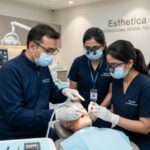
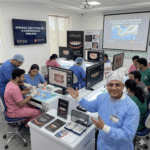
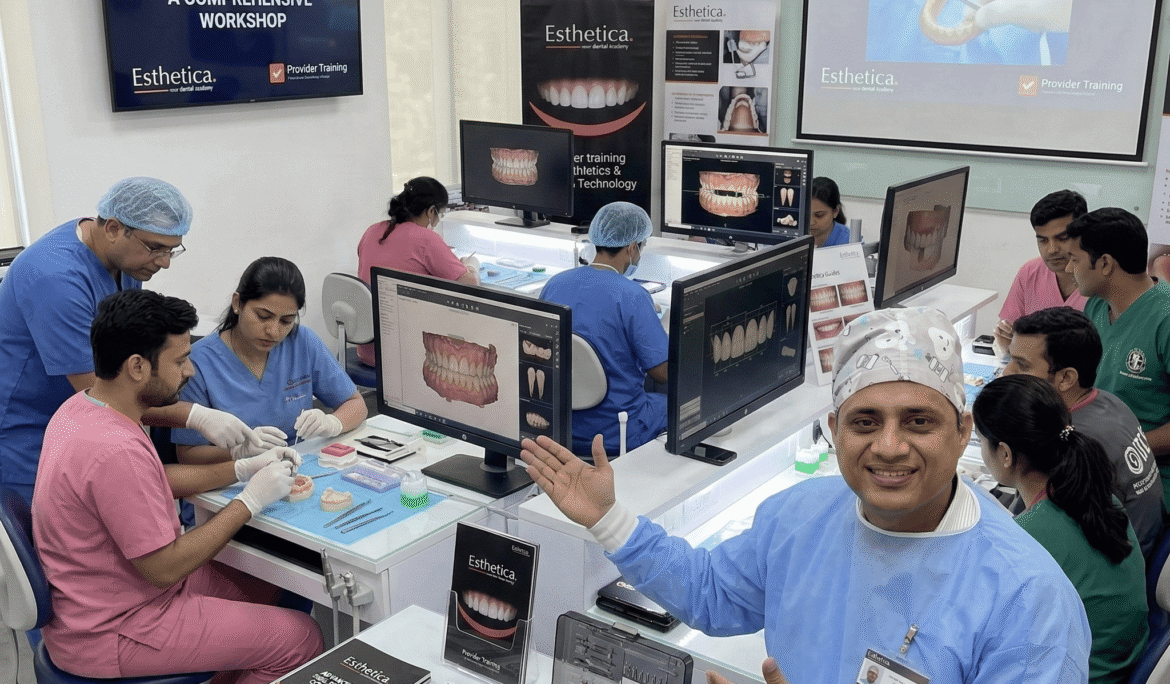
Most international programs mix short theory sessions with live-case days. You begin with planning discussions, review scans and agree on a surgical strategy. Then you observe or assist during surgery, followed by prosthetic steps such as impressions, try-ins and delivery.
Well-run implantology training in India for German dentists also considers language, schedules and documentation. Instruction is normally in English, and small batches mean more time with the mentor. Ask how many participants share each case, because a crowded operatory limits what you actually learn.
Hands-On vs Observation: Know Your Scope of Practice
Important: Check this before you pay a single euro.
This is the point many dentists overlook. Your right to treat patients is tied to your registration. A dentist licensed in Germany generally cannot treat patients in another country without local registration, so much international training is observation, assisted surgery, or work on models and simulation.
Ask the academy in writing exactly what you will do: observe, assist, or operate under supervision where permitted. Also remember that training certificates are normally proof of participation, not a statutory qualification. For recognition at home, contact your regional dental chamber (Landeszahnärztekammer) and clarify what counts toward your continuing education.
How to Choose Advanced Dental Implant Training for International Dentists
Your checklist: Five questions that separate good programs from average ones.
Before you commit, compare programs using the same criteria. A clear answer to each question below usually signals a trustworthy academy.
- Who are the mentors, and how many years of full-arch experience do they have?
- How many live cases will you see, and how many will you assist?
- What is the batch size and the mentor-to-participant ratio?
- Is the prosthetic phase included, or only the surgical phase?
- What are the fee, refund terms and certificate wording?
Many dentists also choose a progressive path, starting with basics and then moving to an advanced dental implant training for international dentists track once they are comfortable. Starting at the right level saves money and avoids frustration.
Planning the Trip: Travel, Timing and Practical Tips
Make the trip smooth: A little preparation protects your time.
Book your visa early and confirm the course dates before purchasing flights. The cooler months, roughly October to March, are more comfortable for travel in northern India. Consider arriving a day early to recover from the flight and settle into your accommodation.
Pack scrubs, loupes if you use them, and a notebook for case notes. Ask the academy whether airport pickup, hotel suggestions and local transport are arranged. Small details like these decide whether the week feels productive or exhausting.
Frequently Asked Questions
1. Can German dentists join All-on-6 implant training in India?
Yes, licensed dentists from any country can usually enrol in international programs. Confirm the eligibility rules, visa requirements and whether hands-on work is permitted for your registration status.
2. How long is an All-on-6 implant course?
Duration varies from short intensive programs of a few days to longer fellowship formats spread over several visits. Choose the length based on how many live cases you want to see.
3. Is All-on-6 better than All-on-4?
Neither is better in every case. All-on-6 gives more support and a safety margin, while All-on-4 suits cases where bone and anatomy allow a simpler approach. A good course teaches you to decide case by case.
4. Will the certificate be valid in Germany?
Most academies issue a participation certificate, which is not a statutory qualification. Ask your Landeszahnärztekammer whether the hours count as continuing education.
5. Do I need prior implant experience?
Basic familiarity with implant placement helps a lot. Beginners should start with a foundation course before attempting full-arch concepts.
6. What is the cost advantage of training in India?
Training fees and living costs are often much lower than in Western Europe, though flights and accommodation add to the total. Compare the full budget, not just the course fee.
7. Will I work on real patients?
Many programs feature live cases, but your role depends on your licence and the clinic’s rules. Always request clarity on observe, assist or operate before you register.
Ready to Take Your Full-Arch Skills to the Next Level?
Your next step: Turn curiosity into a plan.
Choosing the right training is about matching your experience, your goals and your legal scope with a program that is honest about what it offers. If you want mentor-led full-arch learning with high case exposure, Esthetica Advanced Dental Academy in Mohali, India welcomes international dentists. Book your consultation today, ask your questions, and request the next batch dates and fee details.
All-on-6 Implant Course India for German Dentists
2-Day
Implantology
An intensive introduction for dentists who want to understand the complete implant workflow.
- ✓2 Days intensive training
- ✓Basic implantology concepts
- ✓Surgical kit demonstration
- ✓Hands-on training
- ✓Live implant surgery exposure
- ✓Certificate
Basic to Advanced
Comprehensive clinical training covering implant placement, bone grafting, sinus lift and prosthetic workflows.
- ✓5–7 Days training
- ✓Live patient surgeries
- ✓Implant placement
- ✓Bone grafting
- ✓Sinus lift
- ✓CBCT planning
- ✓Prosthetic workflow
Implant Diploma
Advanced structured training for dentists seeking deeper implant surgery and prosthetic exposure.
- ✓7 Days intensive program
- ✓15 implant procedures
- ✓Advanced surgery
- ✓Bone management
- ✓Sinus lift
- ✓Prosthetic rehabilitation
- ✓Extended mentorship
Customize Your
Course
Need a program designed around your specific clinical requirements? Build a customized implantology training plan with our team.
- ✓Choose your training duration
- ✓Select specific clinical procedures
- ✓Personalized learning objectives
- ✓Hands-on clinical exposure
- ✓Advanced implantology topics
- ✓Individual mentorship options