








Advanced General Dentistry Course in India for Dental Professionals
Finished your BDS or MDS but still feel unsure when a complex case walks into your clinic? You are not alone. Many young dentists discover that college teaches the basics, while real patients demand much more. An advanced general dentistry course in India helps you close that gap with practical skills, guided cases, and the confidence to treat patients on your own terms. In this guide, we break down what such a course covers, who it suits, and how to pick one that truly builds your career.
Why Do So Many Dentists Feel Unprepared After Graduation?
Dental college gives you a strong theoretical base, but chairside time with varied cases is often limited. You may have extracted teeth and filled cavities, yet placing an implant or planning a full smile makeover can still feel intimidating. Patients today also expect more. They want painless care, natural-looking results, and fast recovery. That is why advanced dentistry courses in India are growing so quickly among fresh graduates and practising clinicians alike.
What Exactly Is an Advanced General Dentistry Course?
Think of it as a bridge between college learning and confident daily practice. Rather than focusing on one narrow topic, the programme covers several areas that a modern clinic uses every day. These usually include implants, endodontics, cosmetic work, prosthodontics, and basic oral surgery. Good general dentistry training in India blends short theory sessions with long practical hours, so every concept turns into a skill you can actually use.
It is important to understand what these programmes are and are not. Most are continuing professional development courses, meaning they sharpen your clinical skills but do not replace a degree or a licence. Always read the fine print before you enrol, and choose a provider that is open about this.
Which Skills Will You Actually Learn?
A well-designed curriculum should leave you with abilities you can apply the very next week. Here are the core areas you should look for:
- Dental implant basics and advanced placement: From case selection to surgical steps and prosthetic loading.
- Root canal treatment: Modern techniques, rotary files, and ways to make treatment comfortable for the patient.
- Smile designing: Planning veneers, laminates, and cosmetic corrections with proper symmetry.
- Crown and bridge work: Preparation, impressions, and long-lasting restorations.
- Minor oral surgery: Wisdom tooth removal, flap handling, and suturing.
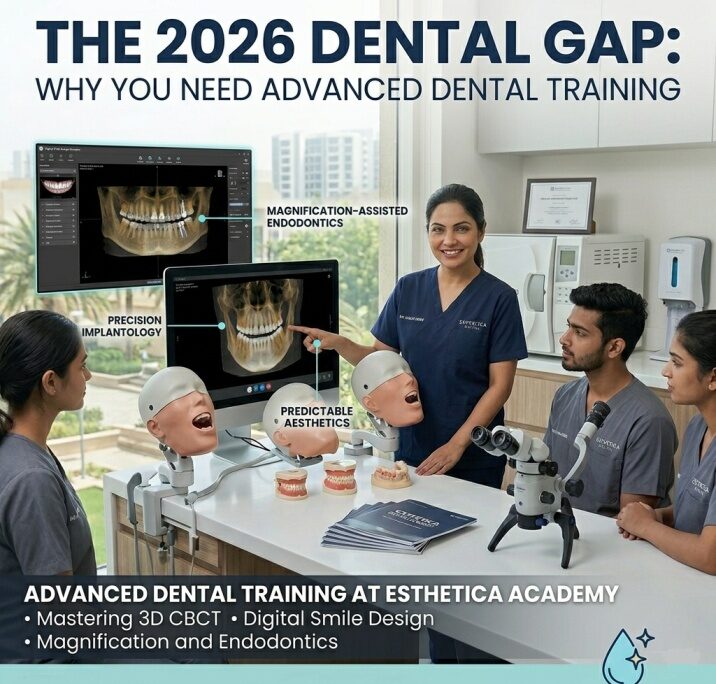
- Digital workflows: CBCT reading, 3D planning, and treatment simulations.
When these topics are taught together, you begin to see how one decision affects the entire treatment plan. That wider view is what separates a confident clinician from a hesitant one.
Why Does Hands-On Training Beat Classroom Lectures?
You cannot learn to place an implant by watching slides. Skill comes from holding the handpiece, feeling the bone, and hearing a mentor correct your angle in real time. That is the biggest strength of clinical dentistry courses for dentists that put practical work first. Live demonstrations, supervised procedures, and small batches give you the repetition needed to build muscle memory.
Small groups matter more than most people realise. When only a few participants share a mentor, you get personal feedback instead of waiting in a crowd. You also get to ask the “silly” questions that every beginner has but rarely voices in a packed hall.
Who Should Join This Kind of Programme?
These courses are not only for fresh graduates. They suit a wider group than you might expect:
- Fresh BDS graduates who want real chairside confidence before opening or joining a clinic.
- Practising general dentists who wish to add implants or cosmetic services to their menu.
- MDS dentists looking to widen their skills beyond one speciality.
- International dentists who want exposure to Indian clinical volume and case variety.
If you have ever referred a patient elsewhere simply because you lacked the skill, this is a strong sign that further training will pay off.
How Can You Choose the Right Course Without Regret?
With so many options online, picking one can feel confusing. Instead of chasing the cheapest fee or the flashiest banner, check a few practical points first.
- Faculty experience: Are the mentors active clinicians who treat patients daily?
- Live patient exposure: Will you work on real cases, or only on models?
- Batch size: Smaller groups mean more attention for you.
- Curriculum depth: Does it cover diagnosis, planning, execution, and complications?
- Transparency: Is the certificate described honestly, with no inflated promises?
- Post-course support: Can you reach your mentors when a tricky case appears later?
A short conversation with the academy team often tells you more than any brochure. Ask about the schedule, the number of cases, and what a typical day looks like.
What Changes in Your Practice After the Course?
The first change is usually confidence. You stop hesitating over cases you used to avoid, and your treatment planning becomes sharper. The second change is income. When you can offer implants, smile designing, and advanced root canals under one roof, patients no longer need to travel elsewhere. Your clinic grows by word of mouth because satisfied patients tell their families.
There is a professional benefit as well. Learning alongside other dentists builds a network you can lean on for referrals, second opinions, and future collaboration. Many dentists say this community is one of the most valuable parts of the whole experience.
Which Mistakes Should You Avoid While Enrolling?
Some dentists join a course expecting a magic switch to flip. Real progress needs effort, so go in with the right mindset. Avoid choosing a programme only because it is short or inexpensive, since quality training takes time. Do not skip the pre-course reading either, because it makes live sessions far more useful. Finally, never treat a certificate of participation as a licence to practise beyond your registration. Use the learning to improve within your legal scope.
Frequently Asked Questions
1. What is an advanced general dentistry course in India?
It is a practical training programme for dentists that covers several clinical areas such as implants, root canals, cosmetic dentistry, and minor surgery. The goal is to build chairside confidence beyond what college offers. Most are structured as continuing professional development, with a mix of theory, demonstrations, and supervised work.
2. Who is eligible to join?
Generally, you need a BDS degree and a valid dental registration. Some academies also welcome MDS dentists and international graduates. Eligibility can differ between providers, so confirm the requirements with the academy before you apply.
3. How long does a typical programme last?
Duration varies widely, from a few days to several months. Short intensive formats suit working dentists, while longer mentorship models allow more repetition and case exposure. Pick a length that matches your schedule and the depth of skill you want.
4. Is hands-on training really necessary?
Yes, because dentistry is a skill-based profession. Reading and watching videos help you understand a procedure, but only practice teaches you to perform it safely. Look for courses that give you supervised practical time rather than lecture-only sessions.
5. Will the certificate make me a specialist?
No. Most such certificates confirm participation and skill development, not a statutory qualification, and they do not change your registration status. They are best viewed as proof of extra training that supports your existing licence.
6. What is the average cost of these courses in India?
Fees depend on duration, faculty, batch size, and whether live patient work is included. Rather than comparing prices alone, compare what you receive: mentorship quality, case numbers, and follow-up support. Always ask for a written fee breakdown, and check the refund policy before paying.
7. Can I learn dental implants in a general dentistry course?
Many programmes include implant dentistry as a core module, covering diagnosis, planning, placement, and restoration. Depth differs from one academy to another, so check how many cases you will actually handle and whether CBCT-based planning is part of the training.
Build Real Clinical Confidence with Esthetica Advanced Dental Academy
Choosing where to learn is one of the biggest decisions in your early career, and it deserves careful thought. Look for mentors who treat patients every day, small batches that give you personal attention, and honest communication about what you will gain. When you find that mix, your skills, your confidence, and your patient trust all move forward together.
Ready to take the next step? Book your seat today and train under experienced clinicians at Esthetica Advanced Dental Academy, where practical learning turns ambitious dentists into confident practitioners. Call 9817230279 or message the team on WhatsApp to ask about upcoming batches.