








Live Patient General Dentistry Course in India for Dentists
If you have just finished your BDS and feel nervous when a real patient sits in your chair, you are not alone. A live patient general dentistry course India offers can close the gap between textbook knowledge and daily clinical practice. Instead of only watching slides or practising on models, you treat real people under expert supervision. This guide explains what such a course includes, who benefits most, and how to pick the right one.
Why Do So Many Fresh Dentists Feel Unprepared After BDS?
You studied for five years, so why does the first solo patient still feel scary?
Dental college teaches theory well, but the number of patients each student handles can be limited. Many graduates complete their internship with only a handful of full procedures behind them. When they open their own practice or join a clinic, the first difficult extraction or root canal can feel overwhelming.
This gap is not a personal failure. It is a training gap, and it is very common across the country. Young dentists often say the hardest part is not knowing the subject but trusting their own hands. Confidence grows only through repetition on real cases, with someone experienced standing next to you.
What Exactly Is a Live Patient General Dentistry Course?
Imagine learning dentistry the way a pilot learns to fly, with real controls and a mentor beside you.
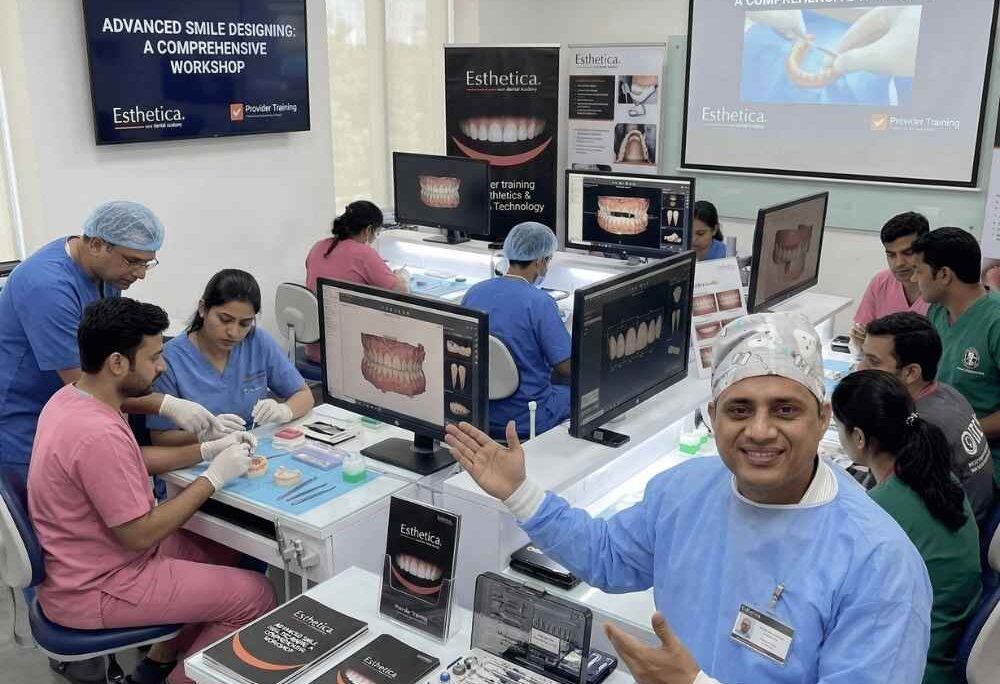
A live patient course lets participants perform treatments on actual patients while a senior clinician guides every step. You assess the case, plan the treatment, and carry out the procedure. The mentor corrects your posture, instrument handling, and decisions in the moment.
This is very different from a lecture-style programme. You see how patients react, how anxiety is handled, and how small complications are managed calmly. These lessons rarely appear in books, yet they shape how good a clinician you become.
What Should a Good General Dentistry Course in India Cover?
A strong syllabus covers the everyday treatments that fill 80% of a clinic’s appointment book.
A well-planned general dentistry course in India should go beyond a single speciality. It should teach diagnosis, treatment planning, and the common procedures a general practitioner performs daily. Think of it as building a complete toolkit rather than learning one trick.
Here are the core areas worth looking for:
- Examination, diagnosis, and radiograph reading
- Tooth-coloured fillings and aesthetic restorations
- Root canal treatment basics
- Simple and surgical extractions
- Scaling, gum care, and preventive dentistry
- Crowns, bridges, and basic prosthetics
- Introduction to implants and smile design
- Patient communication and case acceptance
If a programme skips diagnosis and communication, it is only teaching half of dentistry.
How Is a Live Patient Dental Course in India Different From Online or Phantom-Head Training?
Can a video really teach you how soft tissue feels under your fingers? Not quite.
Online lectures are useful for theory, and phantom-head practice helps you build early hand skills. Neither one, however, replicates a breathing, talking patient. Real mouths bring saliva, limited opening, bleeding, and nervous questions, all of which test your composure.
A live patient dental course India students attend places you inside that reality, safely and under supervision. You learn how to adjust when things do not go by the book. Many clinicians combine all three methods, but they agree that real patient exposure is where learning clicks.
Why Does a Hands-On Dentistry Course in India Build Real Confidence?
Confidence is not a personality trait in dentistry. It is a skill you practise.
A good hands-on dentistry course India programme gives you repeated exposure to similar procedures. The first extraction feels tense, the fifth feels manageable, and the twentieth feels routine. That steady progression is what turns hesitation into steady hands.
Mentorship matters just as much as repetition. When an experienced dentist points out a small error early, you avoid building a bad habit. Over time, you stop second-guessing every step and start trusting your clinical judgement.
Who Should Consider Joining This Kind of Training?
If any of these describe you, this course may fit your next career step.
Fresh BDS graduates are the most obvious group. They hold the degree but want practical depth before treating patients alone. Interns finishing their rotation also benefit, especially if they felt they watched more procedures than they performed.
Practising dentists join too, often to refresh weak areas. A dentist who avoids surgical extractions or molar root canals may attend to finally handle them in-house. Dentists planning to open their own clinic find it useful because it shows how a real, busy practice runs.
What Skills Can You Realistically Expect to Gain?
Think beyond technique. The best courses sharpen your whole clinical mindset.
On the technical side, you can expect improved cavity preparation, smoother anaesthesia delivery, and cleaner extraction technique. You also learn to read X-rays with more accuracy and to plan treatment in a logical sequence. These are the building blocks of everyday general practice.
On the soft side, you learn how to explain procedures simply, calm anxious patients, and present treatment options honestly. Patients return to dentists who listen well and communicate clearly. That trust often matters more to a young practice than any single procedure.
How Do You Choose the Right Live Patient Course in India?
Not every course with “live patient” in the title delivers the same experience.
Start by asking how many participants share each batch. Smaller groups mean more chair time and more personal feedback. A programme that crowds twenty people around one patient teaches very little. Ask directly how many procedures you will perform yourself rather than observe.
Next, look at the faculty. Experienced clinicians who treat patients daily bring practical shortcuts that textbooks miss. Check whether the course covers case selection, complication handling, and documentation. Finally, read honest reviews and ask to speak with past participants about their experience.
What Does a Typical Learning Journey Look Like?
Great training usually follows a simple path: watch, assist, then perform.
Most programmes begin with orientation and case discussion. You review patient records, study radiographs, and agree on a treatment plan with your mentor. This early stage teaches you to think before you pick up an instrument.
After that, you move into assisting and then performing procedures with supervision. Mentors review your work, explain what went well, and show you what could improve. By the end, many participants feel ready to manage routine cases independently, though continued practice always matters.
Is the Certificate Recognised as a Degree? A Quick Reality Check
Honest expectations protect you from disappointment later.
Short clinical courses are designed for skill building, not for replacing formal qualifications. Such programmes generally do not grant a degree, diploma, or licence, and they do not extend your legal scope of practice. Your registration with the dental council remains what allows you to treat patients.
Always ask the organiser for written clarity about what the certificate represents. A reputable academy will state this openly. Treat the certificate as proof of training participation, and treat the real value as the skills you carry back to your clinic.
Frequently Asked Questions
1. What is a live patient general dentistry course?
It is a clinical training programme where dentists treat real patients under expert supervision. You handle common general dentistry procedures, from diagnosis to treatment. The goal is practical confidence rather than theory alone.
2. Who can join a live patient dental course in India?
Usually, BDS graduates, interns, and practising dentists with valid registration can enrol. Eligibility can differ between institutes, so confirm the requirements before booking. Some programmes also welcome dentists returning to practice after a break.
3. Will I actually treat patients myself?
This depends on the programme, so ask for specifics. Good courses let you perform procedures under supervision instead of only watching. Request the expected number of hands-on cases in writing before you pay.
4. How long does a general dentistry course in India usually take?
Duration varies widely, from a few days to several months. Short formats suit working dentists, while longer ones suit fresh graduates needing deeper practice. Choose based on your current experience and your schedule.
5. Is a hands-on dentistry course better than an online course?
They serve different purposes. Online learning explains concepts efficiently, but only real cases teach tactile skill and patient handling. Most dentists benefit from a mix, with live practice carrying the most practical weight.
6. Does the certificate allow me to practise independently?
No. A training certificate does not replace your dental council registration or act as a degree. It confirms participation in training. Your legal right to practise depends on your existing registration.
7. What should I check before enrolling?
Check batch size, faculty experience, number of live cases per participant, and the exact syllabus. Ask about fees, refund terms, and what the certificate means. Reading real reviews and speaking with past participants adds useful insight.
Ready to Move From Theory to Confident Practice?
Your first real case should not feel like a leap in the dark.
Dentistry rewards those who practise with guidance, reflect on their work, and keep learning. A well-run live patient programme gives you that structure at a stage when habits are still forming. The right choice will leave you calmer, more skilled, and more trusted by your patients.
If you are ready to build real clinical confidence, Esthetica Advanced Dental Academy offers a practical path through its live patient general dentistry course in India, combining hands-on training with experienced mentorship. Reach out to the academy to ask about upcoming batches, case exposure, and course details before you decide.
2-Day
Implantology
An intensive introduction for dentists who want to understand the complete implant workflow.
- ✓2 Days intensive training
- ✓Basic implantology concepts
- ✓Surgical kit demonstration
- ✓Hands-on training
- ✓Live implant surgery exposure
- ✓Certificate
Basic to Advanced
Comprehensive clinical training covering implant placement, bone grafting, sinus lift and prosthetic workflows.
- ✓5–7 Days training
- ✓Live patient surgeries
- ✓Implant placement
- ✓Bone grafting
- ✓Sinus lift
- ✓CBCT planning
- ✓Prosthetic workflow
Implant Diploma
Advanced structured training for dentists seeking deeper implant surgery and prosthetic exposure.
- ✓7 Days intensive program
- ✓15 implant procedures
- ✓Advanced surgery
- ✓Bone management
- ✓Sinus lift
- ✓Prosthetic rehabilitation
- ✓Extended mentorship
Customize Your
Course
Need a program designed around your specific clinical requirements? Build a customized implantology training plan with our team.
- ✓Choose your training duration
- ✓Select specific clinical procedures
- ✓Personalized learning objectives
- ✓Hands-on clinical exposure
- ✓Advanced implantology topics
- ✓Individual mentorship options