








Dental Fellowship in India for Foreign Dentists: Your Complete Guide to Clinical Training
A dental fellowship in India has become a serious option for dentists who want more hands-on experience than a weekend course can offer. If you are looking into a dental fellowship for foreign dentists, you probably have questions about cost, quality, legality and what you will actually learn. This guide answers them in plain language. It also covers clinical dental training in India for dentists based in Canada, the UK, Africa, the Middle East and beyond, so you can decide with confidence.
What Is a Dental Fellowship in India, Really?
A dental fellowship is a structured, short-to-mid-length training program. It builds advanced clinical skills in one area, such as implantology, smile design or endodontics. Sessions are usually a mix of lectures, case discussions, live demonstrations and supervised practice. Unlike a university degree, a fellowship does not award a formal academic qualification. Its purpose is skill development, not licensing.
This distinction matters. Most private fellowships in India are continuing professional development programs. The certificate shows you took part, but it does not grant registration or independent practice rights in India. Any honest academy will tell you this up front, and you should ask before paying anything.
Why Are Foreign Dentists Choosing India for Clinical Training?
India treats a very large number of dental patients every year. For a trainee, that means exposure to a wide range of cases, from simple extractions to complex full-arch rehabilitations. Seeing many cases in a short time helps you build pattern recognition, which is hard to get from textbooks alone.
Cost is the second factor. Training fees, accommodation and daily expenses are generally lower than in North America or Western Europe. Many programs also use modern tools such as CBCT scanners, digital planning software and guided surgery workflows. Together, these make clinical dental training in India both practical and budget-friendly for many overseas dentists.
Dental Fellowship for Canadian Dentists: What to Know Before You Apply
Canadian dentists are regulated province by province. Before you enrol anywhere abroad, contact your provincial dental regulatory body. Ask whether the training counts toward continuing education credits and what documents they need, such as attendance records and course outlines. Requirements differ, so never assume.
It also helps to ask the program whether hands-on patient work is permitted for visiting dentists. In many cases, foreign participants do their practical work on models, simulators or supervised cases within the limits of the law. If you plan to apply your new skills back in Canada, keep detailed logs of what you learned. Those records can be useful for your own portfolio and for regulators.
Skills You Can Build During a Dental Fellowship for Foreign Dentists
Most fellowships focus on high-demand procedures that dentists want to offer in their own clinics. Implant dentistry is the most popular choice. Topics often include case selection, CBCT interpretation, immediate loading, bone grafting basics and prosthetic planning. Full-arch concepts such as All-on-4 and All-on-6 also attract many participants.
Beyond implants, you may find modules on smile design and veneers, laser-assisted root canals, minor oral surgery, soft tissue management and digital workflows. Some programs add practice-building sessions on patient communication and treatment planning. Choose a curriculum that matches the procedures you want to perform once you are back home.
Fellowship vs Degree vs Observership: Which One Fits You?
A fellowship is skill-focused and short. It suits practising dentists who want to add one advanced service to their clinic. An observership means you watch procedures without treating patients. It is useful for learning workflows but offers little practice of your own.
A formal degree, such as an MDS, is a long academic commitment that can lead to specialist recognition. It requires entrance procedures and years of study. If you simply want better clinical confidence in a few months, a fellowship is usually the more realistic path.
How to Choose the Right Clinical Dental Training Program in India
Not every program is equal, so compare carefully. Look for these signs of quality:
- Transparent disclaimers: A clear statement of what the certificate does and does not allow.
- Experienced mentors: Faculty with real clinical practice and conference or teaching experience.
- Small batches: Fewer participants means more personal attention.
- Modern technology: CBCT, digital planning and guided surgery tools.
- Clear fee policy: Written details on payments, inclusions and refunds.
- Real feedback: Reviews or testimonials from past international participants.
Ask for the full schedule and learning outcomes in writing. A trustworthy academy will answer without pressure.
Travel, Visa and Planning Tips for International Dentists
Visa rules depend on your nationality and the type of program. Contact the Indian embassy or consulate in your country to confirm which visa category applies to short-term professional training. Apply well before your start date, since processing times vary.
Plan accommodation close to the training center to save time on daily travel. Carry copies of your dental registration, passport and program confirmation. Weather, food and language can feel unfamiliar, so build a few rest days into your schedule. Buying health and travel insurance is also a smart step.
A Message from Dr. Sharad Arya, Founder – Esthetica Dental Academy
When I started Esthetica Dental Clinic in 2012, my vision was simple — to combine clinical excellence with genuine patient care. Over the years, as our practice grew across Punjab, Himachal, and Chandigarh, I realized that the biggest gap in Indian dentistry wasn’t a lack of talent, but a lack of accessible, hands-on implant training for practicing dentists.
That’s why we built Esthetica Dental Academy — not as another certificate mill, but as a mentorship-driven program where dentists actually work on live cases, under supervision, until they’re confident enough to do it on their own. I’ve seen BDS graduates walk in unsure of their surgical skills and walk out ready to plan and execute full-arch implant cases independently.
If you’re serious about growing your implant practice, I’d encourage you to invest in training that prioritizes real clinical exposure over theory alone. That’s the philosophy behind everything we teach here.
— Prof. Dr. Sharad Arya, MDS
Every batch we train is small by design, because implant surgery demands individual attention, not a classroom of fifty watching a screen. Whether it’s digital implant planning, guided surgery, or full-arch rehabilitation, we make sure every participant leaves confident enough to apply it in their own practice.
Frequently Asked Questions
Q1. Is a dental fellowship in India valid for foreign dentists?
Yes, foreign dentists can join fellowship programs, but these are typically training programs rather than statutory qualifications. They improve your skills but do not give you a license to practise independently in India. Always confirm the program’s terms before enrolling.
Q2. How long does clinical dental training in India take?
Duration varies widely. Some intensive programs run for one to two weeks, while others stretch over several months or are split into modules. Pick a format that fits your work schedule and travel plans.
Q3. Can Canadian dentists join a dental fellowship in India?
Yes, many Canadian dentists attend training abroad. Check with your provincial regulatory body about continuing education credit and record-keeping. That way your time abroad supports your professional requirements at home.
Q4. What is the cost of a dental fellowship for foreign dentists?
Fees depend on the course, duration and inclusions. Ask for a written breakdown covering tuition, materials, certificates and any extras. Also budget for flights, visa, stay and daily expenses.
Q5. Will I treat real patients during the fellowship?
This depends on the program and on local regulations for visiting dentists. Some courses use models and live demonstrations, while others allow supervised work within legal limits. Ask this question before you pay.
Q6. Which dental fellowship is best for foreign dentists?
Implantology is the most popular because of steady patient demand. Smile design, endodontics and oral surgery basics are also common picks. The best choice is the one that matches the procedures you plan to offer.
Q7. Are dental academy fees refundable?
Policies differ between academies. Some, including Esthetica’s, state that registration and course fees are non-refundable. Read the payment terms carefully and keep a copy for your records.
Ready to Take the Next Step in Your Dental Career?
A well-chosen dental fellowship in India can sharpen your clinical confidence, widen the treatments you offer and connect you with a global network of dentists. Start by defining your goal, then compare curricula, mentors, fees and legal limits. Take time to speak with the academy team, ask about batch sizes and confirm every detail in writing.
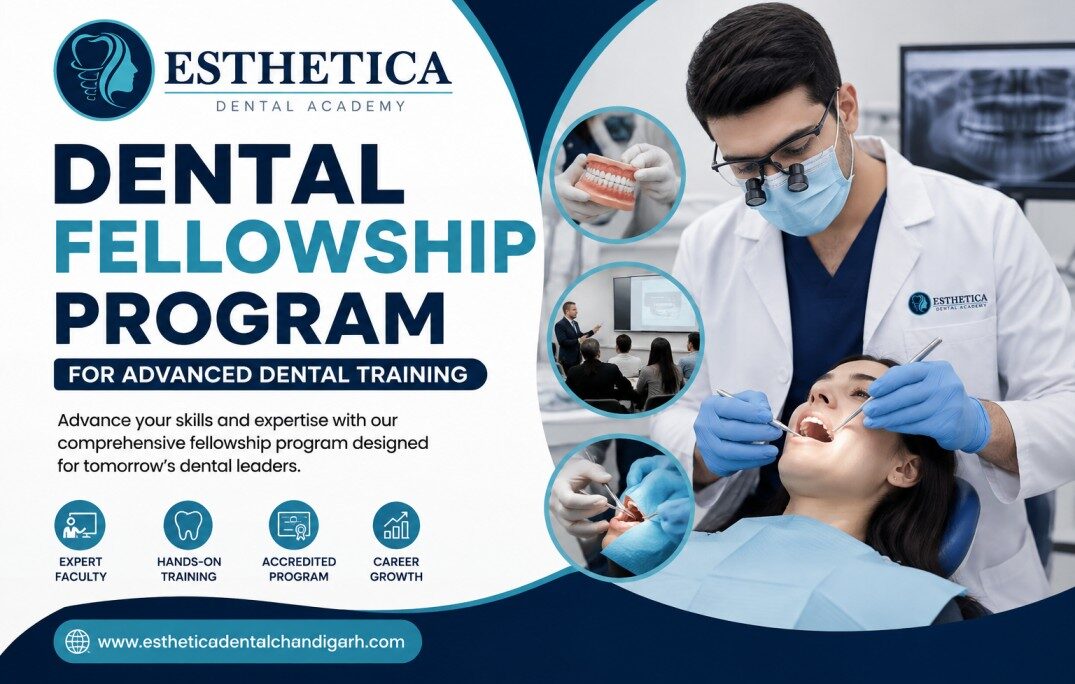
If you are looking for a focused program in implant dentistry and advanced full-arch training, consider reaching out to Esthetica Advanced Dental Academy to learn about upcoming courses and how they support international dentists.