








Smile Designing Course in Panchkula? Here’s Everything You Need to Know
If you’re a dentist in Panchkula wondering how to stand out in a crowded market, a Smile Designing Course in Panchkula might be the career move you’ve been waiting for. Cosmetic dentistry isn’t a side skill anymore; it’s becoming the main reason patients choose one clinic over another. Whether you’re a fresh BDS graduate or a practicing dentist looking to upgrade your skill set, enrolling in the right Dental Courses in Panchkula can completely change how confident you feel in the chair and how much you earn outside it.
In this blog, we’ll break down what a smile designing course actually covers, why it’s becoming one of the most searched forms of Advanced Dental Training in North India, and how to pick a program that gives you real clinical exposure instead of just a certificate.
Why Dentists in Panchkula Are Choosing Smile Designing as a Career Skill
Panchkula, along with the greater Chandigarh tricity region, has seen a sharp rise in patients asking for cosmetic solutions — veneers, laminates, teeth whitening, and full smile makeovers. Patients aren’t just visiting the dentist for pain relief anymore; they’re walking in with Instagram photos asking, “Can you give me a smile like this?”
This shift means general dentists who only know restorative basics are starting to lose cases to clinics that offer cosmetic expertise. A smile designing course fills that exact gap. It teaches you how to analyze facial proportions, plan veneer cases, choose the right shade and material, and deliver results patients are genuinely excited about — not just satisfied with.
What You’ll Actually Learn in a Smile Designing Course
A good smile designing program goes far beyond theory slides. Here’s what most structured courses typically cover:
- Facial and dental analysis — understanding symmetry, proportion, and smile lines before touching a single tooth
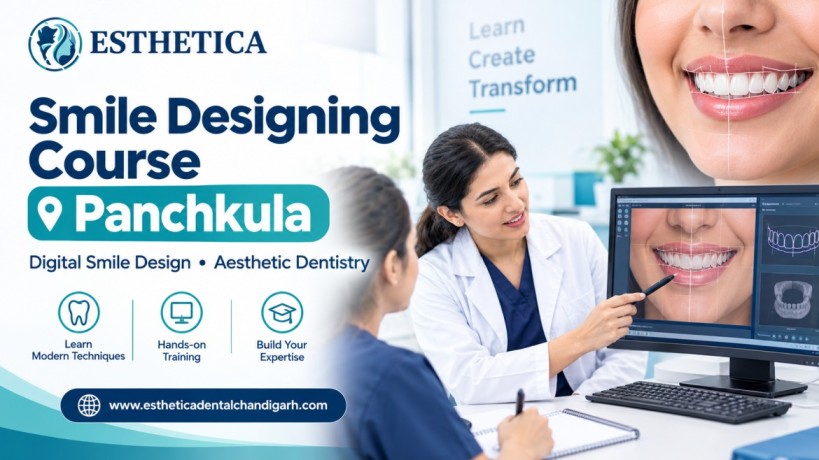
- Digital smile design (DSD) concepts — using photos and software to plan the outcome with the patient before starting treatment
- Veneers and laminates — prepping teeth correctly, choosing between porcelain and composite, and managing shade matching
- Case planning and patient communication — learning how to present treatment options in a way that increases case acceptance
- Live patient training — the real differentiator, where you actually perform procedures under expert supervision instead of only watching demonstrations
If a course skips the live patient component, you’re mostly paying for information you could find in a textbook. The real value of hands-on Advanced Dental Training is muscle memory — knowing how a prep feels, how the material behaves, and how to fix small mistakes before they become big ones.
Who Should Enroll in Dental Courses in Panchkula?
Smile designing courses attract a fairly wide range of dentists, including:
- Fresh BDS graduates who want a specialized skill early instead of waiting years to “figure it out” in general practice
- Practicing dentists who feel confident with fillings and root canals but hesitant with cosmetic cases
- Clinic owners who want to add high-value cosmetic services without hiring a specialist
- Dentists planning to move abroad who want an edge during licensing exams or job interviews
If you’ve ever turned away a smile makeover case because you weren’t confident enough to attempt it, that’s usually the clearest sign it’s time to upskill.
How Smile Designing Fits Into Advanced Dental Training
Smile designing isn’t really a standalone skill — it connects directly to prosthodontics, orthodontics, and even implantology. For example, a patient who needs a full smile makeover might require a combination of veneers, minor alignment correction, and sometimes implants if teeth are missing.
That’s why the strongest Advanced Dental Training programs don’t teach smile designing in isolation. They build it on top of a solid general dentistry foundation, so you understand not just how to make a smile look good, but how to make it function properly and last for years. This combination is what separates a dentist doing “cosmetic touch-ups” from one who is genuinely building a premium cosmetic practice.
Hands-On Training vs Theory-Only Courses
This is probably the single biggest factor to check before enrolling in any course. A lot of programs are marketed heavily online but only offer:
- Recorded lectures
- PDF study material
- Occasional live webinars with no patient contact
Compare that to a program where you’re physically present in a clinic, watching live procedures, assisting, and eventually performing supervised cases yourself. The difference in confidence after completion is night and day. When researching Dental Courses in Panchkula, always ask directly: “Will I be working on real patients, or just watching videos?” The answer to that single question tells you almost everything about the course’s actual value.
Career and Income Growth After Smile Designing Certification
Cosmetic dentistry is consistently ranked among the higher-earning specializations within general dental practice, mainly because it’s elective, results-driven, and patients are often willing to pay a premium for aesthetics. Once you’re confident with:
- Veneers
- Laminates
- Whitening protocols
- Basic digital smile design planning
You open the door to a completely new patient segment — one that isn’t just looking for treatment, but for transformation. Many dentists report that cosmetic cases alone significantly increase their average revenue per patient, simply because these procedures are priced higher and often lead to repeat referrals from happy clients showing off their new smile.
What About International Opportunities (Canada, etc.)?
A growing number of dentists in India are exploring licensing pathways to practice abroad, and Canada is one of the most common destinations dentists ask about. If you’re preparing for exams like the NDBE (National Dental Examining Board of Canada), having strong practical exposure, especially in cosmetic and restorative work, can genuinely help during clinical assessments, since these exams often test real hands-on judgment, not just theoretical knowledge.
A smile designing course that includes live patient training gives you an advantage here, because you walk into international clinical evaluations having already handled real cases, real materials, and real patient expectations not just simulations.
Choosing the Right Academy for Your Smile Designing Course
Before enrolling anywhere, it’s worth checking a few basics:
- Faculty experience — are you learning from dentists who actively practice, or only teach?
- Batch size — smaller batches usually mean more individual chair time
- Live patient access — non-negotiable if you want real skill transfer
- Course structure—foundation, advanced, and fellowship-level options so you can grow progressively
- Location convenience — Panchkula-based or tricity-based academies save you travel time for ongoing mentorship
Start Your Smile Designing Journey With Esthetica Advanced Dental Academy
If you’re serious about mastering smile designing with real clinical exposure rather than just certificates, Esthetica Advanced Dental Academy offers structured programs — from foundation-level courses to advanced and fellowship tracks built around live patient training and mentorship from experienced clinicians. Whether your goal is building a premium cosmetic practice locally or preparing for international opportunities, a well-structured smile designing course can be the turning point in your dental career.
A Message from Dr. Sharad Arya, Founder – Esthetica Dental Academy
When I started Esthetica Dental Clinic in 2012, my vision was simple — to combine clinical excellence with genuine patient care. Over the years, as our practice grew across Punjab, Himachal, and Chandigarh, I realized that the biggest gap in Indian dentistry wasn’t a lack of talent, but a lack of accessible, hands-on implant training for practicing dentists.
That’s why we built Esthetica Dental Academy — not as another certificate mill, but as a mentorship-driven program where dentists actually work on live cases, under supervision, until they’re confident enough to do it on their own. I’ve seen BDS graduates walk in unsure of their surgical skills and walk out ready to plan and execute full-arch implant cases independently.
If you’re serious about growing your implant practice, I’d encourage you to invest in training that prioritizes real clinical exposure over theory alone. That’s the philosophy behind everything we teach here.
— Prof. Dr. Sharad Arya, MDS
Every batch we train is small by design, because implant surgery demands individual attention, not a classroom of fifty watching a screen. Whether it’s digital implant planning, guided surgery, or full-arch rehabilitation, we make sure every participant leaves confident enough to apply it in their own practice.
Frequently Asked Questions
1. What is a smile designing course for dentists?
It’s a specialized training program that teaches dentists how to plan and deliver cosmetic dental treatments like veneers, laminates, and whitening, using facial and dental analysis to create natural, aesthetic results.
2. How long does a smile-designing course usually take?
Course duration varies widely from short 1-2 day foundation workshops to multi-week fellowship programs that include extensive live patient training and mentorship.
3. Do I need prior cosmetic dentistry experience to join?
No. Most programs are structured to take beginners from foundational concepts up to advanced techniques, so fresh graduates and experienced dentists can both benefit.
4. Will I get to work on real patients during the course?
This depends entirely on the academy. Look specifically for programs that include live patient exposure, since this is what builds real clinical confidence.
5. Is smile designing training useful for dentists planning to move to Canada?
Yes. Hands-on cosmetic and restorative experience can support clinical readiness for exams like the NDBE, since these assessments often evaluate practical skill alongside theoretical knowledge.
6. How much can I earn after specializing in smile designing?
Cosmetic procedures are typically priced higher than routine treatments, and dentists with strong smile designing skills often see increased revenue per patient along with more referrals.
7. What’s the difference between a basic and advanced smile designing course?
Basic courses usually cover fundamentals like case selection and simple veneer preps, while advanced and fellowship-level programs go deeper into complex case planning, full smile makeovers, and higher surgery or procedure counts under supervision.