








Implantology Course in Mohali with Live Surgery Training: Is It the Right Next Step for Your Dental Career?
If you have been thinking about adding implants to your practice, choosing an implantology course in Mohali is a smart place to start. Implant dentistry is one of the fastest-growing areas of modern dental care, and patients now ask for it by name. But reading textbooks or watching recorded lectures only takes you so far. A good implantology course with live surgery training lets you watch real cases, ask questions in the moment, and build the confidence to treat your own patients. This guide explains what to look for, what you will learn, and how to decide if this path suits you.
Why More Dentists Are Adding Implants to Their Skill Set
Patients no longer settle for temporary fixes when they lose a tooth. They want something that looks natural, feels stable, and lasts for years. That shift in expectation has made implants one of the most requested treatments in clinics across India and abroad.
For a dentist, this means a real opportunity to grow professionally. Placing implants lets you offer complete tooth replacement instead of referring patients elsewhere. It also strengthens patient trust, because people prefer one doctor who can handle the full treatment journey. A structured dental implant course in Mohali gives you a clear route into this field without needing to travel across the world.
What Makes Live Surgery Training So Different From Theory Classes?
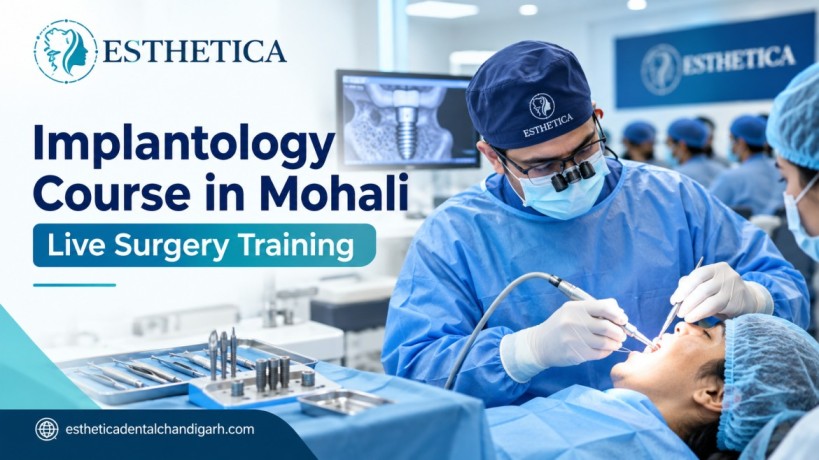
Theory teaches you the “what,” but surgery teaches you the “how” and the “what if.” When you watch an experienced clinician place an implant on a live patient, you see the small details no slide can show. You notice how the incision is planned, how bone is handled, and how decisions change when something unexpected appears.
That is why live surgery training matters so much. You see complications being managed calmly, and you hear the reasoning behind each choice. Good programs keep groups small so every participant can see clearly and ask questions during the procedure. The goal is simple: you leave with practical judgment, not just notes.
Ready to see real implant surgery instead of reading about it? Contact the academy today and ask about the next batch.
What Should a Good Dental Implant Course in Mohali Actually Cover?
A well-planned dental implant course in Mohali should take you from basics to real clinical work in a logical order. It should not rush into surgery before you understand diagnosis and planning. Look for a curriculum that builds one skill on top of another.
Here are the core topics worth checking for:
- CBCT-based diagnosis and reading bone quality and quantity
- Digital treatment planning and implant position selection
- Surgical steps, flap design, and implant placement techniques
- Soft tissue management and healing protocols
- Immediate loading concepts and full-arch rehabilitation, including All-on-6
- Prosthetic workflow, from impressions to the final restoration
- Handling complications and knowing when to refer
If a course skips planning or prosthetics, it teaches only half of implant dentistry. Success depends on both the surgical and restorative sides working together.
Hands-On Implantology Training in Mohali: What Practice Really Looks Like
Watching is valuable, but your hands need practice too. Good hands-on implantology training in Mohali gives you supervised time with models, guided drills, and, where appropriate, work under mentor supervision. The aim is to build muscle memory and steady technique before you ever treat an independent case.
You should expect to practice drilling sequences, implant positioning, suturing, and prosthetic steps. A mentor should correct your technique in real time, because small errors in angulation or depth can affect long-term results. Small training groups make this possible, since each participant gets individual attention. Practice with feedback is where confidence truly grows.
Who Should Join an Implantology Course?
These programs suit several kinds of dental professionals, and the right fit depends on where you are in your career. Recent graduates often join to build a strong foundation early. Practicing general dentists join to add implants without referring cases out.
Specialists such as prosthodontists, periodontists, and oral surgeons sometimes enroll to refine full-arch techniques or digital workflows. International dentists also travel to India for focused, practical training. Whatever your background, you should already hold a valid dental registration in your own country. Training builds on your existing qualification; it does not replace it.
How to Choose the Right Implantology Training (Without Regretting It Later)
Not every course is equal, and a flashy brochure can hide a thin program. Before you pay a registration fee, ask direct questions. Who is teaching, and how much clinical experience do they have? How many participants share one batch, and how much time is spent on live cases versus lectures?
Also check what you receive at the end. Be clear about the difference between a certificate of participation and a formal degree or licence. Reputable academies state this openly. Finally, read the refund and registration policy carefully, because many fees are non-refundable. Asking these questions early protects both your time and your money.
Implantology Training in India for Canadian and International Dentists
More dentists from Canada and other countries now look at India for practical implant training. The reasons are usually access to live cases, small groups, and mentorship that is focused on clinical skill. For someone based in Toronto, Vancouver, or Calgary, a short, intensive stay can be an efficient way to build hands-on experience.
There is one important point to understand, though. Completing a training program abroad does not automatically give you the right to place implants in Canada. Each province has its own dental regulatory body that decides scope of practice and licensing. Before you travel, contact your provincial regulator and confirm what training they recognize. Treat the course as skill development, and confirm the legal side separately.
Planning to train from Canada or abroad? Send your questions to the academy team before you book travel.
A Message from Dr. Sharad Arya, Founder – Esthetica Dental Academy
When I started Esthetica Dental Clinic in 2012, my vision was simple — to combine clinical excellence with genuine patient care. Over the years, as our practice grew across Punjab, Himachal, and Chandigarh, I realized that the biggest gap in Indian dentistry wasn’t a lack of talent, but a lack of accessible, hands-on implant training for practicing dentists.
That’s why we built Esthetica Dental Academy — not as another certificate mill, but as a mentorship-driven program where dentists actually work on live cases, under supervision, until they’re confident enough to do it on their own. I’ve seen BDS graduates walk in unsure of their surgical skills and walk out ready to plan and execute full-arch implant cases independently.
If you’re serious about growing your implant practice, I’d encourage you to invest in training that prioritizes real clinical exposure over theory alone. That’s the philosophy behind everything we teach here.
— Prof. Dr. Sharad Arya, MDS
Every batch we train is small by design, because implant surgery demands individual attention, not a classroom of fifty watching a screen. Whether it’s digital implant planning, guided surgery, or full-arch rehabilitation, we make sure every participant leaves confident enough to apply it in their own practice.
Frequently Asked Questions
1. How long does an implantology course in Mohali take?
Duration depends on the program. Some are short, intensive modules that run over a few days, while others are spread across several months with multiple sessions. The best approach is to check the current schedule directly with the academy, because batch dates and formats change from time to time.
2. Is live surgery training included in the course?
Programs advertised as an implantology course with live surgery training are built around observing real procedures. Always confirm how many live cases you will see and whether you can ask questions during them. Small group size makes a big difference to how much you actually learn.
3. Can a fresher BDS graduate join a dental implant course?
Yes, many courses accept recent graduates who hold a valid BDS degree and registration. Beginners usually benefit from a program that starts with diagnosis and planning before moving to surgery. If you are new, ask whether the course offers foundational modules.
4. Will I get a degree after finishing the course?
Usually no. Most implant training programs award a certificate of participation, not a degree, diploma, or statutory qualification. This is normal for continuing education, but you should read the program’s disclaimer so you know exactly what the certificate represents.
5. Can Canadian dentists practice implants after training in India?
Not automatically. Practice rights in Canada are controlled by provincial dental regulatory authorities. Contact your provincial college or regulator before enrolling, and ask what continuing education they accept and what scope of practice applies to you.
6. What is the difference between live surgery and hands-on training?
Live surgery means you observe real procedures performed by an experienced clinician. Hands-on training means you practice the steps yourself, usually on models or under supervision. The strongest programs combine both, so you see the technique and then apply it.
7. What topics should an implantology course include?
Look for CBCT interpretation, treatment planning, surgical placement, soft tissue handling, immediate loading, prosthetic rehabilitation, and complication management. Advanced options such as All-on-6 and full-mouth rehabilitation are a bonus for dentists who want to grow into complex cases.
Ready to Build Real Implant Skills? Start With the Right Academy
Choosing a course is a career decision, so it helps to pick a place that combines teaching with real clinical exposure. At Esthetica Advanced Dental Academy, the focus is on practical, evidence-based implant education, including live surgery observation, hands-on practice, CBCT-guided planning, and full-arch rehabilitation concepts such as All-on-6. Small training groups mean you get personal guidance instead of getting lost in a crowd. If you are serious about learning implants in Mohali, reach out to Esthetica Advanced Dental Academy to ask about upcoming batches, fees, and eligibility, or send a WhatsApp message for a one-to-one conversation.