









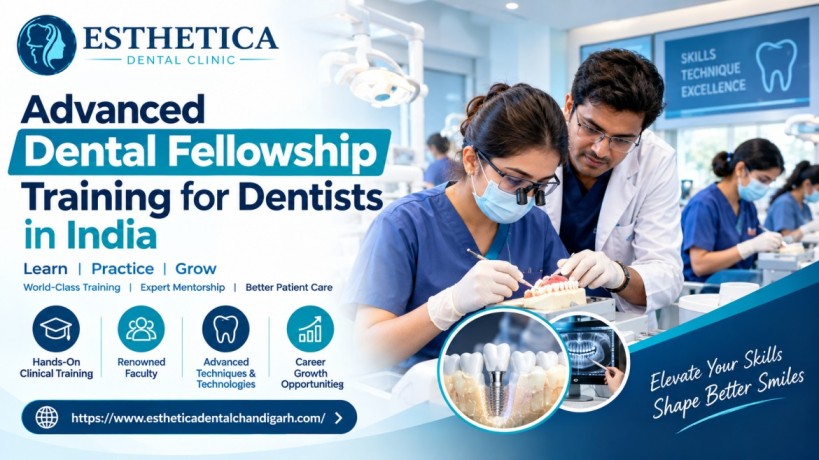
Advanced Dental Fellowship Training for Dentists in India
Dentistry today is evolving faster than ever, and staying relevant means going beyond a basic degree. If you are searching for a dental fellowship course in India, you are already thinking like a dentist who wants to lead, not just practice. Fellowship programs bridge the gap between textbook knowledge and real, hands-on clinical mastery. They give practitioners the confidence to handle complex cases, adopt digital workflows, and deliver results patients actually talk about. This blog walks you through what a fellowship really involves, why it matters right now, and how the right training path can transform an ordinary dental career into an extraordinary one.
What Is a Dental Fellowship Program, and Why Does It Matter?
A dental fellowship is a structured, mentorship-driven training format built for dentists who already hold a basic degree but want specialized, practice-ready skills. Unlike a full-time postgraduate degree, a fellowship is shorter, more focused, and heavily clinical. It typically blends live case demonstrations, supervised patient treatment, and small-group discussions led by experienced specialists.
This format has become especially popular because dental science moves quickly. Techniques in implantology, digital smile design, and full-mouth rehabilitation change almost every few years. A fellowship keeps working dentists updated without requiring them to pause their practice for two or three years. It is, in many ways, the smartest middle path between a weekend workshop and a full postgraduate residency.
Advanced Dental Training for Dentists: Bridging Theory and Real Practice
Most dental graduates leave college with strong theoretical foundations but limited exposure to advanced, real-world procedures. Advanced dental training for dentists exists precisely to close that gap. These programs are designed around clinical exposure rather than classroom lectures alone.
Participants usually get to:
- Observe and assist in live implant surgeries
- Practice on models before treating actual patients
- Learn CBCT-guided diagnosis and digital planning
- Understand soft tissue management and prosthetic workflows
- Receive one-on-one feedback from senior mentors
This kind of immersive learning builds muscle memory and clinical judgment that no textbook can replicate. Dentists who complete advanced training often report faster diagnosis times, fewer treatment complications, and noticeably higher patient satisfaction scores once they return to their own clinics.
Dental Fellowship Training in India: A Growing Global Hub
India has quietly become one of the most sought-after destinations for dental fellowship training in India, and the reasons are practical rather than accidental. The country offers a rare combination of high patient volume, advanced equipment, experienced faculty, and significantly lower training costs compared to Western countries.
For a dentist based in Canada, the UK, Australia, or the Middle East, this combination is hard to ignore. A fellowship that might cost tens of thousands of dollars elsewhere is often available in India at a fraction of the price, without compromising on quality. Add to this India’s reputation as a global dental tourism hub, and trainees also get exposure to a wide variety of clinical cases, including complex full-mouth rehabilitations and cosmetic smile makeovers that are less common in smaller international practices.
Many training centers in India also offer flexible schedules, short-term visas for international participants, and structured accommodation support, making the entire experience smoother for dentists travelling from abroad.
What a Well-Structured Fellowship Curriculum Should Cover
Not all fellowship programs are created equal, so it helps to know what a genuinely valuable curriculum looks like before enrolling. A strong program should include:
Implant Dentistry Fundamentals—covering diagnosis, treatment planning, and single-tooth implant placement for beginners.
Full-Mouth and All-on-6 Rehabilitation — advanced protocols for complex cases involving multiple missing teeth or full arch restoration.
Digital Smile Design and Prosthetics—training in aesthetic planning tools that let patients visualise outcomes before treatment even begins.
Immediate Loading Protocols—techniques that allow same-day teeth solutions, which are increasingly in demand among patients.
CBCT-Guided Surgical Planning—using 3D imaging to reduce surgical risk and improve implant accuracy.
Soft Tissue and Complication Management — an often-overlooked area that separates confident clinicians from hesitant ones.
A fellowship that combines all these elements with genuine hands-on practice, rather than just observation, delivers the strongest return on investment.
Why International Dentists, Including Those from Canada, Are Choosing Indian Fellowships
There has been a noticeable rise in interest from dentists based in Canada looking for affordable, high-quality fellowship options abroad. Canadian dental education, while excellent, often comes with limited seats for advanced implant and cosmetic training, along with high tuition costs. This has pushed many practising dentists to look toward India as a practical alternative.
Indian fellowship programs typically offer:
- Lower overall program costs without sacrificing clinical depth
- Exposure to a higher volume and variety of patient cases
- Access to internationally recognised equipment brands used in daily training
- Shorter program durations that fit around an existing practice schedule
- Certificates that reflect genuine hands-on skill development
For a Canadian dentist looking to specialise in implantology or cosmetic dentistry without committing years to a formal residency, a focused Indian fellowship can be a genuinely efficient solution.
How Fellowship Training Accelerates Career Growth
Completing an advanced fellowship does more than add a certificate to your wall. It changes how you practice. Dentists who invest in structured, mentorship-based training often notice:
Increased Case Confidence — the ability to take on complex implant or full-mouth cases that were previously referred out.
Higher Patient Trust — patients respond well to dentists who can clearly explain modern techniques and show visible expertise.
Better Revenue Potential—advanced procedures like implants and smile design typically carry higher treatment value than routine dental work.
Professional Network Expansion — fellowships connect you with mentors and peers across cities and countries, often leading to referrals and collaborative opportunities.
Long-Term Career Differentiation — in a competitive dental market, specialised training helps you stand out as a go-to expert rather than a general practitioner.
Choosing the Right Fellowship Partner
Since fellowships vary widely in quality, it’s worth evaluating a few things before you commit: the faculty’s actual clinical experience, the ratio of hands-on practice to lecture time, group sizes, access to real patient cases, and post-training mentorship support. A program that promises everything but delivers only theory-heavy sessions will not move your practice forward the way genuine clinical immersion will.
Esthetica Advanced Dental Academy: Where Skill Meets Mentorship
For dentists serious about advanced clinical growth, Esthetica Advanced Dental Academy offers exactly the kind of hands-on, mentorship-driven training this blog has been describing. With small training batches, live case exposure, CBCT-guided implant planning, and full-mouth rehabilitation modules led by experienced clinicians, the academy is built for practitioners who want practical mastery, not just certificates. Whether you’re a general dentist exploring implantology for the first time or an experienced practitioner aiming to refine full-arch techniques, Esthetica Advanced Dental Academy provides the structured, real-world training that turns capability into confidence. If you’re ready to take the next step in your dental career, reach out to Esthetica Advanced Dental Academy today and book your consultation to explore upcoming fellowship batches.
Frequently Asked Questions
1. What is the duration of a typical dental fellowship course in India?
Most fellowship programs range from a few days to a few weeks, depending on the specialisation, with intensive hands-on modules rather than long academic terms.
2. Can dentists from Canada join dental fellowship programs in India?
Yes, many Indian academies welcome international dentists, including those from Canada, and often assist with scheduling and travel logistics for short-term training visits.
3. Do I need prior implant experience to join an advanced fellowship?
Most programs are designed for both beginners and experienced dentists, with modules structured to build skills progressively from basic to advanced levels.
4. Is hands-on patient treatment included in fellowship training?
Reputable fellowships include live case observation and supervised hands-on practice, which is essential for developing real clinical confidence.
5. How is dental fellowship training different from a postgraduate degree?
A fellowship is shorter, more clinically focused, and designed for working dentists, while a postgraduate degree is a longer academic commitment with broader theoretical coverage.
6. Are certificates from Indian dental fellowship programs recognised internationally?
Certificates typically reflect training and skill participation rather than a statutory license, so it’s important to check recognition requirements in your home country before enrolling.
7. What makes India a preferred destination for advanced dental training?
India combines experienced faculty, high patient case volume, modern technology, and significantly lower training costs, making it an attractive option for dentists worldwide.
Ready to build real clinical confidence instead of just adding another certificate? Book your seat at Esthetica Advanced Dental Academy today and take the next step toward becoming the specialist your patients already believe you can be.