






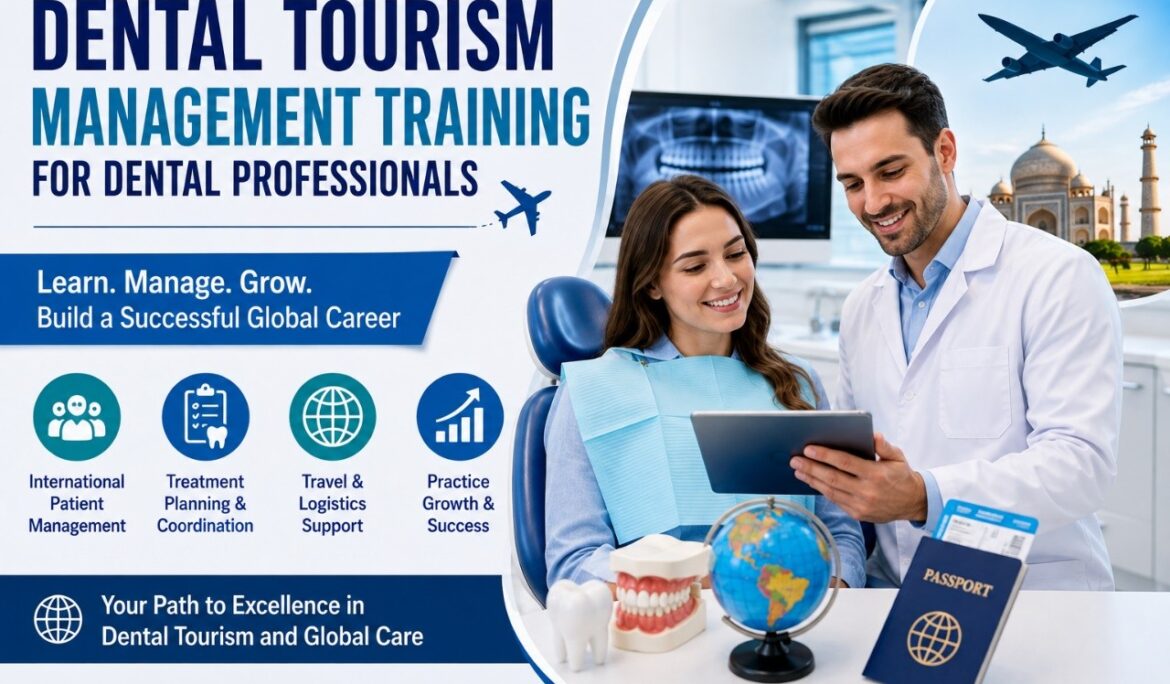
Dental Tourism Management Training for Dental Professionals
Dentistry has gone international. More patients from Canada, the U.S., the UK, Australia, and other countries are traveling abroad for dental implants, smile makeovers, and full-mouth rehabilitation. For dentists, this growing movement creates new professional opportunities. International patients may have different treatment histories, expectations, healthcare experiences, and ideas about quality care.
International Dental Tourism Skills for Dentists are important because treating traveling patients involves more than clinical procedures. Dentists need strong communication, treatment planning, coordination, documentation, scheduling, and follow-up skills. When these areas work together, patients can feel informed and confident throughout their journey.
Why Should Dentists Develop Dental Tourism Skills?
Patients traveling overseas may need to arrange flights, accommodation, time away from work, recovery, and finances. These practical concerns can influence how they choose a clinic and schedule treatment.
International patient management helps dentists understand these concerns while keeping clinical needs at the center. The goal is to create a professional journey that is organized, realistic, and focused on individual needs.
Strengthen Communication With International Patients
Communication is one of the most valuable skills in international dental care. Patients may not understand local terminology, procedures, technology, or payment systems. Dentists should explain treatment choices using simple and familiar language.
Discuss appointments, alternatives, possible risks, expected recovery, and follow-up requirements clearly. Avoid making promises about outcomes or timelines that cannot be confirmed.
Develop Better International Treatment Planning
International dental treatment planning requires attention to both clinical requirements and travel schedules. Patients may have only a limited number of days available, so dentists need to identify what can safely be completed during one visit and what may require another trip.
A useful plan should explain treatment stages, appointment timing, alternatives, recovery periods, and factors that could change the schedule. Complex cases should be divided into practical stages rather than rushed to meet a travel deadline.
Set Realistic Patient Expectations
Patients researching dental treatment abroad often compare clinics, qualifications, technology, costs, reviews, and expected results. Dental tourism training helps professionals discuss these subjects honestly and professionally.
Every patient is different. A preliminary assessment from photographs or previous records can provide useful information, but the final plan may change after an examination. Explaining this clearly helps patients understand their options.
Build Strong Documentation Habits
International cases can involve photographs, X-rays, scans, medical histories, consent forms, treatment plans, prescriptions, laboratory information, and follow-up instructions. Keeping these records accurate and organized helps the dental team work efficiently.
Good documentation is also useful when patients return to Canada or another country and require continuing care. Organized files can help another dentist understand the treatment history.
Master Appointment Scheduling
Traveling patients often organize their entire trip around dental appointments. A well-planned schedule can reduce stress, but efficiency should never replace appropriate clinical care.
Dental teams should allow enough time for consultations, procedures, reviews, healing, and unexpected changes. Some treatments require recovery periods that cannot be shortened simply because a patient has a return flight.
Understand Cultural Differences
International patients come from different cultural backgrounds and may have different expectations about communication, privacy, decision-making, and healthcare. Dentists do not need to know every cultural practice, but they should approach differences with patience and respect.
Ask patients what matters to them, avoid assumptions, use understandable language, and provide written instructions for important information.
Develop Digital Communication Skills
Many international patients first contact a dental practice through a website, email, social media message, or video consultation. The first digital interaction can influence whether they decide to continue with the clinic.
Dental professionals should communicate online in a professional, warm, and informative way. Digital channels can help collect preliminary records, answer general questions, and prepare patients for consultation.
Learn Effective Cost Communication
Treatment cost is an important consideration for patients traveling abroad. However, an estimate provided before examination may change when new clinical findings are identified.
Dentists should explain what an estimate includes and identify factors that can affect the final amount, such as materials, laboratory work, additional procedures, consultations, and follow-up visits. Clear financial communication is more valuable than presenting an unrealistic low price.
Provide Reliable Post-Treatment Support
International patients may return home soon after treatment, making clear aftercare especially important. Before departure, patients should understand medication instructions, oral hygiene, diet, recovery expectations, warning signs, and follow-up requirements.
This preparation gives patients greater confidence and helps them recognize when professional advice may be necessary.
Choose Practical Dental Tourism Training
A dental tourism course should provide knowledge that professionals can apply to real patient situations. Look for training that covers communication, case assessment, treatment planning, scheduling, documentation, cultural awareness, cost discussions, and post-treatment coordination.
Case studies and practical examples can make learning more useful. Professionals should learn how to evaluate each situation and choose an appropriate response.
Train the Entire Dental Team
International patient care rarely depends on the dentist alone. Receptionists, coordinators, assistants, managers, laboratories, and specialists may all contribute to the patient’s experience.
When team members understand their roles, communication becomes smoother. Patients can receive consistent information, appointments can be coordinated effectively, and important records can remain organized.
Stay Current With Dental Tourism Trends
Patients increasingly use online reviews, social media, clinic websites, digital consultations, and educational content when researching dental care abroad. Dental practices should understand how these tools influence expectations.
Using digital communication responsibly can make the patient journey more convenient while maintaining professional standards and personal communication.
Build Confidence Through Continuous Learning
Treating international patients can be rewarding, but preparation matters. Professionals who develop international dental tourism skills can become better equipped to answer questions, create realistic plans, coordinate appointments, explain costs, and provide follow-up support.
Esthetica Dental Tourism understands that clinical expertise and patient coordination need to work together. A patient-centered approach can help people feel informed and supported throughout their dental journey.
A Message from Dr. Sharad Arya, Founder – Esthetica Dental Academy
When I started Esthetica Dental Clinic in 2012, my vision was simple — to combine clinical excellence with genuine patient care. Over the years, as our practice grew across Punjab, Himachal, and Chandigarh, I realized that the biggest gap in Indian dentistry wasn’t a lack of talent, but a lack of accessible, hands-on implant training for practicing dentists.
That’s why we built Esthetica Dental Academy — not as another certificate mill, but as a mentorship-driven program where dentists actually work on live cases, under supervision, until they’re confident enough to do it on their own. I’ve seen BDS graduates walk in unsure of their surgical skills and walk out ready to plan and execute full-arch implant cases independently.
If you’re serious about growing your implant practice, I’d encourage you to invest in training that prioritizes real clinical exposure over theory alone. That’s the philosophy behind everything we teach here.
— Prof. Dr. Sharad Arya, MDS
Every batch we train is small by design, because implant surgery demands individual attention, not a classroom of fifty watching a screen. Whether it’s digital implant planning, guided surgery, or full-arch rehabilitation
FAQs
1. What skills do dentists need for international dental tourism?
Dentists need communication, treatment planning, organization, documentation, scheduling, cultural awareness, and follow-up skills.
2. Why is dental tourism training important?
It prepares professionals for the practical challenges involved in treating patients who travel internationally for dental care.
3. Can dentists learn international patient management?
Yes. Structured training can teach communication, coordination, documentation, scheduling, and expectation management.
4. Are these skills useful for Canadian patients?
Yes. They can help dentists communicate with and support patients traveling from Canada and other countries.
5. What should an international treatment plan include?
It should explain procedures, stages, appointment timing, alternatives, recovery needs, and factors that may change the plan.
6. How can dentists communicate better with overseas patients?
Use simple language, listen carefully, explain choices, invite questions, confirm understanding, and provide written instructions.
7. Can the whole dental team benefit from training?
Yes. Dentists, coordinators, managers, assistants, and administrative staff can all benefit from understanding international patient workflows.
Build a Strong Future in Global Dental Care
International dental tourism offers new opportunities for dental professionals, but successful care requires more than technical ability. Communication, planning, documentation, scheduling, cultural awareness, digital coordination, and reliable follow-up all contribute to a positive patient experience.
International Dental Tourism Skills for Dentists can help professionals develop practical knowledge for this growing area of dental care. By combining clinical expertise with strong patient management, dental teams can create a smoother, clearer, and more trustworthy journey for patients from around the world.
For professionals, continuous learning can turn international patient challenges into opportunities for stronger service, better coordination, and lasting patient relationships over time.