









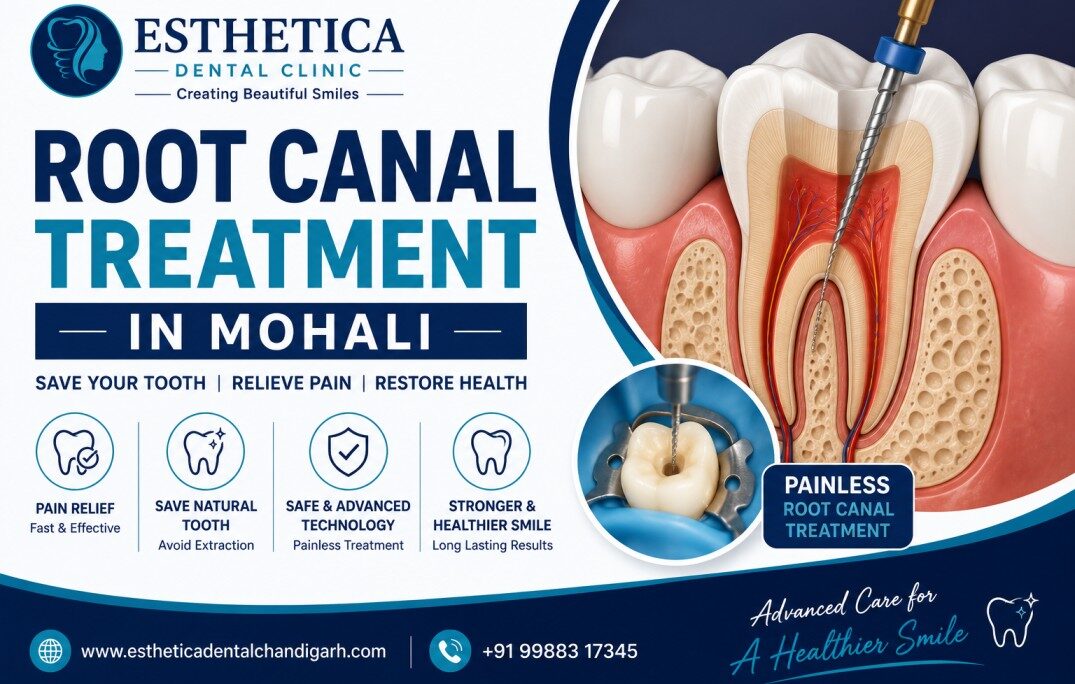
Root Canal Treatment in Mohali
Tooth pain can sometimes be more than a temporary dental problem. Persistent toothache, sensitivity, swelling, or discomfort while chewing may indicate an infection or inflammation deep inside the tooth. In such cases, root canal treatment in Mohali can help save the natural tooth and restore normal oral function.
A root canal is a common restorative dental procedure designed to remove infected or damaged pulp from inside a tooth. Instead of extracting the affected tooth, the dentist cleans and disinfects the root canals before sealing and restoring the tooth. Understanding when root canal treatment is required and what happens during the procedure can make the experience less stressful and help you seek treatment at the right time.
What Is Root Canal Treatment?
Root canal treatment is a dental procedure used to treat infection or inflammation affecting the pulp, which is the soft tissue located inside the tooth. The pulp contains nerves and blood vessels and can become damaged due to deep tooth decay, cracks, trauma, or repeated dental procedures.
When bacteria reach the pulp, they can cause an infection that may spread to the surrounding tissues if left untreated. During a root canal, the infected pulp is removed, the inside of the tooth is thoroughly cleaned, and the canals are sealed.
After treatment, the tooth is usually restored with a suitable filling or dental crown to protect it and allow it to function normally.
When Do You Need Root Canal Treatment?
Not every toothache requires a root canal. However, certain symptoms may indicate that the infection or damage has reached the inner part of the tooth.
1. Persistent Toothache
Pain that continues for an extended period, especially without an obvious cause, can be a warning sign. The discomfort may be mild at first but can gradually become more intense.
Pain may also occur while biting or chewing, indicating that the tissues around the affected tooth may be inflamed.
2. Prolonged Sensitivity to Hot and Cold
Temporary sensitivity after consuming something hot or cold is relatively common. However, if the pain is intense or continues even after the food or drink is removed, it may indicate damage to the tooth pulp.
Persistent sensitivity should be evaluated by a dentist rather than ignored.
3. Pain While Biting or Chewing
If a particular tooth hurts when you bite down, chew food, or put pressure on it, there may be an underlying problem. Deep decay, cracks, inflammation, or infection can all contribute to this type of discomfort.
4. Swelling Around the Tooth
Swelling around the gums near a painful tooth can be a sign of infection. In some cases, a small pimple-like bump may also develop on the gums.
Such symptoms should receive prompt dental attention because an untreated infection can potentially spread to nearby tissues.
5. Deep Tooth Decay
Untreated cavities can gradually move deeper into a tooth. When decay reaches the pulp, a simple filling may no longer be sufficient.
A dentist may recommend root canal treatment to remove the infected tissue and preserve the remaining tooth structure.
6. Cracked or Damaged Teeth
A crack or fracture can sometimes allow bacteria to enter the inner part of a tooth. Depending on the location and severity of the damage, root canal treatment may be recommended to address pulp damage and preserve the tooth.
What Causes the Need for a Root Canal?
Several dental problems can lead to pulp damage or infection. Common causes include:
- Deep or untreated tooth decay
- Cracked or fractured teeth
- Dental trauma or injury
- Repeated dental procedures on the same tooth
- Severe wear or damage to the tooth
- Bacterial infection reaching the pulp
Maintaining good oral hygiene and receiving regular dental check-ups can help detect problems before they become more complicated.
What to Expect During Root Canal Treatment
Many people feel nervous when they hear the term “root canal.” Modern dental techniques and local anesthesia make the procedure considerably more comfortable than many patients expect.
Here’s a general overview of what happens.
Step 1: Dental Examination
The dentist first examines the affected tooth and may use dental X-rays to understand the condition of the tooth, roots, and surrounding bone.
This helps determine whether root canal treatment is appropriate.
Step 2: Local Anesthesia
Local anesthesia is administered to numb the area around the affected tooth. This helps minimize discomfort during the procedure.
Step 3: Removing the Infected Pulp
The dentist creates a small opening in the tooth to access the pulp chamber. The damaged or infected pulp tissue is carefully removed.
Step 4: Cleaning and Disinfecting
The root canals are cleaned and shaped using specialized dental instruments. The canals are then disinfected to reduce bacteria and help prevent further infection.
Step 5: Sealing the Tooth
Once the canals have been cleaned, they are filled and sealed with a suitable material. This helps prevent bacteria from entering the treated area again.
Step 6: Restoring the Tooth
After root canal treatment, the tooth may require a permanent filling or dental crown depending on how much tooth structure remains.
A crown can provide additional protection, particularly for teeth that have lost significant structure due to decay or the root canal procedure.
Is Root Canal Treatment Painful?
One of the most common concerns about root canal treatment in Mohali is whether the procedure will be painful.
With appropriate local anesthesia, most patients do not experience significant pain during the procedure. Some mild sensitivity or soreness may occur after treatment, particularly when biting or chewing.
Following the dentist’s instructions can help manage temporary discomfort and support recovery.
It is important to remember that delaying treatment because of fear can allow an infection to become more serious. Getting professional dental advice early can often prevent the problem from progressing.
Benefits of Root Canal Treatment
Root canal treatment offers several important benefits when a tooth has an infected or damaged pulp.
Saves Your Natural Tooth
One of the biggest advantages is that the procedure can preserve the natural tooth rather than requiring extraction.
Restores Normal Function
After the tooth has been properly restored, it can generally be used for normal biting and chewing.
Helps Stop Infection
Removing infected pulp and cleaning the root canals addresses the source of infection inside the tooth.
Reduces Dental Complications
Timely treatment may help prevent an infection from progressing and affecting surrounding dental tissues.
Maintains Your Smile
Preserving a natural tooth can help maintain the appearance and overall structure of your smile.
What Is Recovery Like After a Root Canal?
Most people can return to their normal routine relatively quickly after treatment. However, the treated tooth may feel slightly sensitive or tender for a few days.
You should follow your dentist’s instructions regarding eating, oral hygiene, and follow-up appointments. If a temporary restoration has been placed, avoid putting excessive pressure on the tooth until the permanent restoration is completed.
Continue brushing twice daily, flossing regularly, and attending routine dental check-ups to maintain your overall oral health.
Why Should You Not Delay Root Canal Treatment?
Ignoring persistent tooth pain does not necessarily mean that the underlying problem is going away. In fact, dental infections can progress even when symptoms temporarily decrease.
An untreated infection may damage surrounding tissues and potentially lead to an abscess or other complications. Seeking professional evaluation when symptoms first appear can help identify the problem and determine the most appropriate treatment.
If you are experiencing persistent tooth pain, swelling, prolonged sensitivity, or discomfort while chewing, consulting a qualified dentist for root canal treatment in Mohali can help determine whether the tooth can be saved.
How Can You Prevent Root Canal Problems?
While not every dental problem can be prevented, good oral care can significantly reduce the risk of severe tooth decay and infection.
Follow these simple habits:
- Brush your teeth twice a day with fluoride toothpaste.
- Floss or clean between your teeth daily.
- Limit frequent consumption of sugary foods and drinks.
- Wear appropriate protection during contact sports.
- Avoid using your teeth to open packages or bite hard objects.
- Schedule regular dental examinations and professional cleanings.
- Treat cavities and dental injuries as early as possible.
Final Thoughts
Root canal treatment is an important restorative dental procedure that can help save a damaged or infected natural tooth. Symptoms such as persistent toothache, prolonged sensitivity, pain while chewing, swelling, and deep decay should not be ignored.
If you are experiencing these symptoms, a professional dental examination at Esthetica Dental Clinic can help determine the cause and whether root canal treatment is suitable for your tooth. With modern techniques, the procedure is designed to remove infection, protect the tooth, and restore its function.
For individuals looking for root canal treatment in Mohali, timely consultation with a dental professional at Esthetica Dental Clinic can be an important step toward protecting their natural teeth and maintaining a healthy smile.
Frequently Asked Questions
1. How do I know if I need a root canal?
Persistent tooth pain, prolonged sensitivity to hot or cold, pain while chewing, swelling, deep decay, or a damaged tooth may indicate the need for root canal treatment. A dental examination and X-ray are usually needed for an accurate diagnosis.
2. How long does root canal treatment take?
The duration depends on the condition of the tooth, the number of canals, and the complexity of the case. Some treatments may be completed in one appointment, while others may require multiple visits.
3. Is a crown necessary after a root canal?
A crown may be recommended when the tooth has lost significant structure or needs additional protection. Your dentist can determine whether a crown or another restoration is appropriate based on the condition of the tooth.