









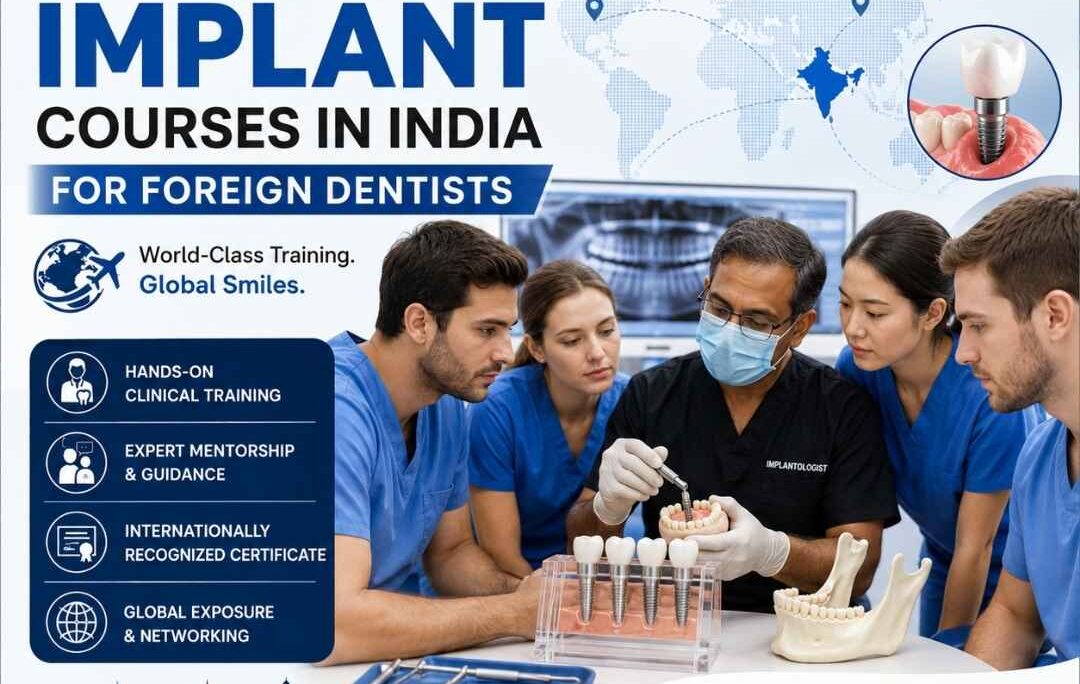
Best Dental Implant Courses in India for Foreign Dentists
Thinking about crossing borders to sharpen your implant skills? You’re not alone. Every year, hundreds of dentists from Canada, the US, the UK, and the Middle East pack their bags and head to India, and the reason is simple: world-class training at a fraction of the cost back home. If you’ve been searching for dental implant courses in India, this guide breaks down everything you need to know before you enroll.
Why Foreign Dentists Are Choosing India for Implant Training
India has quietly become one of the go-to destinations for clinicians who want practical, no-nonsense skill-building rather than dry theory. Dental schools and private academies across the country have opened their doors specifically to international participants, offering structured, mentorship-driven programs. The draw isn’t just affordability, it’s the sheer patient volume Indian clinics see, which translates directly into more hands-on exposure per course day than many dentists get in months back home.
For dentists from Canada especially, the appeal is growing fast. Continuing education costs in North America have climbed steadily, and finding live-patient training slots can mean long waiting lists. India offers a shortcut: focused, intensive programs that compress years of learning into weeks.
What Makes Hands-On Dental Implant Training India So Valuable
Reading textbooks and watching webinars only gets a clinician so far. Implantology is a tactile skill, and there’s no substitute for holding the drill, feeling the bone density, and making real-time decisions on a live patient under expert supervision.
Hands-on dental implant training India programs typically place heavy emphasis on:
- Live surgical demonstrations followed by supervised practice
- CBCT-guided diagnosis and digital treatment planning
- Immediate loading protocols and full-arch rehabilitation
- Small batch sizes so mentors can actually watch and correct technique
This kind of training builds muscle memory and clinical confidence that no online module can replicate. Dentists who complete these programs often say the biggest shift isn’t in what they know, it’s in how naturally they now approach case planning and execution.
Choosing a Dental Implant Certification Course India That Actually Counts
Not every certificate carries the same weight, so it pays to do your homework before signing up. A strong dental implant certification course India should offer transparency about faculty credentials, batch size, and the exact number of live cases you’ll be exposed to.
Here’s what separates a genuinely useful certification course from a glorified weekend workshop:
- Structured curriculum covering basic to advanced implant placement, not just theory slides
- Verified mentorship from practicing implantologists with real surgical case history
- Digital workflow training, including CBCT interpretation and guided surgery planning
- Post-course support, such as case discussion groups or follow-up mentoring
Before enrolling, ask directly how many implants you’ll personally place or assist with during the course. If the answer is vague, that’s a red flag worth noting.
Implantology Courses for International Dentists: What to Expect Logistically
Traveling for education adds a layer of planning most domestic courses don’t require, and reputable academies know this. Good implantology courses for international dentists usually bundle in more than just classroom time.
Expect programs that offer:
- Visa invitation letters and documentation support
- Airport pickup and local accommodation guidance
- Flexible scheduling that fits around international travel dates
- English-medium instruction with clear, jargon-free explanations
- Certificates recognized for continuing education credit tracking back home
For dentists coming from Canada, the US, Australia, or the UK, this logistical support often makes the difference between a stressful trip and a genuinely productive learning experience. Look for academies that have a track record of hosting international cohorts, not just occasional one-off foreign visitors.
Comparing Course Duration: Short Workshops vs Comprehensive Programs
One of the biggest decisions foreign dentists face is choosing between a compact few-day workshop and a longer, more comprehensive program. Short workshops are great for dentists who already have some implant experience and simply want to refine specific techniques like immediate loading or All-on-6 rehabilitation. Comprehensive programs, often spanning several weeks, suit those starting from a more foundational level and wanting deeper exposure to diagnosis, planning, surgery, and prosthetics all in one structured journey.
Neither option is inherently better, it genuinely depends on where you currently stand as a clinician. Dentists new to implantology usually benefit more from longer programs that build concepts progressively, while experienced general dentists looking to add a specific skill can often get what they need from a focused short course.
The Canada Connection: Why Canadian Dentists Are Booking Seats in India
Canada has seen a noticeable rise in dentists traveling abroad for advanced implant training, and the reasons go beyond just cost. Continuing education seats for hands-on implant surgery are limited across Canadian institutions, and demand consistently outpaces availability. Add in the exchange rate advantage, and a training trip to India often costs a fraction of an equivalent program in Toronto or Vancouver, even after factoring in flights and accommodation.
Canadian dentists also appreciate that Indian training academies are accustomed to hosting international clinicians, meaning course materials, terminology, and clinical protocols are typically aligned with globally recognized standards rather than region-specific practices. This makes the transition back to Canadian clinical practice smoother, since the skills learned translate directly without needing significant adaptation.
Building Confidence Through Real Case Exposure
The real value of traveling for implant training isn’t the certificate on your wall, it’s the confidence that comes from handling genuinely complex cases under expert guidance. Programs that expose you to diabetic patients, elderly patients with compromised bone density, and full-mouth rehabilitation cases prepare you far better for the unpredictability of real-world practice than a simulation-only course ever could.
This is exactly the philosophy behind Esthetica Advanced Dental Academy, where training programs are built around live clinical exposure, CBCT-guided planning, and mentorship from surgeons with over a decade of full-arch and All-on-6 rehabilitation experience. Rather than rushing participants through generic modules, the focus stays on small batch sizes so every dentist gets individual attention and real case-based learning.
What Happens After the Course Ends
A good implant training program doesn’t just end when the certificate is handed over. The best academies maintain some form of ongoing support, whether that’s a case discussion group, access to mentors for tricky treatment planning questions, or refresher sessions for alumni. This kind of continued relationship matters more than most dentists realize going in, because real clinical confidence builds over months of practice back home, not just during the course itself.
When researching programs, it’s worth asking directly whether alumni support exists in any form. A course that disappears the moment it ends offers far less long-term value than one that stays connected to its graduates.
Final Thoughts Before You Enroll
Choosing where to train is one of the more consequential decisions in a dentist’s career trajectory, especially when implantology is becoming such a central part of modern dental practice. India’s combination of affordability, patient volume, and mentorship-driven teaching has made it a serious contender for dentists worldwide, and particularly for those coming from Canada looking for accessible, high-quality hands-on learning. Do your research, ask the tough questions about live case exposure, and pick a program that treats your growth as a clinician seriously, not just as another enrollment number.
Frequently Asked Questions
1. Are dental implant courses in India recognized internationally?
Most reputable academies structure their curriculum around globally accepted implantology protocols, though it’s important to check whether your home country’s dental board accepts the certificate for continuing education credits.
2. How long do hands-on implant training programs in India typically last?
Programs range from short 3 to 5 day intensive workshops to comprehensive multi-week courses, depending on whether you’re building foundational skills or refining a specific technique.
3. Do I need prior implant experience to join a certification course?
Not necessarily. Many academies offer tracks for both beginners and experienced dentists, though it’s worth confirming this before enrolling since curriculum depth varies significantly.
4. Is it worth traveling from Canada for implant training in India?
Given the cost savings, faster availability of seats, and heavy hands-on exposure, many Canadian dentists find the trip financially and clinically worthwhile compared to waiting for limited domestic slots.
5. What kind of visa support do international dentists get?
Established academies typically assist with invitation letters and documentation, though the process still requires standard visa applications through your home country’s channels.
6. Will I actually place implants on live patients during the course?
This varies widely by academy. Always ask for specifics upfront, since some courses are observation-heavy while others offer genuine supervised hands-on placement.
7. How do I know if a certification course is legitimate?
Look for transparency around faculty credentials, small batch sizes, verifiable case exposure, and clear communication about what the certificate does and doesn’t qualify you for in your home jurisdiction.