









The transition from the clinical classroom to the private practice is one of the most challenging leaps a dental professional will ever make. While your academic training has equipped you with the technical skills to perform complex procedures, there is one crucial area where many fresh graduates feel unprepared: patient communication for dentists.
In a university setting, patients are often viewed as “cases” to be managed according to a curriculum. In the real world, however, patients are people with fears, financial constraints, and high expectations. Mastering the art of patient communication for dentists is not just a “soft skill”—it is the foundation of patient trust, case acceptance, and the long-term success of your practice.
Why Communication Becomes the First Hurdle
Fresh graduates often enter the workforce with a high degree of technical anxiety. When you are focused on the mechanics of a procedure, your ability to empathize or explain complex treatment plans can diminish. Here is why the struggle is so common:
1. The “Expert-Patient” Gap
You have spent years learning dental terminology. When you speak in jargon—using terms like “osseointegration” or “periodontal involvement”—your patient hears nothing but confusion. This creates an immediate barrier. Patient communication for dentists must focus on breaking down these technical barriers so that patients understand their condition and are more likely to accept the recommended treatment.
2. Lack of “Financial Empathy”
Academic dentistry rarely touches on the cost of private-practice care. Many graduates struggle to discuss treatment costs because they feel uncomfortable asking for money. This hesitation can be interpreted by the patient as a lack of confidence in the treatment plan itself.
3. Fear of Being Questioned
New graduates often fear being “found out” if a patient asks a difficult question. This leads to defensive or overly brief responses, which further erodes trust. Patients don’t expect you to know everything, but they do expect honesty and transparency.
The 5 Pillars of Effective Patient Communication
To fix these communication gaps, you must shift your mindset from “performing a procedure” to “guiding a patient.”
1. Master the Art of Simplification
If you cannot explain a procedure to a five-year-old, you don’t understand it well enough yet. Use analogies. Instead of explaining “bone density,” explain that the bone is the “foundation of a house,” and we need a solid foundation before we can build the structure (the implant).
2. Active Listening (The 80/20 Rule)
Spend 80% of your initial consultation listening and 20% speaking. Most patients will tell you exactly why they are hesitant if you give them the space to do so. Good patient communication for dentists is rooted in asking open-ended questions:
“What is your main goal for your smile today?”
“What has been your experience with dentists in the past?”
“What concerns do you have about this treatment plan?”
3. Visual Communication
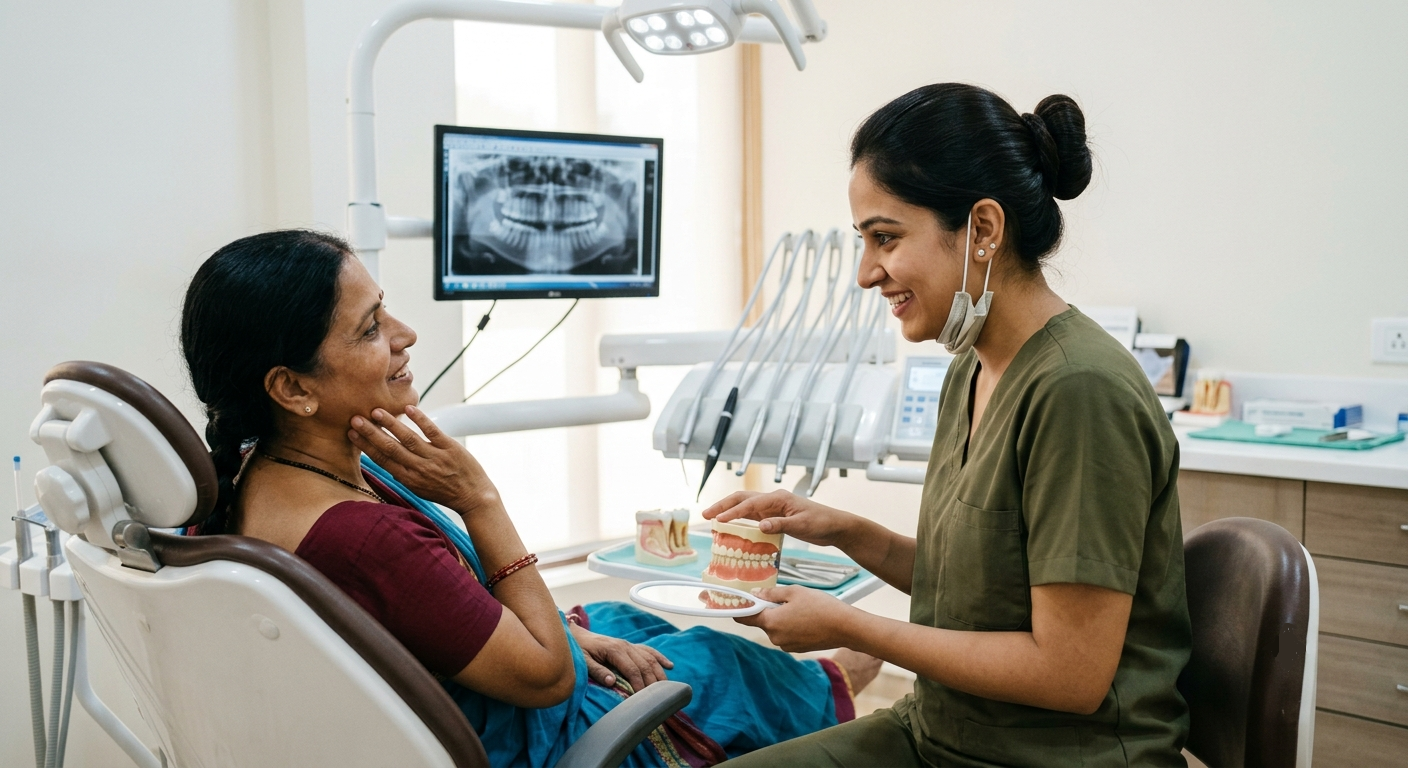
We live in a visual age. Use intraoral cameras, 3D models, and digital imaging to show, not just tell. When a patient can see their own decay or the potential of their final result, the conversation shifts from “you are trying to sell me something” to “we are solving a problem together.”
4. Practice “Financial Transparency”
Never shy away from the cost. Present the treatment plan first, highlight the value (the benefit to their quality of life), and then present the investment. If you are confident in the value, the price becomes secondary.
5. Managing Expectations
Communication fails when the result doesn’t match the patient’s internal expectation. Be honest about what is possible. If a procedure will have a significant healing period or aesthetic trade-off, state it upfront. Trust is built on what you don’t promise as much as what you do.
The Role of Mentorship
One of the fastest ways to overcome communication anxiety is to observe masters at work. At Esthetica Dental Clinic and Implant Center, we emphasize that mentorship is not just about holding a drill—it is about watching how Prof. Dr. Sharad Arya interacts with patients, handles objections, and builds lasting relationships.
When you observe a senior clinician:
Watch how they handle a patient who is afraid.
Note how they explain complex implant procedures in simple, human terms.
Notice how they pause to let the patient process information.
Transforming Your Practice
As you gain experience, your technical speed will improve, but your communication skills will define your reputation. Patients rarely talk about the precision of your preparation; they talk about how you made them feel. Effective patient communication for dentists is the ultimate tool for practice growth.
Actionable Steps to Improve Starting Today:
Record your consultations (with permission): Listen back to how you explain things. Do you talk too fast? Do you interrupt?
Roleplay with colleagues: Practice your treatment presentations until they flow naturally.
Adopt a “Patient-First” focus: Before every appointment, remind yourself that the goal is not to finish the procedure—it is to help the person in the chair.
Frequently Asked Questions (FAQ)
Q: How do I respond when a patient says, “That’s too expensive”? A: Don’t get defensive. Say: “I understand. Let’s look at the long-term impact of not addressing this issue versus the investment today. Would you like to explore financing options?”
Q: What if I don’t know the answer to a question? A: Never bluff. Say: “That is a great question. Let me consult with my clinical team to get you the most accurate information.” Honesty builds more trust than a quick, incorrect answer.
Q: Is communication just as important as surgical skill? A: In private practice, they are two sides of the same coin. A perfect surgery that a patient didn’t want or understand is still a failed patient experience.
Elevate Your Professional Journey
At Esthetica Dental Clinic, we are committed to mentoring the next generation of dentists to be both surgical experts and empathetic communicators. Your career success is waiting on the other side of your ability to connect with your patients.